



Sonic vs. Bristle Cleansing Brushes: What's Actually Different
The two cleansing-brush categories look similar on a shelf. They work in genuinely different ways, and that difference explains most of what people love or dislike about each type.
How each motor moves: vibration vs. oscillating heads
Sonic devices use an electromagnetic motor to vibrate a silicone head at very high frequency — Foreo describes its Luna line as delivering thousands of pulsations per minute. There's no spinning or rotation. The silicone surface simply flexes and moves against skin. Bristle brushes, by contrast, use a small motor to spin or oscillate a bristle head, similar in principle to an electric toothbrush. That mechanical difference is the root of almost every other difference between the two categories.
Exfoliation intensity
Bristles physically brush against the skin's surface. That produces a more noticeable exfoliating sensation, and for many users, a more noticeable improvement in texture and product absorption afterward. Silicone pulses move cleanser around and lift surface debris, but they don't buff at dead skin cells the same way. If your main goal is gentle makeup and sunscreen removal, that difference may not matter much. If you're specifically chasing an exfoliating effect, bristles deliver it more directly. That's also why they carry a higher irritation risk for reactive skin.
Hygienic care: bacteria & replacement heads over time
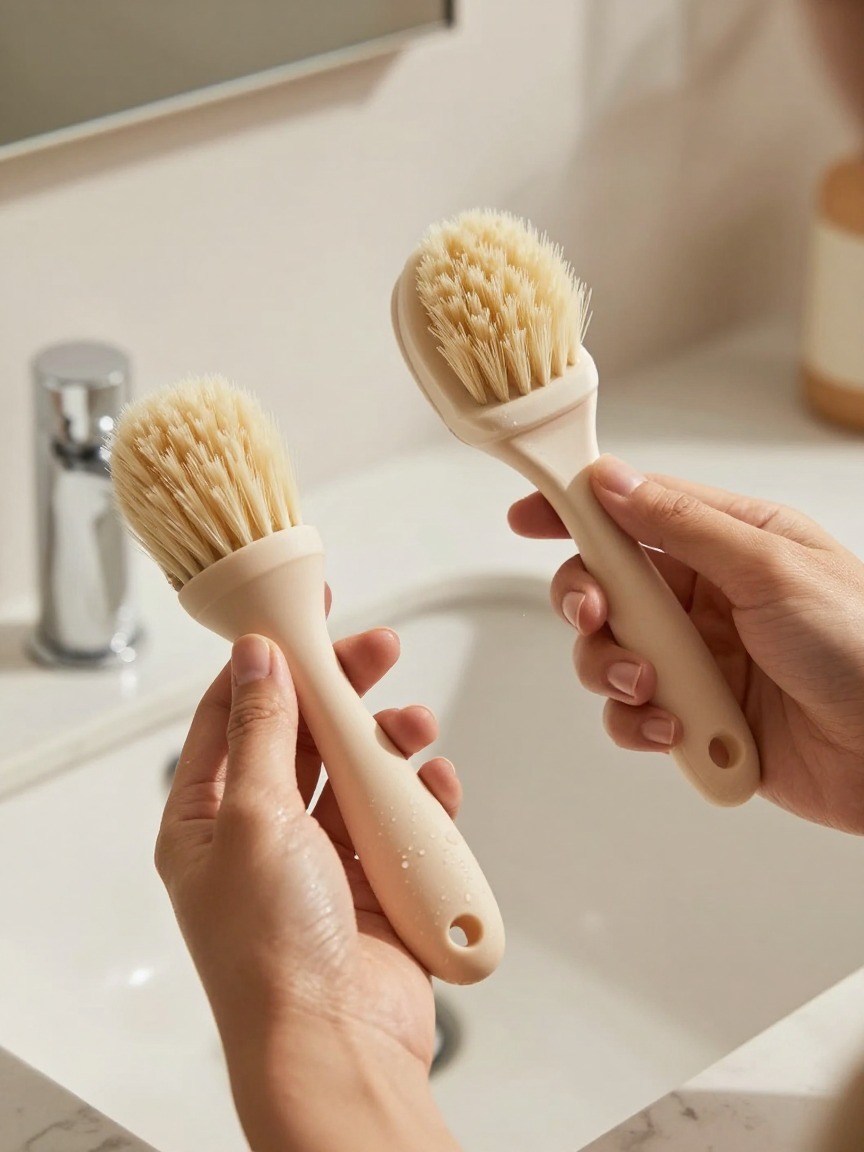
This is where silicone has a clear, hygienic advantage. A solid silicone head has no bristles, no gaps, and no porous material for water, dead skin, and product residue to collect in. You rinse it under water after use and it's functionally clean. Bristle heads are inherently more absorbent. They hold moisture between uses, which is exactly the environment bacteria and mold prefer. Manufacturers almost universally recommend replacing bristle heads every 3 months for that reason. If you're inconsistent about rinsing and air-drying a brush properly, silicone is the more forgiving choice.
Silicone durability vs. bristle wear
Silicone doesn't fray, crack, or lose material over time the way nylon does. The head itself simply doesn't degrade the way bristles wear down with repeated use. A well-maintained silicone device can look and perform much the same after a year as it did on day one. Bristle heads visibly flatten and fray with wear — a second reason, beyond hygiene, to replace them every few months rather than running them into the ground.
Sound and sensation
Sonic brushes tend to produce a low hum and a vibrating sensation against skin. Bristle brushes produce more of a soft buzzing or scrubbing sensation as the head spins. Neither is loud enough to disturb a household. But if you're sensitive to vibration on your face, a low-speed silicone setting is generally the more comfortable starting point to test the category with.
Waterproof ratings for shower use
Most sonic and bristle brushes alike are designed for shower use, so check the waterproof rating before buying — IPX7 or better is the standard to look for. A brush without a solid waterproof rating is a poor fit for a wet bathroom routine, regardless of whether it's silicone or bristle.
Cost of ownership
Sonic silicone devices tend to cost more upfront. But the head itself typically lasts the life of the device — a year or more — since there's nothing to wear out mechanically the way bristles fray. Bristle brushes are often cheaper to buy initially, but the ongoing cost of replacement heads every few months adds up. A brush used with old, frayed, or overdue bristle heads is both less effective and less hygienic. Premium silicone picks like Foreo and PMD Beauty sit at the top of the price range, while budget-friendly options from Olay and Vanav make the category more accessible; Clarisonic, the brand that pioneered bristle brushes, is now discontinued.
Who tends to prefer which: sensitive skin & rosacea
Silicone brushes are generally the safer starting point for sensitive, dry, rosacea-prone, or reactive skin. The lowest speed settings are genuinely gentle, and there's no bristle abrasion to worry about. Bristle brushes tend to appeal more to people with normal-to-oily, non-reactive skin who want a more noticeable exfoliating effect and don't mind the extra maintenance. Neither is objectively better. They suit different skin tolerances and different goals — the honest answer to which is better is almost always it depends on your skin, not a universal winner.
A note on combining brush types with actives
If your routine already includes a chemical exfoliant like a glycolic or salicylic acid, or a retinoid, a bristle brush on the same night adds a second layer of exfoliation on top of a chemical one. That combination is a common cause of over-exfoliation. Silicone is the lower-risk choice to pair with an active-heavy routine. Even then, it's worth keeping brush nights and strong-active nights on different days rather than stacking both at once.