In short: LED face masks use red, near-infrared, or blue light to support collagen production and calm acne-causing bacteria, respectively. They're backed by real but still-developing research, work gradually over weeks of consistent use, and are marketed as cosmetic devices, not treatments for diagnosed skin conditions, which still need a dermatologist.
Affiliate disclosure: We may earn a commission from qualifying purchases made through links on this page, at no extra cost to you. Some links on this page are affiliate links.
Tools & Devices · Guide
LED Face Masks
Recommended led face masks
Our current top picks in this category, judged on formulation, evidence, texture and value.
Editor's Pick#1
people who want the most clinically studied LED mask on the market and don't mind the price
Contour Face
Omnilux
Omnilux's LED technology is the same platform used in dermatology clinics. The Contour Face is its rigid, dermatologist-favorite home version, and it has more research behind it than most at-home competitors.
Extensive clinical research behind Omnilux's LED platform, more than most home devices
FDA-cleared for temporary reduction in the appearance of fine lines and wrinkles
Even, consistent light distance thanks to the rigid, hinged design
Rigid shell doesn't flex to different face shapes, there's no blue-light setting for acne, and it's one of the most expensive masks on the market
people focused on fine lines and firmness who want maximum LED coverage in a flexible mask
Skin LED Light Therapy Mask
CurrentBody Skin
CurrentBody Skin packs one of the highest LED counts of any flexible silicone mask. It aims red and near-infrared light squarely at collagen support and visible firmness.
High LED density for edge-to-edge, full-face coverage
FDA-cleared, flexible silicone design that molds closer to the face than rigid visors
Backed by the brand's own multi-week before-and-after testing
No blue-light mode, so it won't help with active breakouts, and it's priced at the higher end of this category
people who want LED therapy as part of a broader facial wellness routine
TheraFace Mask
Therabody
Therabody built the TheraFace Mask around its TheraFace Pro ecosystem. It offers red, red-plus-near-infrared, and blue light combinations, plus companion facial tools that single-purpose masks don't offer.
Multiple LED combination settings — red, red plus near-infrared, and blue — in one mask
FSA/HSA eligible, which softens the out-of-pocket cost for many buyers
Pairs with the Therabody app for guided sessions and progress tracking
The controller puck and cord add bulk compared to fully cordless masks, and getting full functionality leans on having the app
What LED Face Masks Actually Do: Red Light, Blue Light & Photobiomodulation
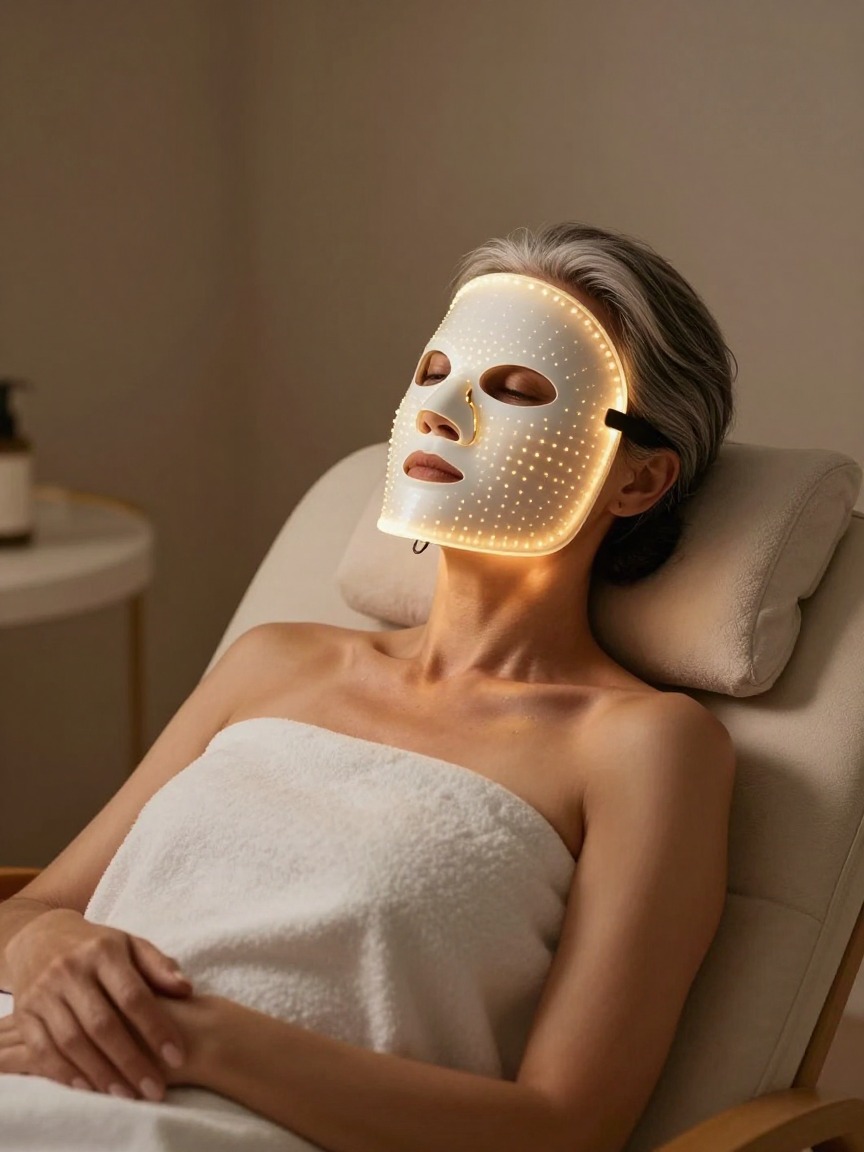
LED face masks bathe skin in narrow bands of light. Most use red, near-infrared, or blue wavelengths, delivered through small diodes built into a wearable mask. The mechanism is called photobiomodulation. Light at these wavelengths is absorbed by cells and is thought to influence cellular activity, without the heat or tissue damage that comes with lasers or UV exposure. Red and near-infrared light, in the 620 to 850 nanometer range, has the most research behind it for supporting collagen production and calming the visible look of redness. Blue light, around 405 to 420 nanometers, is studied for its effect on the porphyrins that acne-causing bacteria produce, which can help reduce breakouts over time. Some masks combine both wavelengths; others focus on just one. The right choice depends on what you're trying to address.
Choosing an LED Face Mask by Skin Type and Concern
Fine Lines, Collagen & Wavelength: General Anti-Aging
If your priority is firmness, texture, or an overall brighter look, red or red-plus-near-infrared masks are the better fit. These wavelengths are most associated in published research with supporting collagen synthesis. They also help reduce the visible signs of aging over consistent use. Results tend to build gradually, over eight to twelve weeks of regular sessions, rather than appearing after one use.
Acne-Causing Bacteria, Breakouts & Oily Skin
Blue light is the wavelength studied specifically for its effect on acne-causing bacteria. It won't address hormonal or cystic acne on its own. It also isn't a substitute for a dermatologist-guided acne routine. But it can be a reasonable addition for mild, surface-level breakouts. Some masks combine blue with red to also address any post-acne redness.
Sensitive Skin and Other Reactive Skin Types
LED therapy is generally gentle, since it doesn't involve heat or exfoliation. But sensitive skin can still react to the light exposure itself, or to whatever's layered underneath during a session. Start with shorter sessions than the manufacturer's maximum. Patch test if you're prone to reactions, and stop if you notice unusual redness, warmth, or irritation that doesn't resolve quickly.
Session Time, Routine & Retinoids: Fitting an LED Mask Into Your Day
Most masks are meant for clean, dry, product-free skin. Layers of serum or sunscreen can block light penetration, or in some cases react with the light itself. A typical routine is cleanse, pat dry, use the mask for its recommended session time, then follow with your normal serums and moisturizer. Skin can be more receptive to product absorption right after treatment. Quick, low-commitment options — like Dr. Dennis Gross Skincare's three-minute format — make daily consistency easier to sustain than a longer session. Avoid using an LED mask over broken skin, active cold sores, or recent injectables until the provider who did the treatment confirms it's safe. If you use retinoids, certain acids, or any medication that increases photosensitivity, ask a doctor or dermatologist before adding regular light exposure to your routine.
Photosensitivity, Consistency & How Long Before You See Change
Photobiomodulation works by nudging cellular activity, not by resurfacing skin, so changes show up on a slower timeline than something like a chemical peel. Most research on red and near-infrared devices points to four to twelve weeks of consistent, several-times-a-week use before texture, tone, or fine lines show a visible shift. Improvements from blue light on breakouts tend to follow a similar timeline. Take a baseline photo in consistent lighting before you start. Check back at the four and eight week marks, rather than looking for change day to day, since gradual improvement is easy to miss without a reference point. If you've used a mask consistently for three months with no change at all, that's a fair point to stop and reconsider.
FDA-Cleared Claims, Evidence & When to See a Dermatologist
The evidence behind LED light therapy is real, but it comes with caveats worth knowing before you spend. Much of the strongest data comes from professional-grade devices, like the clinical platform behind Omnilux's clinic and home masks, delivering more power per session than most at-home devices. That doesn't mean at-home devices don't work. It does mean results are typically more modest and slower to appear than in a clinical study. Individual response also varies. No LED mask, at any price, replaces prescription treatment, in-office procedures, or a dermatologist's care for a diagnosed skin condition. It's worth understanding what "FDA-cleared" actually means: most LED masks, including flexible options like CurrentBody Skin and Qure Skincare, are cleared as Class II general wellness devices for a narrow claim, such as temporary reduction in the appearance of fine lines. That clearance speaks to safety and a defined claim, not to how dramatic the results will be. Think of an LED mask as a supporting habit in a broader routine, not a stand-alone fix.
Common Mistakes
Expecting a single session to produce visible change. Most benefits reported in research come from weeks of consistent use.
Choosing the wrong wavelength for the concern, like a red-only mask for active breakouts.
Layering active skincare ingredients under the mask instead of applying them afterward.
Ignoring eye protection or the manufacturer's session-time guidance in an effort to get faster results.
Treating an LED mask as a replacement for dermatologist care when a skin issue is persistent, painful, or worsening.
Popular picks from related categories, chosen with the same rubric.
Editor's Pick#1
Dry-to-normal sensitive skin, especially anyone also using retinoids or other actives
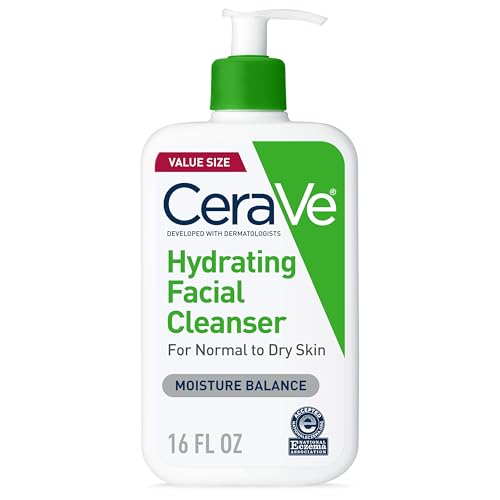
Hydrating Facial Cleanser
CeraVe
It's formulated with three ceramides, hyaluronic acid, and a National Eczema Association seal. Dermatologists mention it most often for reactive skin. It's a genuinely non-foaming, low-irritation formula that doesn't strip the barrier.
Ceramide and hyaluronic acid formula supports the skin barrier while cleansing
Fragrance-free, non-foaming, and won't disrupt a compromised moisture barrier
Budget-friendly per ounce and widely available at drugstores
Doesn't fully dissolve heavy sunscreen or long-wear makeup on its own, so double-cleansing days may need a micellar water or oil-based first step
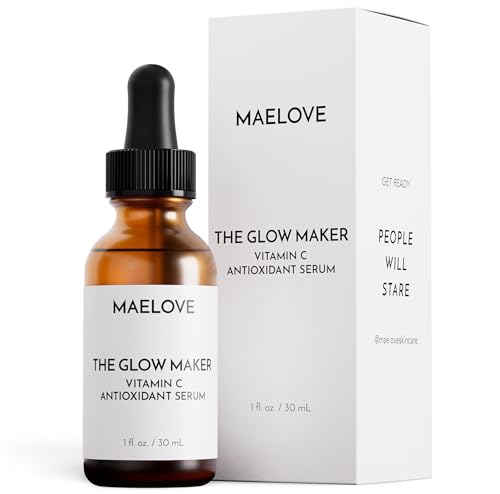
Readers who want a well-formulated L-ascorbic acid serum without the prestige price tag
Glow Maker
Maelove
It leans on similar formulation logic to pricier serums: L-ascorbic acid plus vitamin E and ferulic acid. It costs a fraction of the price. That's why it's often called an affordable alternative to the prestige options.
Combines L-ascorbic acid with vitamin E and ferulic acid, echoing higher-end formulas
Opaque pump bottle helps limit light and air exposure
Noticeably cheaper per ounce than most L-ascorbic acid serums of similar formulation
The pump can dispense unevenly or feel like it needs priming, a minor but frequently mentioned annoyance
Normal to dry skin that wants a dermatologist-developed, fragrance-free daily moisturizer
CeraVe Moisturizing Cream
CeraVe
It pairs three essential ceramides with hyaluronic acid in a rich, fragrance-free base. Long-term users with dry, compromised skin consistently praise it. It's also inexpensive enough to use liberally.
Ceramide + hyaluronic acid formula supports the skin barrier
Fragrance-free and well-tolerated by sensitive skin
Large jar size makes it very cost-effective per ounce
The tub packaging means dipping fingers into the product, which isn't ideal for hygiene or portability
acne-prone, sensitive, or post-procedure skin that needs a dermatologist-trusted daily option
UV Clear Broad-Spectrum SPF 46
EltaMD
Dermatologists reach for EltaMD more than almost any other sunscreen. It pairs broad-spectrum zinc oxide protection with niacinamide and hyaluronic acid. The oil-free base is genuinely weightless and layers well under makeup.
Broad-spectrum SPF 46 with zinc oxide
Oil-free, non-comedogenic formula favored for acne-prone skin
Contains niacinamide and hyaluronic acid for added hydration
Pricier per ounce than most drugstore sunscreens, and the pump makes it easy to under-apply if you're not deliberate about the amount.
oily, pore-prone skin that wants a formula built specifically around pore congestion
Super Volcanic Pore Clay Mask 2X
innisfree
Two types of volcanic clay target sebum and blackheads. The texture isn't chalky or hard to remove like older clay formulas. It's also genuinely affordable for how often you'll reach for it.
Lightweight, non-cakey texture that spreads and rinses easily
Visibly reduces the look of congested pores after a single use
Priced low enough to use regularly without guilt
The mineral scent is noticeable and won't appeal to everyone
Anyone dealing with clogged pores, blackheads, or rough, bumpy texture who wants an evidence-backed exfoliating toner
2% BHA Liquid Exfoliant
Paula's Choice
It's built around a well-studied 2% salicylic acid concentration at an effective pH. The base is fragrance-free and alcohol-free. That combination is why it's stayed a favorite among ingredient-focused shoppers for years, rather than fading as a trend.
2% salicylic acid at a pH that actually works
Fragrance-free and alcohol-free formula
Noticeably improves texture and blackheads with consistent use
The active concentration can cause redness or flaking in the first couple of weeks, so it's not the easiest starting point for very reactive or rosacea-prone skin
Affiliate disclosure: We may earn a commission from qualifying purchases made through links on this page, at no extra cost to you. Some links on this page are affiliate links.