What Gua Sha and Jade Rollers Actually Do
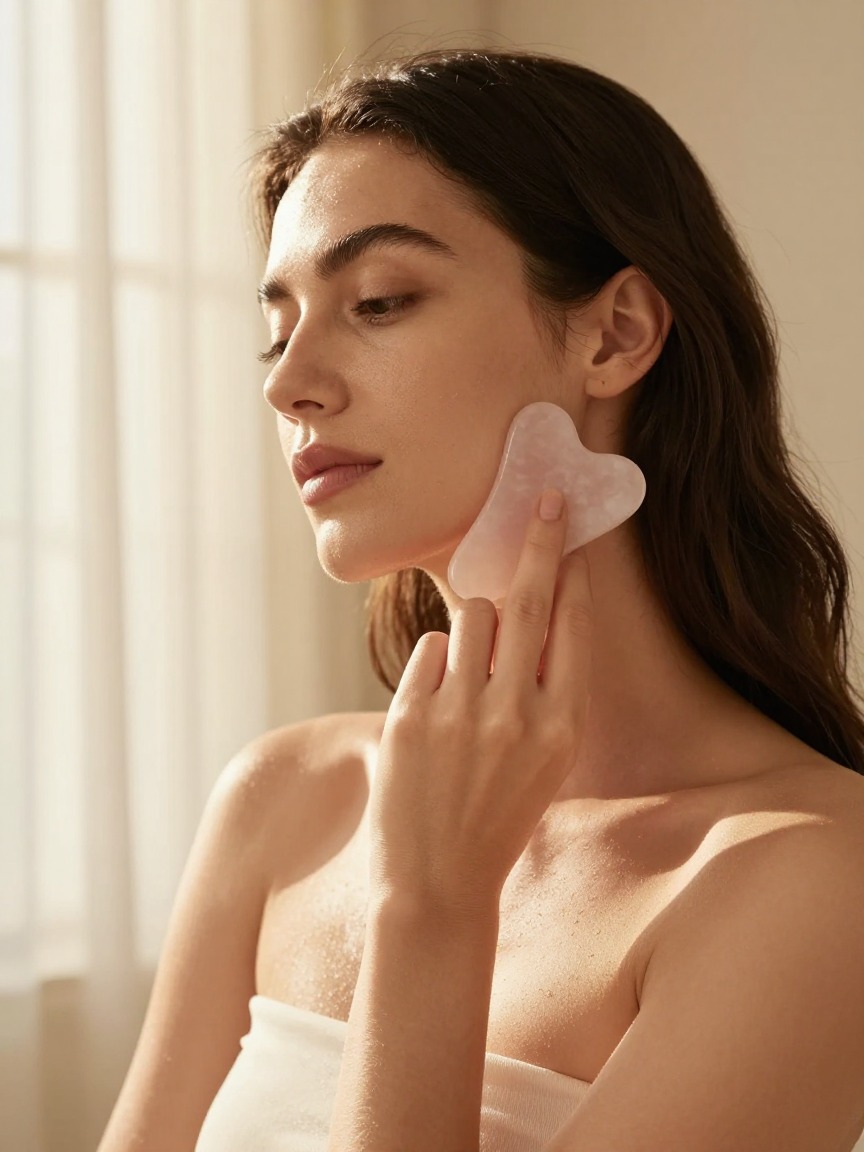
Gua sha is a facial adaptation of an older Traditional Chinese Medicine practice. A flat-edged tool is scraped firmly along the skin. Jade rolling is newer and gentler — a stone wheel rolls across the face instead of scraping. Both fall under the broader umbrella of manual facial massage. The honest answer to what they do is straightforward: they move fluid, warm the skin, and relax facial muscles. That's it. They do not remove fat or flush out "toxins." They don't break down cellulite-style tissue, or trigger the long-term collagen remodeling a dermatologist's in-office device might.
Circulation, Lymphatic Drainage & Temporary Puffiness Relief
The visible effects — a slightly slimmer-looking jaw, brighter skin, less puffiness under the eyes — come from moving fluid that pooled overnight. There's also a temporary flush of blood to the surface, which is what people mean by "boosting circulation." Gua sha and jade rolling support lymphatic drainage the same way any gentle massage does. Those effects are real, but they're temporary. They typically fade within a few hours to a day. If you stop using the tool, your face doesn't "relapse." It simply returns to its normal fluid balance, the same as after any facial massage.
It's worth separating the ritual from the result. A few quiet minutes of self-massage genuinely helps with stress and tension, independent of any skin outcome. Plenty of people keep up a gua sha habit for that reason alone, even once the novelty of a slimmer-looking jaw wears off. That's a legitimate benefit. It's just not a skincare claim, and it's worth being honest with yourself about which one is actually motivating you to keep doing it.
Traditional Chinese Medicine Origins: From Bian Stone to Rose Quartz
Facial gua sha borrows its scraping technique from a much older Traditional Chinese Medicine practice used on the body, traditionally performed with a bian stone. A bian stone is a dense, smooth stone prized for its weight and durability. Modern tools adapt that same technique for delicate facial skin, using softer pressure and smaller shapes.
Most gua sha stones and jade rollers sold today are carved from rose quartz or a dyed, jade-adjacent stone rather than true bian stone or nephrite jade. Brands like Mount Lai helped popularize the modern rose quartz gua sha stone. Wildling built its reputation on a heavier, bian-stone-style tool instead. Neither material choice has a proven skincare benefit of its own — it mostly comes down to weight, feel, and how cold the stone stays.
What the Clinical Evidence Shows About Contouring
Clinical research on facial gua sha specifically is thin. Much of what gets cited in marketing comes from small studies on general lymphatic drainage massage, or body gua sha for muscle soreness. Those aren't controlled trials on facial skin outcomes. That doesn't mean the tools are useless. Manual massage has reasonably well-documented short-term effects on circulation and muscle tension in general. But claims like "sculpts your jawline permanently" or "contours skin like a facelift" go well beyond what's actually been shown. Treat gua sha and jade rolling as a relaxing self-care ritual with a real, mild, temporary de-puffing benefit. They are not a treatment for sagging, wrinkles, or any diagnosed skin condition.
Be skeptical of any product page that promises a specific, permanent measurement change — a jawline claimed to be a set number of millimeters narrower, or wrinkles said to visibly shrink after a fixed number of days. No independent, peer-reviewed research on facial gua sha or jade rolling supports claims that specific. If a listing cites a "clinical study," check whether it was run by the brand itself on a handful of participants, rather than published independently.
Choosing a Tool: Rose Quartz, Jade, Stainless Steel or Facial Roller
A flat gua sha stone gives you more control over angle and pressure than a facial roller does. It's the better pick for targeting the jaw, brow bone, or neck tension specifically. A roller glides passively and is more forgiving for beginners, though the motion is gentler and more superficial. Material matters less than you'd think: rose quartz, jade, and polished stainless steel all work, and none has a proven edge over the others for skin outcomes. Kitsch's affordable rose quartz stone works on the same principle as pricier options. Stainless steel and rose quartz both hold a chill a little longer, which some people prefer for morning puffiness.
Sensitive Skin, Jawline & Cheekbones
If you have thin, sensitive, or reactive skin — or you're prone to broken capillaries — start with a roller rather than a scraping stone, the way Herbivore's jade roller is designed. It's harder to overdo it with a roller. There's less risk of pressing hard enough to bruise. If you have rosacea, active eczema, or dermatitis, check with a dermatologist before adding any facial massage tool to your routine, since heat and friction can trigger a flare.
Oily and acne-prone skin can use either tool. Just never glide it directly over an active breakout, open blemish, or cyst — you risk spreading bacteria and irritating already-inflamed skin further. Work around active spots, not over them. Normal and combination skin has the most flexibility. A firmer gua sha stone with distinct edges gives more noticeable short-term de-puffing than a roller, especially along the jawline and under the cheekbones, once you're comfortable with the technique.
Facial Oil, Squalane & Technique
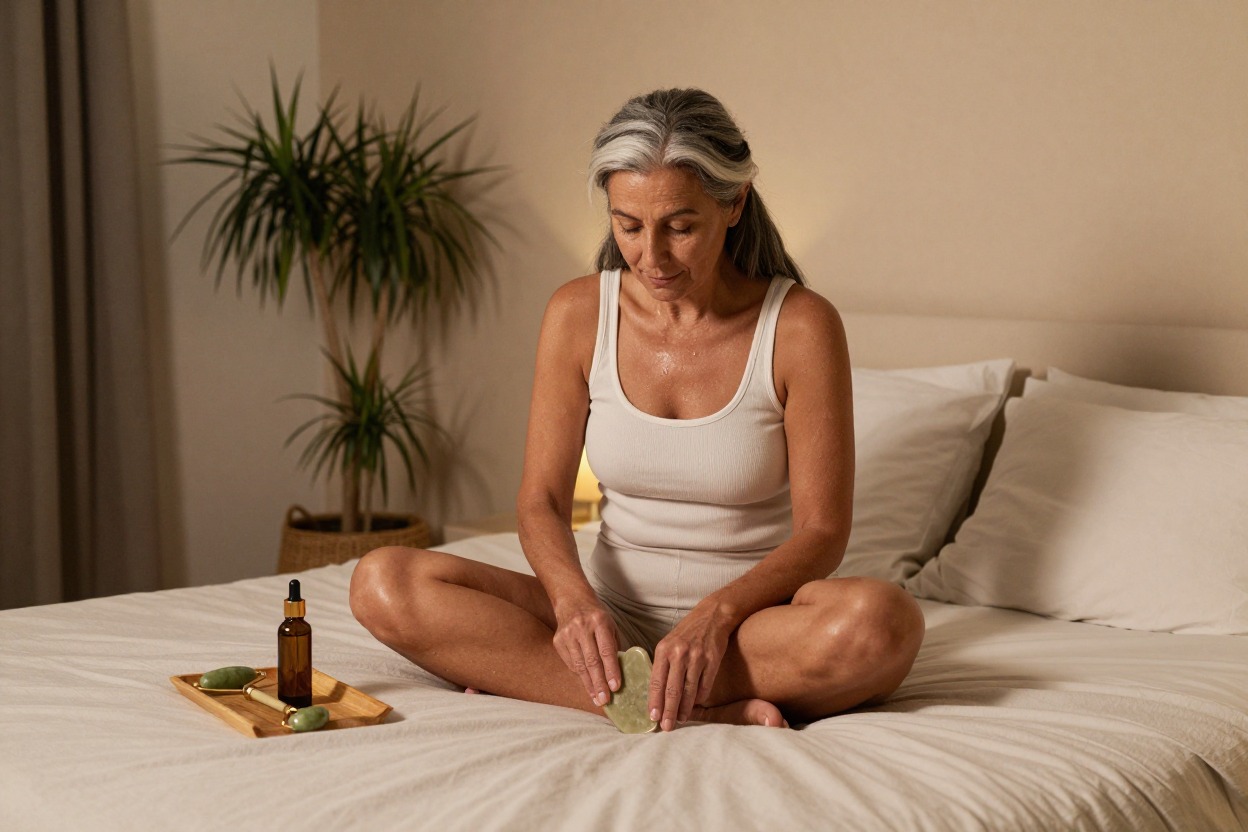
Gua sha and jade rolling work best as the last step of an evening routine, after cleansing. Use a facial oil — not a water-based serum, which doesn't provide enough slip — as the glide medium. Squalane is a popular, budget-friendly choice that suits most skin types, including acne-prone skin. Some people also do a quick morning pass with a chilled roller, kept in the fridge, to reduce overnight puffiness before makeup. Either way, five to ten minutes is plenty. Longer sessions don't multiply the benefit; they just raise the risk of over-massaging delicate areas like under the eyes.
How Much Pressure Is Right
Light-to-moderate pressure is the correct technique for almost every step. Any redness from a session should fade within a few minutes. If you see marks or bruising that linger for hours, you're pressing too hard, or using too little oil.
Caring for Your Tool
A gua sha stone or roller is a reusable, skin-contact tool, so treat it like one. Wash it with mild soap and warm water after every session. Dry it fully before storing it, and keep it out of direct sunlight for long stretches, which can dull some stones over time. If you ever share a tool with a partner or family member, clean it between users the same way you would a makeup brush. Facial oil and residue on a shared stone is a straightforward way to spread bacteria or irritation from one person's skin to another's.
Mistakes That Undo the Benefit, Including Under-Eye Care
The single biggest mistake is pressure: harder is not better. Pressing hard enough to leave marks that last more than a few minutes means you're bruising capillaries, not "releasing tension." The second mistake is skipping oil — a dry stone drags and creases skin instead of gliding over it. The third is expecting a permanent result, then feeling disappointed when it fades; that fade is normal and expected, not a sign you're doing it wrong. Under-eye skin deserves the lightest touch of anywhere on the face, since it's thinnest and shows irritation fastest. Finally, clean your tool after every use with mild soap and water. Leftover facial oil sitting in the grooves of a stone, or the barrel of a roller like Then I Met You's or Skin Gym's, is a genuine breeding ground for bacteria that then gets massaged straight back onto your face.
Used with realistic expectations, a gua sha stone or jade roller is a legitimately nice five minutes of self-care with a small, real, temporary payoff. Used with the expectation that it will replace injectables, a facialist, or a dermatologist's advice for an actual skin concern, it will only disappoint. If puffiness is persistent, one-sided, or comes with pain, see a doctor — it may not be a skincare issue at all.