Tools & Devices: what to know
Skincare tools and devices span the full range from genuinely useful to mostly gimmick, so the most valuable thing you can bring to this category is realistic expectations. Used correctly and consistently, the good ones support your routine, but none of them replace the fundamentals of cleansing, actives and sun protection, and the price of a device rarely reflects the strength of the evidence behind it.
Cleansing brushes, gua sha and rollers
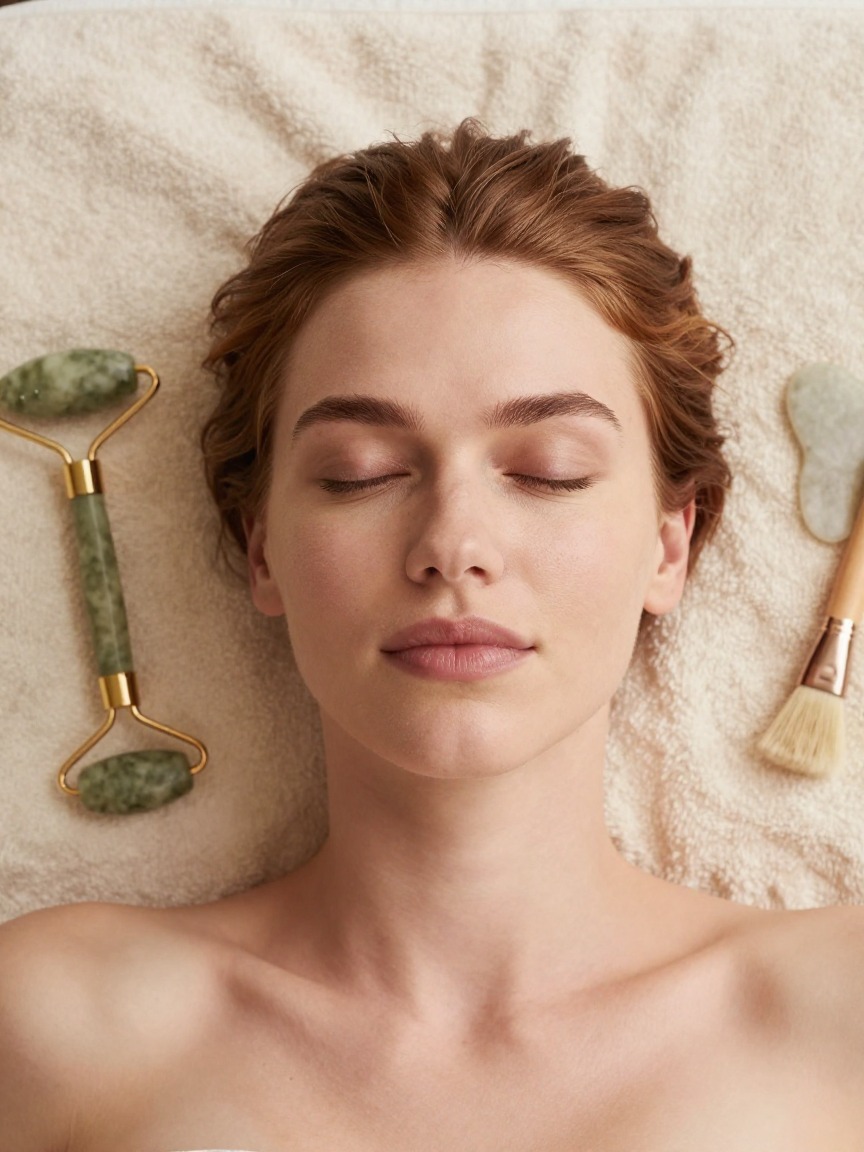
Facial cleansing brushes can give a slightly deeper, more even cleanse than fingertips, but they are easy to overuse on sensitive skin and need scrupulous cleaning. Gua sha stones and facial rollers will not melt away wrinkles or replace a facialist; what they offer is a few minutes of massage that can ease puffiness and tension and make a skincare ritual more enjoyable. Ice rollers work on the same principle, offering a brief, cooling de-puff in the morning. Treat all of these as pleasant, low-risk extras rather than results-drivers, and enjoy them for the ritual as much as any measurable change. Used gently for a few minutes at a time, they are hard to get wrong, which is part of why they have stayed popular for so long.
LED, microcurrent and microneedling
The higher-tech devices have more going on. LED masks use specific light wavelengths and have reasonable evidence for supporting skin over consistent use. Microcurrent devices deliver a low-level current for a temporary lift and firmer look that fades without upkeep. At-home derma rollers create controlled micro-injuries to prompt repair, but they carry real technique and hygiene risks, and deeper needling and lasers are genuinely better left to trained professionals. This is the group where expectations most often outrun reality, so it pays to understand what each one can and cannot do before spending.
What the evidence actually supports
It helps to sort tools by how much science backs them. LED light therapy has the most credible research behind it for gradually supporting skin over months of consistent use, which is why the technology also appears in dermatology clinics. Microcurrent produces a real but temporary lift that fades, so it rewards routine rather than one-off use. At-home derma rollers can help with texture, but the short needle lengths sold for home use are far milder than professional microneedling. Cleansing brushes and massage tools are low-risk comfort and ritual more than transformation, and judging each against its evidence keeps your spending sensible.
Choosing and using them safely
Match the device to a goal you actually care about, and be honest about whether you will keep using it, because most results depend entirely on consistency over weeks and months. Keep every tool scrupulously clean, use gentle pressure, and follow the instructions on timing and frequency rather than assuming more is better. Derma rollers in particular demand strict hygiene and a light touch to avoid doing harm. When a device promises dramatic, permanent change from a few minutes a week, treat that claim with healthy scepticism, because nothing this convenient rewrites skin overnight.
When to spend and when to skip
Because prices here run from a few dollars to several hundred, it is worth deciding where a device fits before buying. A gua sha stone, roller or ice roller costs little and carries almost no risk, so it is easy to try. LED masks are the pricier purchase most likely to reward the outlay if you will genuinely use them for months. Microcurrent devices need ongoing use and often a conductivity gel to keep working, which adds to the running cost. Derma rollers are cheap but demand strict hygiene. If a tool would sit in a drawer after a week, the money is better spent on sunscreen and a good active.
Tools support a routine, never replace it
The throughline across this whole category is that devices are supplements. No gadget substitutes for daily sunscreen, a suitable moisturiser and a well-chosen active or two, and anything promising clinic-level results at home is either overstating its case or describing a treatment that is safer in professional hands. Set expectations at that level and tools become what they are best at, a pleasant and occasionally useful boost on top of fundamentals that are already doing the heavy lifting.
When to leave it to a professional
Some treatments are genuinely better, and safer, in trained hands. Deeper microneedling, medical-grade peels, laser and energy-based procedures all carry real risk of scarring, burns or pigment changes when done incorrectly, and the at-home versions are deliberately milder for that reason. If you are chasing a significant change in scarring, deep lines or stubborn pigmentation, a consultation with a dermatologist or licensed professional will get you further than any home device. Use home tools for maintenance and small gains, and recognise the point where a gadget is trying to do a clinic's job.