In short: Retinol is a vitamin A derivative that speeds cell turnover and supports collagen production, making it the most evidence-backed over-the-counter ingredient for fine lines, texture, and tone. Beginners should start with a low percentage, buffer with moisturizer, apply just two to three nights a week, and use daily sunscreen - easing in matters more than strength.
Affiliate disclosure: We may earn a commission from qualifying purchases made through links on this page, at no extra cost to you. Some links on this page are affiliate links.
Serums & Treatments · Guide
Retinol Serums for Beginners
Recommended retinol serums for beginners
Our current top picks in this category, judged on formulation, evidence, texture and value.
Editor's Pick#1
First-time retinol users who want ceramides and niacinamide working alongside the active from day one
Resurfacing Retinol Serum
CeraVe
It pairs encapsulated retinol - a slower-release, gentler format - with niacinamide and ceramides. That gives the skin barrier support while it adjusts to a new active.
Encapsulated retinol releases gradually, which tends to feel gentler than free retinol at a similar strength
Includes niacinamide and a ceramide blend to support the skin barrier while it adjusts
Fragrance-free and widely available at drugstore prices
The exact retinol percentage isn't disclosed on the label, so it's harder to compare potency directly against serums that do state one
Sensitive or reactive skin that wants a minimal, dermatologist-tested formula for a first retinol
Retinol B3 Serum
La Roche-Posay
It keeps the ingredient list simple: pure retinol, vitamin B3 (niacinamide), and adenosine. That limits how many new variables sensitive skin has to adjust to at once.
Simple formula built around retinol, niacinamide, and adenosine rather than a long list of actives
Marketed and tested specifically with sensitive skin in mind
Lightweight texture that layers easily under a night moisturizer
The brand doesn't publish the exact retinol percentage, so beginners have to go by feel rather than a known starting strength
Beginners who want a clearly stated, moderate starting percentage at an accessible price
Retinol Complex 0.3%
Naturium
At a clearly labeled 0.3%, it sits squarely in the beginner-appropriate range. Squalane and bakuchiol in the formula help cushion some of retinol's dryness.
Clearly labeled 0.3% concentration makes it easy to know exactly what strength you're starting at
Squalane and bakuchiol in the formula help offset some of the initial dryness
Priced well below many prestige retinol serums
0.3% is at the higher end of what's usually recommended for an absolute first-time user, so easing in slowly still matters
What retinol actually does: cell turnover, fine lines & texture
Retinol is a form of vitamin A. Skin enzymes convert it into retinoic acid, which speeds up cell turnover. That process signals skin to act younger and healthier. Over months of consistent use, you'll see smoother texture, a more even tone, and softer fine lines. Retinol has real research behind it, not just marketing language. That's why dermatologists reach for it more than almost any other over-the-counter active.
Retinol won't erase deep wrinkles overnight or shrink pores permanently. It also won't treat a diagnosed skin condition like cystic acne or rosacea on its own. Those are jobs for a dermatologist, often with prescription-strength options. A retinol serum is a long-game cosmetic ingredient, not a quick fix or a medical treatment.
Retinol, retinaldehyde (retinal) & tretinoin: how the family works
Every over-the-counter retinoid has to become retinoic acid to do anything. That's the form skin cells actually respond to. Retinol needs two conversion steps - first to retinaldehyde, then to retinoic acid. That's what makes it the gentlest and slowest-acting of the common options.
Retinaldehyde, often shortened to "retinal," needs only one step. It acts faster and can be more irritating at a given percentage than retinol. A 0.2% retinal isn't automatically gentler than a 0.3% retinol just because the number looks smaller. Prescription tretinoin is retinoic acid itself. It skips conversion entirely, which is part of why it's considerably stronger and reserved for prescription use.
Choosing a beginner formula by skin type: ceramides, hyaluronic acid & what helps
Normal or combination skin
Most people here tolerate a straightforward 0.25%-0.3% encapsulated retinol without much drama. That's especially true when it's introduced gradually. This range builds tolerance without overwhelming the skin barrier.
Sensitive skin or reactive skin: encapsulated retinol & niacinamide
Look for the lowest percentage available, ideally encapsulated. A fragrance-free formula with ceramides or niacinamide helps too. Buffering - applying moisturizer before the retinol, or mixing the two together - matters even more here than the exact percentage.
Dry skin: hyaluronic acid, ceramides & buffering
Retinol tends to be drying on its own. A formula built around a hydrating base - hyaluronic acid, ceramides, glycerin - feels far more comfortable than a bare-bones retinol layered under a separate moisturizer.
Oily or acne-prone skin: adapalene vs. retinol
Retinol can help with texture and post-acne marks over time. It isn't an acne treatment the way benzoyl peroxide is. Adapalene, sold over the counter as Differin, treats acne more directly than a cosmetic retinol serum. A lightweight, oil-free retinol formula layers more comfortably under sunscreen and makeup than a heavier, cream-based one.
Beginner-friendly examples include CeraVe's Resurfacing Retinol Serum, La Roche-Posay's Retinol B3 Serum, and Naturium's Retinol Complex 0.3%. RoC and The Ordinary make well-known options too. Paula's Choice sells a 1% Booster designed to be diluted into moisturizer.
Where retinol fits in a routine: sunscreen & sun sensitivity
Retinol is a PM-only step. Cleanse, let skin dry completely, then apply a pea-sized amount - or smaller, for a first application - followed by moisturizer. Applying it to damp skin increases penetration and irritation. Waiting for skin to dry matters more than most people expect. Retinol increases sun sensitivity, so daily sunscreen the following morning isn't optional. It's part of using retinol safely, not an afterthought.
The "start low, go slow" schedule for beginners: patch test & tolerance
Patch test first: apply a small amount to your inner forearm for a few nights before using it on your face. Most dermatologist-style guidance for first-time users looks like this: two nights a week for the first two to three weeks. Watch for redness, flaking, or stinging that doesn't settle within a few minutes. If skin tolerates that, move to every other night for another few weeks. Only build toward nightly use once skin stays calm. Rushing this timeline is the single most common reason beginners quit retinol after one bad week.
Mistakes that stall a routine: dryness, buffering & sunscreen
Starting nightly instead of building up gradually
Applying too much product, assuming more means faster results
Skipping sunscreen the next morning
Introducing retinol in the same week as a new acid exfoliant or benzoyl peroxide
Quitting at the first sign of dryness, instead of buffering or scaling back frequency
Who should avoid retinol: pregnancy & when to see a dermatologist
Skip topical retinoids if you're pregnant, trying to conceive, or breastfeeding. This is standard medical guidance. Raise it with your doctor or OB-GYN rather than assuming a low over-the-counter percentage is fine. The same caution applies to active eczema, a rosacea flare, or another diagnosed skin condition. A dermatologist can advise on timing and formulation. We're reviewers evaluating formulation and tolerability, not clinicians. Nothing here should be read as medical advice for a specific skin condition.
Popular picks from related categories, chosen with the same rubric.
Editor's Pick#1
Dry-to-normal sensitive skin, especially anyone also using retinoids or other actives
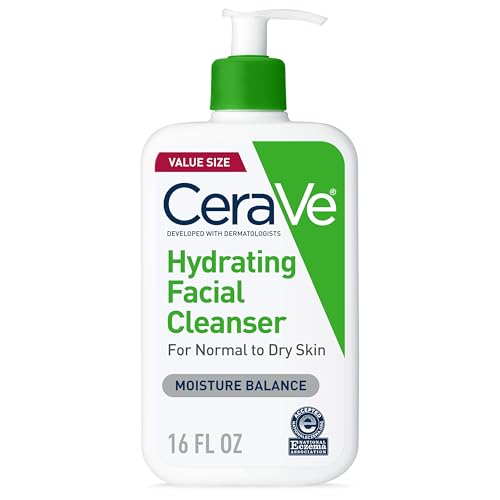
Hydrating Facial Cleanser
CeraVe
It's formulated with three ceramides, hyaluronic acid, and a National Eczema Association seal. Dermatologists mention it most often for reactive skin. It's a genuinely non-foaming, low-irritation formula that doesn't strip the barrier.
Ceramide and hyaluronic acid formula supports the skin barrier while cleansing
Fragrance-free, non-foaming, and won't disrupt a compromised moisture barrier
Budget-friendly per ounce and widely available at drugstores
Doesn't fully dissolve heavy sunscreen or long-wear makeup on its own, so double-cleansing days may need a micellar water or oil-based first step
Normal to dry skin that wants a dermatologist-developed, fragrance-free daily moisturizer
CeraVe Moisturizing Cream
CeraVe
It pairs three essential ceramides with hyaluronic acid in a rich, fragrance-free base. Long-term users with dry, compromised skin consistently praise it. It's also inexpensive enough to use liberally.
Ceramide + hyaluronic acid formula supports the skin barrier
Fragrance-free and well-tolerated by sensitive skin
Large jar size makes it very cost-effective per ounce
The tub packaging means dipping fingers into the product, which isn't ideal for hygiene or portability
acne-prone, sensitive, or post-procedure skin that needs a dermatologist-trusted daily option
UV Clear Broad-Spectrum SPF 46
EltaMD
Dermatologists reach for EltaMD more than almost any other sunscreen. It pairs broad-spectrum zinc oxide protection with niacinamide and hyaluronic acid. The oil-free base is genuinely weightless and layers well under makeup.
Broad-spectrum SPF 46 with zinc oxide
Oil-free, non-comedogenic formula favored for acne-prone skin
Contains niacinamide and hyaluronic acid for added hydration
Pricier per ounce than most drugstore sunscreens, and the pump makes it easy to under-apply if you're not deliberate about the amount.
oily, pore-prone skin that wants a formula built specifically around pore congestion
Super Volcanic Pore Clay Mask 2X
innisfree
Two types of volcanic clay target sebum and blackheads. The texture isn't chalky or hard to remove like older clay formulas. It's also genuinely affordable for how often you'll reach for it.
Lightweight, non-cakey texture that spreads and rinses easily
Visibly reduces the look of congested pores after a single use
Priced low enough to use regularly without guilt
The mineral scent is noticeable and won't appeal to everyone
Anyone dealing with clogged pores, blackheads, or rough, bumpy texture who wants an evidence-backed exfoliating toner
2% BHA Liquid Exfoliant
Paula's Choice
It's built around a well-studied 2% salicylic acid concentration at an effective pH. The base is fragrance-free and alcohol-free. That combination is why it's stayed a favorite among ingredient-focused shoppers for years, rather than fading as a trend.
2% salicylic acid at a pH that actually works
Fragrance-free and alcohol-free formula
Noticeably improves texture and blackheads with consistent use
The active concentration can cause redness or flaking in the first couple of weeks, so it's not the easiest starting point for very reactive or rosacea-prone skin
people who want the most clinically studied LED mask on the market and don't mind the price
Contour Face
Omnilux
Omnilux's LED technology is the same platform used in dermatology clinics. The Contour Face is its rigid, dermatologist-favorite home version, and it has more research behind it than most at-home competitors.
Extensive clinical research behind Omnilux's LED platform, more than most home devices
FDA-cleared for temporary reduction in the appearance of fine lines and wrinkles
Even, consistent light distance thanks to the rigid, hinged design
Rigid shell doesn't flex to different face shapes, there's no blue-light setting for acne, and it's one of the most expensive masks on the market
Affiliate disclosure: We may earn a commission from qualifying purchases made through links on this page, at no extra cost to you. Some links on this page are affiliate links.