




What the Skin Barrier Actually Does: Stratum Corneum, Lipids & TEWL
The outermost layer of skin, the stratum corneum, works like a brick wall. Skin cells are the 'bricks.' A mix of lipids — ceramides, cholesterol, and fatty acids — forms the 'mortar' that holds them together. This structure does two jobs at once. It keeps water inside skin from evaporating too quickly, a process called transepidermal water loss, or TEWL. It also keeps outside irritants, pollutants, and microbes from getting in too easily. When that skin barrier is intact, skin generally looks and feels calm, evenly toned, and comfortable. That holds regardless of whether it's oily or dry. When it's compromised, skin tends to feel tight and look dull or flaky in places. It also reacts more easily to products that never used to bother it.
Why Cleansing Disrupts the Skin Barrier: Surfactants & Sulfates
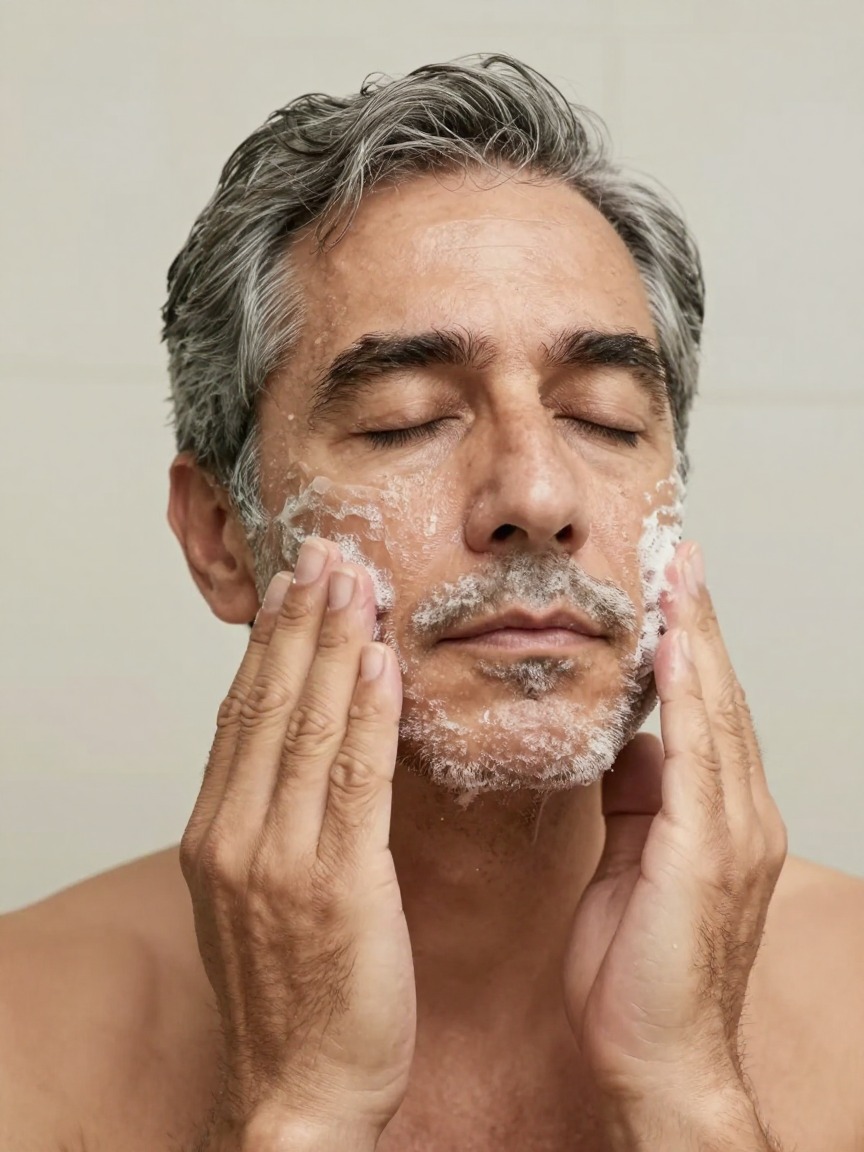
Of every step in a skincare routine, cleansing has the most direct contact with the barrier's lipid layer. Surfactants are designed to break down and lift away oil. They don't always tell surface oil apart from the lipids meant to stay in the barrier. This is where surfactant choice matters more than texture. Harsher surfactants, like sodium lauryl sulfate high on the ingredient list, can strip more lipids than necessary. That's why some gel formulas leave skin feeling tight or 'squeaky' minutes after rinsing. Milder surfactants — cocamidopropyl betaine, decyl glucoside, sodium cocoyl isethionate, and similar — clean just as thoroughly. They cause less lipid loss along the way. This distinction matters most for sensitive skin and combination skin. The cheeks can least afford the extra stripping.
Signs a Gel Cleanser Is Stripping Sensitive Skin or Combination Skin
- A tight, 'stretched' feeling in the minutes after rinsing, especially before moisturizer goes on.
- Skin that looks shinier again within an hour or two of cleansing. This can be a rebound response to over-stripping, not genuinely oily skin.
- New sensitivity to products that never used to cause a reaction. That's a sign the barrier isn't doing its usual job of keeping irritants out.
- Visible flaking or rough patches that show up specifically after cleansing, not throughout the day.
Ceramides, Cholesterol & Fatty Acids: Lipids That Support the Barrier
A handful of ingredient categories, when present in a gel cleanser, tend to correlate with a formula that's gentler on the skin barrier:
- Ceramides — the same lipids naturally found in the barrier. Brands like CeraVe add them back in. That happens during the brief window a cleanser touches skin.
- Cholesterol and fatty acids are less commonly listed individually. They're sometimes included alongside ceramides in a more complete lipid-replenishing blend.
Glycerin, Hyaluronic Acid & pH: Humectants That Round It Out
- Humectants like glycerin and hyaluronic acid don't replace barrier lipids. They help skin hold onto water during and after the cleanse. That softens the stripped feeling some gels can leave behind.
- A near-neutral to slightly acidic pH — skin's natural surface is mildly acidic. Cleansers formulated closer to that range tend to be gentler over daily use. Highly alkaline formulas are more likely to disrupt the barrier.
Why This Matters More for Combination Skin's T-Zone
Combination skin already has two different barrier conditions living on one face. The T-zone usually has a more resilient, oil-buffered barrier. The cheeks have a thinner one that's more easily disrupted. A cleanser that's too harsh doesn't just dry out the cheeks. Over time, it can also push the T-zone into overproducing oil to compensate for barrier stress. That's part of why some combination-skin routines feel like they're chasing oil in a loop. Choosing a gel cleanser with a barrier-friendly surfactant base tends to break that cycle. It works better than switching to a stronger 'oil-control' product.
When to See a Dermatologist About Barrier Damage
Persistent barrier damage is worth having a dermatologist look at. Watch for ongoing redness or stinging with most products. Also watch for a rash that doesn't calm down within a couple of weeks of a gentler routine. A damaged skin barrier can look similar to several skin conditions that benefit from a proper diagnosis. An in-person or telehealth exam with a dermatologist can rule those out. That's faster than trial and error.