
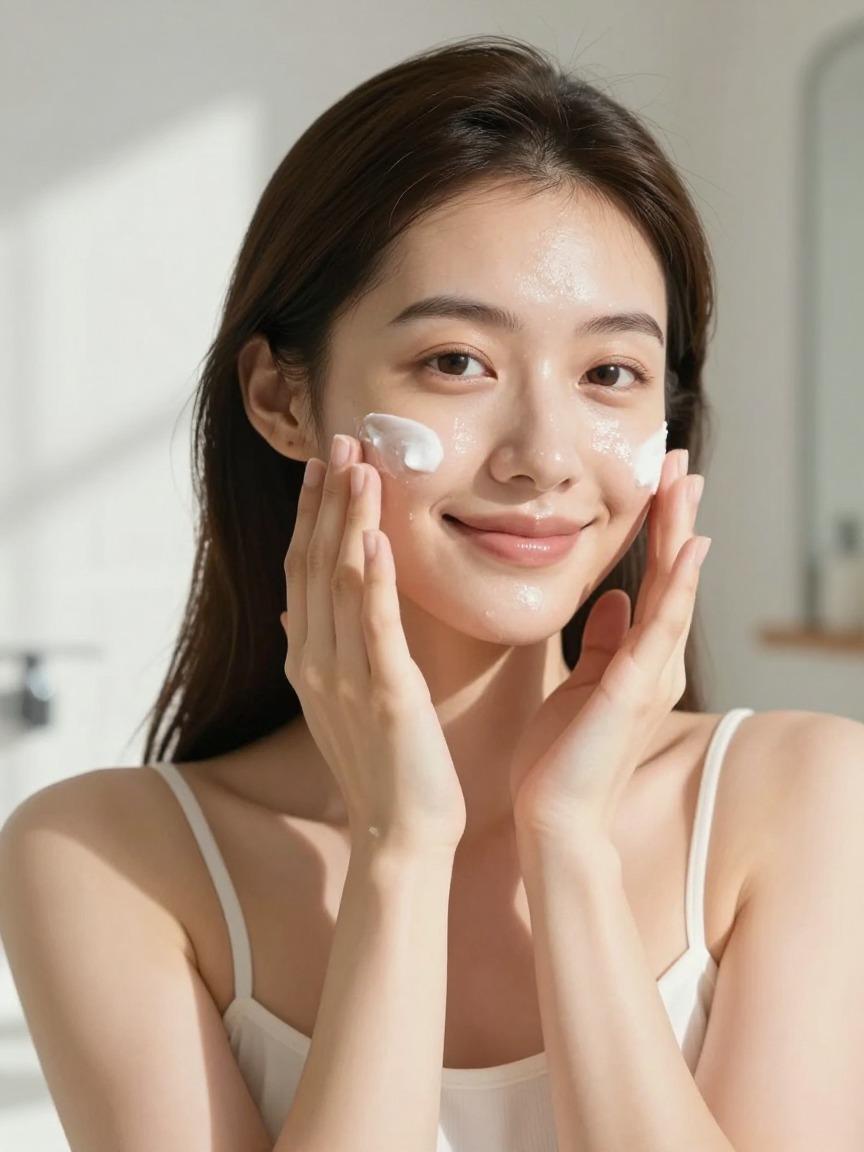
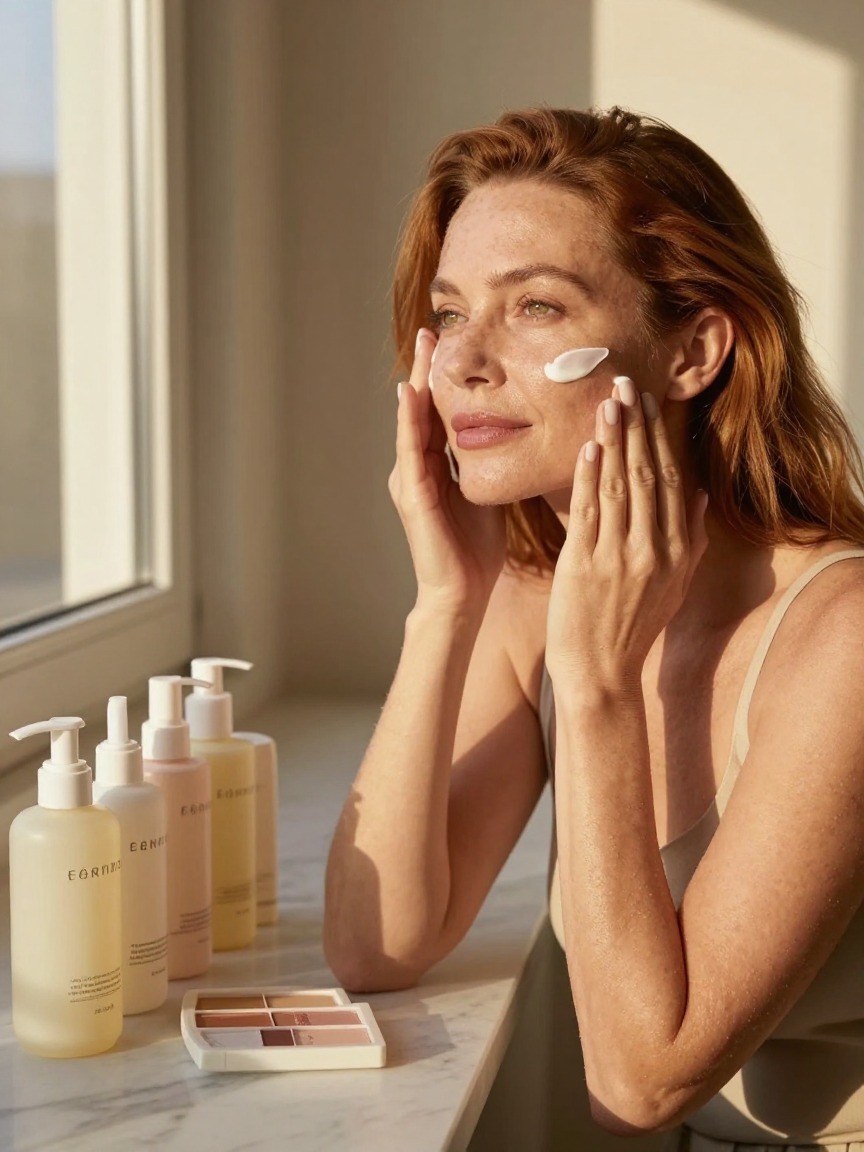

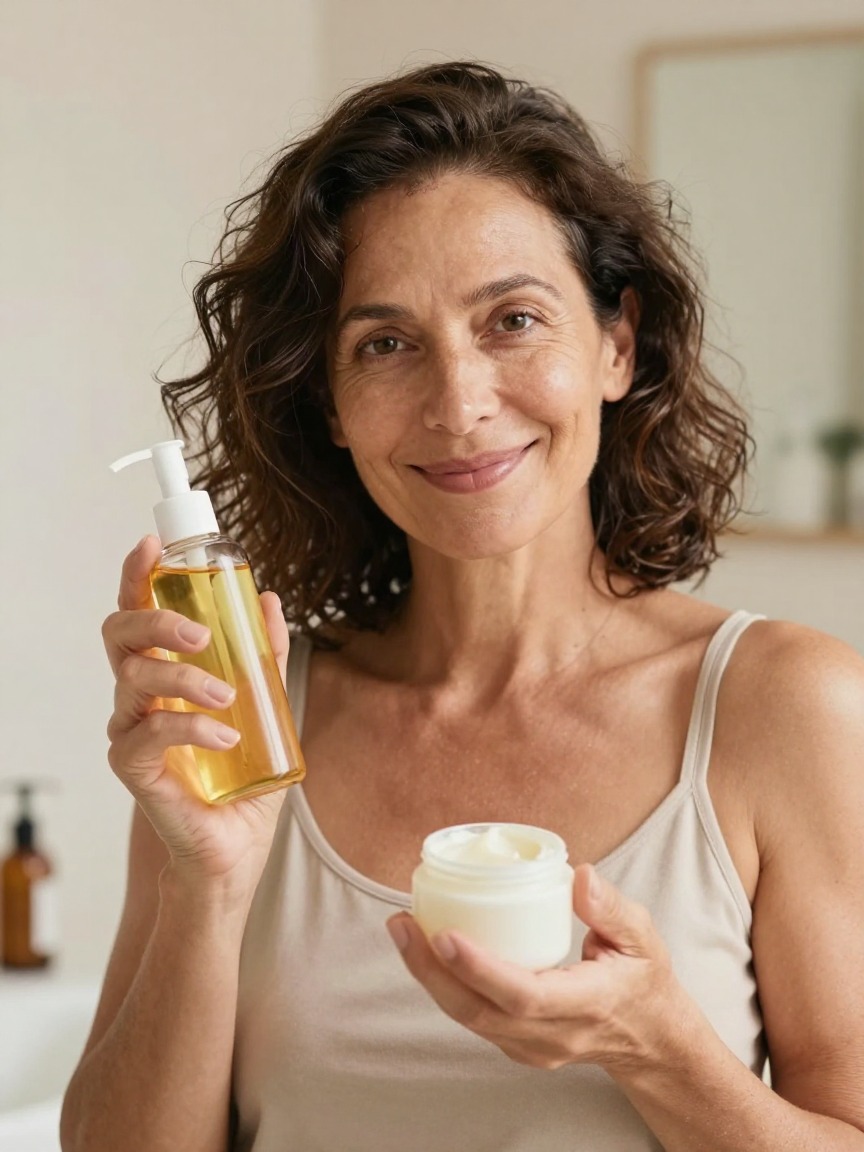
Same principle, different format: oil cleanser vs. cleansing balm
Oil cleansers and cleansing balms work on identical chemistry. Both use oil to dissolve oil-based makeup, sunscreen, and sebum. Both are typically designed to emulsify with water before rinsing clean. The difference is entirely in texture and delivery. An oil cleanser is liquid and usually lives in a bottle, sometimes with a pump, like Neutrogena's or The Ordinary's. A cleansing balm is solid or semi-solid at room temperature and lives in a jar, like Banila Co's, melting into an oily texture as it warms against skin. Choosing between them comes down to preference, packaging, and what kind of makeup or sunscreen you're typically removing, more than any meaningful difference in how well they clean.
Texture and application: pump bottle vs. jar and spatula
An oil cleanser pours or pumps out ready to use. A few drops spread across dry skin, and you massage in immediately. A balm needs a beat to warm up. Scoop out a small amount with a spatula, and it transforms from a solid to a silky oil within seconds of contact with warm hands or skin. That transformation is part of the appeal for a lot of balm users. It feels more like a ritual, and the thicker starting texture gives more cushion for massaging away stubborn or long-wear makeup. Oils tend to feel faster and lighter, which some people prefer for a quick evening cleanse when they're not wearing much makeup.
Waterproof makeup removal power
Balms generally have a slight edge with heavy, long-wear, or waterproof makeup. The richer starting texture holds up longer during massaging and gives stubborn formulas more time to break down — a strength Clinique's balm is built around. Oils can absolutely remove the same makeup, but may need a touch more product or a longer massage time to match a balm's performance on waterproof mascara or full-coverage foundation. For everyday makeup, tinted sunscreen, or minimal coverage, the two formats perform close to identically.
Packaging, hygiene & comedogenic considerations for acne-prone skin
Balms live in jars, which means repeated finger contact unless a spatula is used. That's a minor hygiene consideration, especially for anyone prone to breakouts or using the product around the eye area. Oils in pump bottles avoid that issue entirely, dispensing a set amount without direct finger-to-product contact. This packaging difference matters most if you're acne-prone: less finger contact means less risk of transferring bacteria or comedogenic residue back onto the skin, regardless of which oils the formula itself contains.
Cost and value: emulsify efficiency vs. price per use
Neither format is inherently more expensive. Both range from budget drugstore options to high-end splurges, like Elemis's. Balms can feel like they go further per use, since a small scoop expands significantly once it melts and starts to emulsify. Oils are dispensed more precisely with a pump, which can also stretch a bottle's lifespan. If you're comparing two specific products, checking the ounce count and expected number of uses is a more useful way to judge value than assuming one format is automatically cheaper.
Travel practicality for dry skin and sensitive skin
Oils in secure pump or flip-top bottles are generally easier to travel with. There's less risk of a mess if the container shifts in a bag. Balms in jars are more prone to leaking, or getting product under fingernails when scooping on the go. Many balm brands offer smaller travel-sized jars for this reason. For dry skin or sensitive skin, packing a familiar formula matters more than format — either travels fine as long as it's the one your skin already tolerates.
Which one should you actually pick
If you wear heavy, long-wear, or waterproof makeup regularly, or simply enjoy a richer, more spa-like ritual, a balm is worth the slightly fussier packaging. If you want something fast, low-maintenance, and easy to travel with, or wear lighter makeup and sunscreen most days, an oil cleanser in a pump bottle is the more practical choice. Many people end up keeping one of each: a balm for evenings after a full face of makeup, and a lighter oil for quicker cleanses or travel.