


Does sunscreen cause acne or clog pores on acne-prone skin?
Sunscreen itself does not cause acne. The real issue is the specific formula on specific skin. Some rich or heavy sunscreens contain ingredients that can clog pores. On acne-prone skin, that congestion can trigger breakouts over a few days. So the question of whether sunscreen cause acne is really about which product you pick. The wrong texture may cause acne flares, while a lighter one sits perfectly fine. This is genuinely good news for anyone worried about breakouts. It means you can solve it with smarter choices rather than skipping SPF.
A few things beyond the formula also play a role. Applying a thick layer and never cleansing it off can trap oil and debris. Sweat under sunscreen on a hot day adds to the mix. Rubbing or reapplying over dirty skin does not help either. Heavy makeup layered on top can make things worse still. None of this means you should skip sun protection. It means you should match both the product and your habits to acne-prone skin. Small adjustments often clear up the problem entirely.
It also helps to give any new sunscreen a fair trial. One or two spots after starting a product may just be coincidence. Real formula-driven breakouts tend to show a clear, repeatable pattern. Track how your skin reacts over a full two weeks before you decide. Change one thing at a time so you know what actually helped.
Choosing a non-comedogenic, oil-free sunscreen for daily use
The label does most of the work for you here. Look for a non-comedogenic sunscreen, which is formulated not to clog pores. Pair that with an oil-free sunscreen texture to limit extra shine. Light fluids, gels, and clear formulas usually suit acne-prone skin best. These sit thin on the surface and are less likely to cause acne than dense creams. Fragrance-free options can also lower the risk of irritation that can mimic breakouts.
Dependable, easy-to-find picks include:
- EltaMD UV Clear Broad-Spectrum SPF 46, a long-standing favorite for breakout-prone skin.
- La Roche-Posay Anthelios Clear Skin Oil-Free Sunscreen SPF 60 for a matte finish.
- Neutrogena Clear Face Liquid Lotion Sunscreen SPF 55, light and affordable.
- Supergoop! Unseen Sunscreen SPF 40, a clear gel that layers under makeup.
Good habits finish the job every day. Cleanse thoroughly each night so sunscreen and oil do not clog pores overnight. If a watery texture appeals, Biore UV Aqua Rich Watery Essence is a popular oil-free sunscreen option. Give a new product a couple of weeks before judging it fairly. If a formula seems to cause acne, switch to another non-comedogenic sunscreen rather than dropping SPF. Skipping sun protection to avoid breakouts trades a small problem for a much bigger one. Protecting your skin daily still matters, even when you are prone to breakouts. For stubborn or painful breakouts, a dermatologist can help. But blaming sun protection alone is rarely the full story. When you find a formula that agrees with your skin, stick with it. Chopping and changing makes it hard to know what caused a breakout. Always remove sunscreen fully at night with a proper cleanser. Leftover product mixed with oil is a common way to clog pores overnight. A gentle double cleanse works well on days you wore a lot of SPF. Keep the rest of your routine simple while you test something new. That way, a non-comedogenic, oil-free sunscreen gets a fair chance on acne-prone skin.
Affiliate disclosure: We may earn a commission from qualifying purchases made through links on this page, at no extra cost to you. Some links on this page are affiliate links.
Recommended sunscreens for oily & acne-prone skin
Editor-picked products from our guides.

UV Clear Broad-Spectrum SPF 46
EltaMD
EltaMD UV Clear pairs zinc oxide with niacinamide and hyaluronic acid in a genuinely oil-free, non-comedogenic base built with acne-prone and post-procedure skin in mind, and it layers cleanly under makeup without pilling.
- Oil-free, non-comedogenic formula favored by dermatologists for acne-prone skin
- Contains niacinamide to help calm redness alongside sun protection
- Lightweight finish that sits well under makeup
- The original formula includes octinoxate alongside zinc oxide, so it's a hybrid rather than a fully mineral sunscreen, and the small bottle is pricey per ounce.
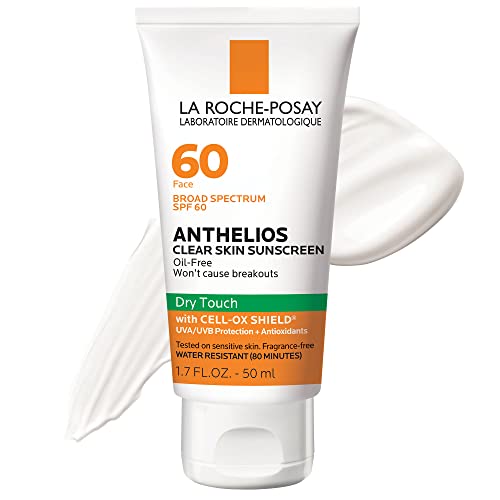
Anthelios Clear Skin Oil-Free Sunscreen SPF 60
La Roche-Posay
This is La Roche-Posay's formula built specifically for acne-prone skin. It's oil-free, fragrance-free, and dermatologist-tested for breakout-proneness. The matte finish holds up through the day.
- Formulated and tested specifically for acne-prone, oily skin
- High SPF 60 broad-spectrum protection
- Fragrance-free, non-comedogenic, mattifying finish
- Relies on chemical filters (avobenzone, homosalate, octisalate, octocrylene), which can feel slightly tacky in the first minute or two after applying before it sets.
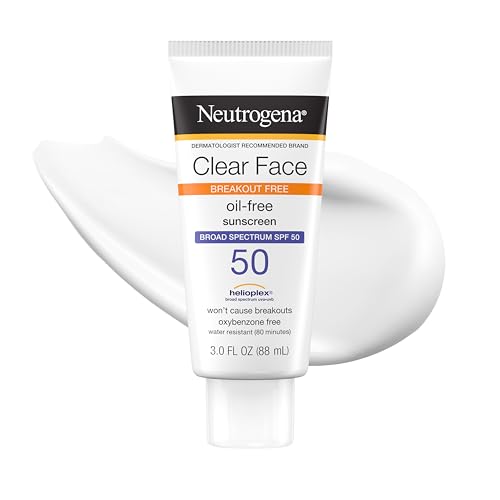
Clear Face Liquid Lotion Sunscreen SPF 55
Neutrogena
Neutrogena's Clear Face lotion delivers broad-spectrum SPF 55 in an oil-free, non-comedogenic formula. Its "breathable mesh" texture feels light, not greasy. It costs a fraction of the prestige options on this list.
- Widely available and inexpensive for the SPF level
- Oil-free, non-comedogenic, marketed specifically for acne-prone skin
- Lightweight lotion texture, not greasy
- Uses a full chemical-filter blend that can sting if it migrates into the eyes, and some users notice mild pilling if layered under a heavy moisturizer.