
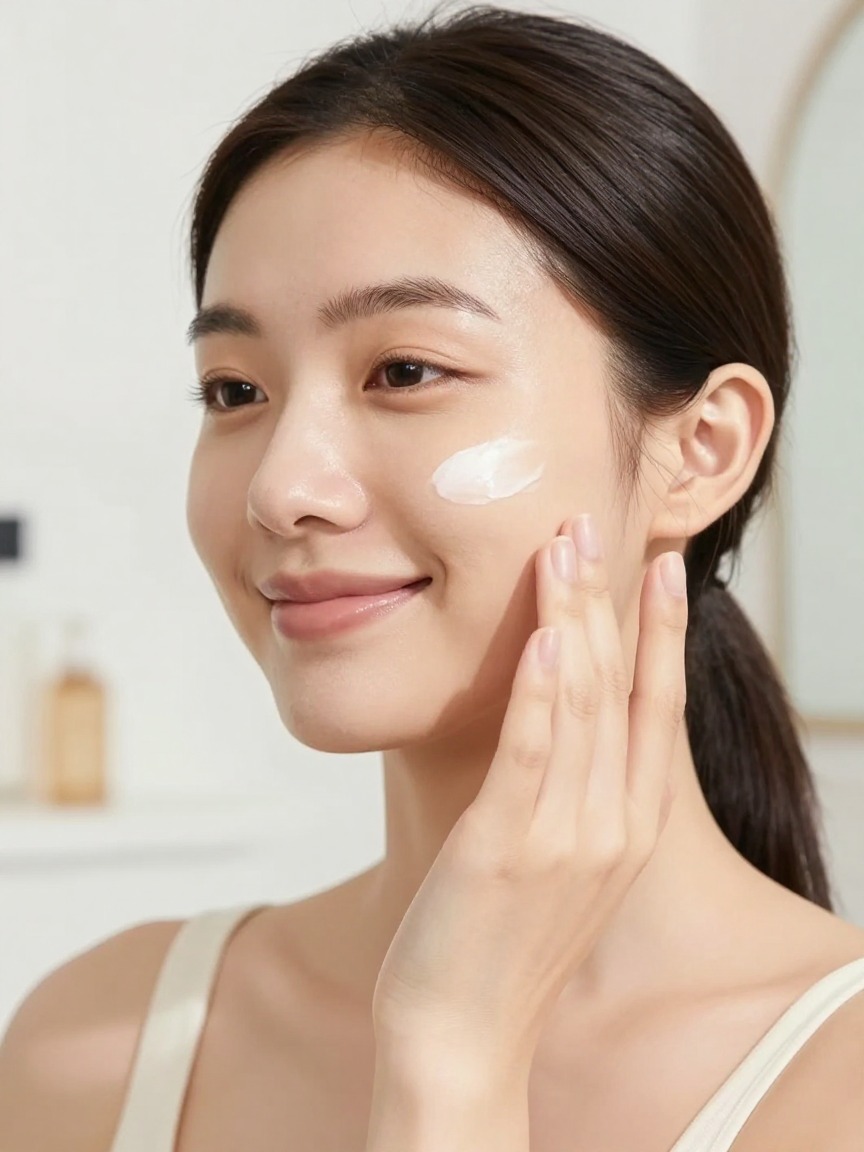
How a matte-finish sunscreen actually works for oily skin
A matte finish doesn't come from the SPF filters themselves. Zinc oxide, titanium dioxide, avobenzone, and the rest of the approved UV filters don't inherently control shine. Matte finish comes from the rest of the formula — mattifying agents like silica, certain starches, or clay-adjacent powders that physically absorb surface oil, combined with lightweight carriers like water, alcohol, or silicone instead of heavier oils and emollients. This distinction matters. It explains why two sunscreens with the same SPF number, even similar filter types, can feel completely different on oily skin.
Fluid sunscreen, gel sunscreen & silica-based mattifying lotion: picking the right texture
Matte-finish sunscreens generally fall into a few texture categories, each suited to slightly different skin behavior:
- Gel sunscreen and water-essence formulas — typically water- or alcohol-based, these feel closest to nothing on application. Biore's Watery Essence is a well-known example, popular in humid climates or for very oily T-zones.
- Ultra-light fluid sunscreen — thin, milk-like textures that spread in a few strokes and dry down to a true matte finish. La Roche-Posay's Anthelios Ultra-Light Fluid is a common pick, and many double as makeup primers because of how smoothly they set.
- Silica-based mattifying lotions and creams — slightly richer than fluids but built with silica or powder-based mattifiers so they don't feel heavy. Useful for combination skin that's oily in some areas and drier in others.
None of these is universally best. Very oily skin in a hot, humid climate often does best with a gel or fluid, while combination skin may prefer a mattifying lotion that doesn't over-dry the cheeks.
Why shine-control & matte-finish claims don't always hold up
Marketing language around shine control varies wildly in how well it translates to real-world wear. A formula that tests matte in a five-minute in-store swatch can still break down by midafternoon, especially with heat, humidity, or an active day. Reviews and long-term wear reports are more reliable than the label alone. Expect some shine breakthrough by midday even from a genuinely well-formulated matte-finish sunscreen — that's normal skin function, not formula failure.
Layering a matte-finish sunscreen with makeup primer, without pilling
Matte-finish sunscreens are popular as a makeup base because they create a smoother canvas than a greasy or under-absorbed layer underneath. A few habits improve the result: apply sunscreen as the last skincare step, wait one to two minutes before starting makeup so it fully sets, and use a light hand with any additional powder or makeup primer layered on top. Stacking too many mattifying products at once is a common cause of pilling. Supergoop!'s Unseen Sunscreen and EltaMD's UV Clear are both popular under-makeup picks that resist pilling when given time to set.
How to reapply SPF over makeup without ruining it
Reapplication is the most commonly skipped step in any sun protection routine, and it's especially tricky over makeup. A few practical options help: SPF-containing setting powders or mineral powder sunscreens can be pressed on top of makeup for a midday touch-up without disturbing foundation. Blotting papers can remove excess oil first, before reapplying a thin layer of a fluid or spray sunscreen. For anyone spending extended time outdoors, reapplying every two hours is still the standard dermatology guidance, makeup or not.
Zinc oxide, broad-spectrum protection & why matte doesn't mean more
It's worth separating cosmetic performance from sun protection performance. A mattifying formula isn't inherently more or less protective than a dewier one, provided both use zinc oxide or another broad-spectrum filter and are applied at the right amount. Choosing based on finish is entirely reasonable — the sunscreen you'll actually wear every day and reapply is the one that protects you. But it shouldn't come at the expense of using enough product to reach the labeled SPF.
If mattifying formulas still aren't working in a humid climate
Neutrogena's Clear Face lotion is a budget-friendly mattifying option worth trying first if shine keeps breaking through. If shine, breakouts, or irritation persist despite trying multiple matte-finish, non-comedogenic sunscreens, that pattern is worth bringing to a dermatologist rather than continuing to cycle through products. Persistent oil overproduction or reactive skin can have underlying causes that a suitable sunscreen alone won't resolve.