











How often can you derma roll safely
Most at-home users should derma roll once or twice a week, not daily. Short needles in the 0.25mm to 0.3mm range work best at that pace. Your skin needs time to recover fully between sessions. Rolling more often does not speed up any results you are hoping for. It simply raises the odds of redness, irritation, and sensitivity. If you are just starting out with derma rolling, once a week is a safe place to begin. You can consider twice a week later, only if your skin handles the first pace comfortably.
So how often is too often to roll? Daily rolling mainly adds redness, sensitivity, and risk. It can leave skin looking irritated instead of smooth and even. Once or twice a week gives the same upside with far less downside. When in doubt, do less rather than more. Chasing faster results with extra sessions usually backfires and sets you back. A calm, patient schedule tends to look better than an aggressive one within a few weeks.
Timing within the week matters too. Leave at least two or three days between sessions so skin can settle. If skin still looks pink from the last roll, wait longer before you derma roll again. Recovery is part of the routine, not a delay in it. Roll in the evening so your skin has overnight to calm down. Skip alcohol-based or strong active products right afterward, since freshly rolled skin is more sensitive than usual.
Needle length and caring for your derma roller
Needle length decides how gentle a tool really is. At-home rollers usually use a short 0.25mm to 0.3mm needle length. Longer needles belong in a professional setting, not your bathroom sink. Match the needle length to at-home use and keep pressure light. Pressing hard does not improve results and can hurt the skin. Let the roller glide with only light contact across each area of the face. That gentle touch is safer and still gets the job done.
Hygiene protects your skin more than any technique. Clean the derma roller before and after every single use. Let it dry fully, then store it in its case away from dust. A dirty derma roller can carry bacteria across the skin and cause breakouts. Replace the roller head when the needles feel dull or bent. A worn head tugs at skin instead of gliding, which only adds irritation and risk.
- Roll once or twice a week, never daily.
- Use a short needle length for at-home rolling.
- Disinfect the derma roller before and after use.
- Apply light, even pressure in a few directions.
- Skip sessions if skin is broken or breaking out.
Plenty of tools fit this routine at different budgets. The Sdara Skincare Derma Roller and the ORA Facial Microneedle Roller are simple manual options. The StackedSkincare Micro-Roller and the BeautyBio GloPRO are pricier picks with extra features. Whatever you own, how often you derma roll should follow your skin's recovery, not a fixed habit. If you have active acne, eczema, or a skin condition, ask a dermatologist before you start. When used carefully, at-home rolling is a low-key way to support your routine. Store your tool somewhere clean and dry between uses. Note the date of each session so you do not roll too soon. Keep your skincare simple on rolling nights, and save strong actives for other days. Hydrating, soothing products pair well afterward. If you ever feel unsure, spacing sessions further apart is the safe default.
Affiliate disclosure: We may earn a commission from qualifying purchases made through links on this page, at no extra cost to you. Some links on this page are affiliate links.
Recommended derma rollers (at-home microneedling)
Editor-picked products from our guides.
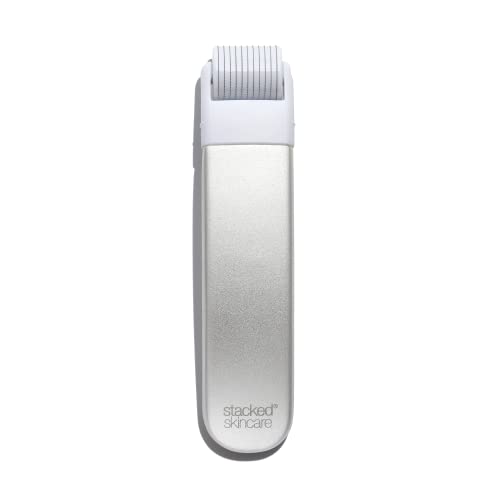
Micro-Roller
StackedSkincare
Developed with input from a board-certified dermatologist. It uses fine 0.2mm titanium needles at a lower price than motorized options.
- Dermatologist-developed design at an accessible price
- 0.2mm titanium needles are on the gentler end for beginners
- Comes with a hard case for hygienic storage
- Manual rolling means results depend heavily on your own technique and consistency

Facial Microneedle Roller
ORA
A straightforward, no-frills 0.25mm titanium roller with clear instructions. It's an easy, low-commitment entry point.
- Simple, single-purpose design with no learning curve
- 0.25mm needles are gentle for a first attempt
- Compact case included for travel and storage
- Basic handle design feels less premium than motorized competitors

Derma Roller
Sdara Skincare
A widely available 0.25mm titanium roller that's become a popular entry point. Its low price and straightforward design keep it approachable.
- Titanium needles at a very approachable price
- 0.25mm length suitable for at-home use
- Comes with a travel case for hygienic storage
- Sdara also sells longer-needle versions online, so double-check you're ordering the 0.25mm at-home length, not a deeper professional-length roller