
Peptides vs. retinoids: two different mechanisms, often confused
Peptides and retinoids get lumped together as "anti-aging ingredients." But they work in almost opposite ways. Retinoids speed up cell turnover. They also directly influence gene expression in skin cells. That's why they affect texture, tone, and fine lines relatively quickly. It's also why they cause irritation as a side effect of that speed. Peptides work as chemical signals instead. Short amino acid chains tell skin cells to behave a certain way. One example is producing more collagen. They do this without directly forcing cell turnover. That's why they're gentler but slower to show results. Most anti-aging creams lean on one approach or the other.
The retinol, tretinoin, retinaldehyde & encapsulated retinol strength spectrum
Not all retinoids are equal in strength or evidence. Retinyl esters, like retinyl palmitate and retinyl acetate, are the mildest. They're also the least studied for visible results. Retinol is the most common over-the-counter form. It has a solid evidence base once used consistently for at least 12 weeks. Retinaldehyde converts to retinoic acid, the active form, faster than retinol. It tends to be slightly stronger. Prescription tretinoin is the most studied and most potent. It's available only through a dermatologist. Encapsulated retinol appears in several drugstore formulas. RoC's Retinol Correxion and Neutrogena's Rapid Wrinkle Repair are two. It aims to deliver similar results to standard retinol with a gentler release. Independent head-to-head data is still limited. Olay's retinol line is another widely sold option at this level.
Signal peptides, cell turnover & what peptides actually do for collagen
"Peptides" is a broad category covering several distinct types. Signal peptides prompt collagen production. Carrier peptides deliver trace minerals like copper. Those support enzyme function in skin repair. Enzyme-inhibitor peptides slow the breakdown of existing collagen. Neurotransmitter-affecting peptides are sometimes marketed as "Botox-like." They aim to relax the small facial muscle contractions linked to expression lines. Their effect is far more subtle than actual neuromodulator injections. Some formulas list a specific, named peptide complex. SkinCeuticals' A.G.E. Interrupter is one example. A named complex is generally a better sign the formulation was intentional, rather than a marketing add-on.
Should you layer peptides and retinoids in the same moisturizer routine?
Yes, you can. It's one of the more evidence-supported combinations in skincare. Peptides don't compete with retinoids for the same receptors. So layering a peptide moisturizer over or under a retinoid is standard practice. The usual approach is simple. Apply the retinoid first, on a dry, not-damp face, to reduce irritation. Then follow with a peptide-containing moisturizer to buffer and support. Some people prefer the reverse order. Others apply peptides in the morning and retinoids at night. That also works, and may suit more reactive skin.
Managing irritation and sun sensitivity without giving up results
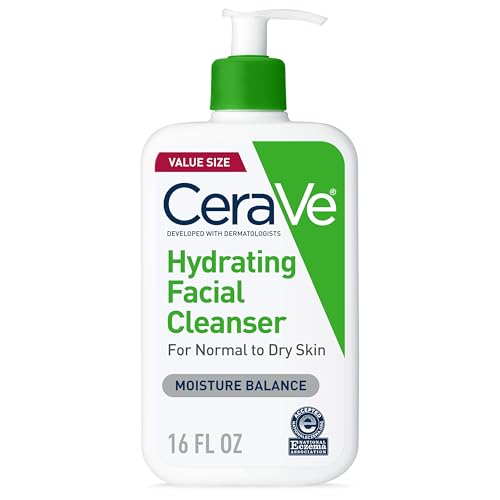
The single biggest reason people stop using retinoids is early irritation. It's almost always manageable with pacing. It's rarely a reason to quit the ingredient entirely. Start at two to three nights a week. Try applying it over rather than under moisturizer. This is the "sandwich" method: moisturizer, then retinoid, then moisturizer again. It works well with barrier-focused creams like CeraVe's. La Roche-Posay's retinol pairs the same way with a rich moisturizer. Pause other actives like acids or scrubs during the adjustment period. All of this reduces the odds of redness, peeling, and sun sensitivity. Those side effects derail most first attempts. Most people can build up to nightly use over four to eight weeks.
Realistic timelines for texture, tone & fine lines
Retinoids typically show visible improvement in texture and tone by 8 to 12 weeks. Fine lines keep improving over 6 months or longer of consistent use. Peptides tend to work on a similar or slightly longer timeline. Their mechanism is inherently gradual. Encouraging new collagen production takes time. Collagen synthesis and remodeling isn't instant, no matter what ingredient is prompting it. Neither ingredient class produces results that look artificial or sudden. When improvement happens, it tends to look like your skin on a good, well-rested week. It just shows up more consistently.
When to bring in a dermatologist for wrinkles and expression lines
Has over-the-counter retinol produced no visible change after several months of consistent use? Does irritation persist despite pacing and buffering? A dermatologist can help. They can assess whether a prescription-strength retinoid makes more sense. Sometimes an entirely different approach fits better, such as an in-office resurfacing treatment. That decision depends on your wrinkles, expression lines, and overall goals.