



The clinical criteria behind a 'good' cleanser: the stratum corneum and skin barrier
When a dermatologist evaluates a cleanser, they're not thinking about texture or scent first. They're thinking about barrier function. The outermost layer of skin, the stratum corneum, works like a brick wall. Skin cells are the bricks. Lipids — including ceramides, cholesterol, and fatty acids — are the mortar holding it together. A cleanser's surfactant is designed to lift away oil, dirt, and product buildup. But that same surfactant can also strip some of that lipid mortar if the formula is too harsh. The goal is a cleanser that removes the first without disturbing the skin barrier too much. Brands like CeraVe, Cetaphil, La Roche-Posay, and Vanicream are built around exactly that balance.
Surfactant chemistry, in plain English: cocamidopropyl betaine and gentler cleansing
Not all surfactants behave the same way. Traditional bar soap uses harsh, high-pH surfactants. They clean efficiently but also strip lipids aggressively. That's part of why soap and sensitive skin don't mix well. Dermatologist-favored cleansers lean on milder surfactants instead, like cocamidopropyl betaine, disodium cocoamphodiacetate, or sodium cocoyl isethionate. These clean effectively at a lower irritation cost. This is also why ingredient lists matter more than lather. A cleanser can foam beautifully and still use gentle surfactants. A non-foaming cleanser can still clean thoroughly.
Foaming cleanser or non-foaming cleanser: lather isn't the point
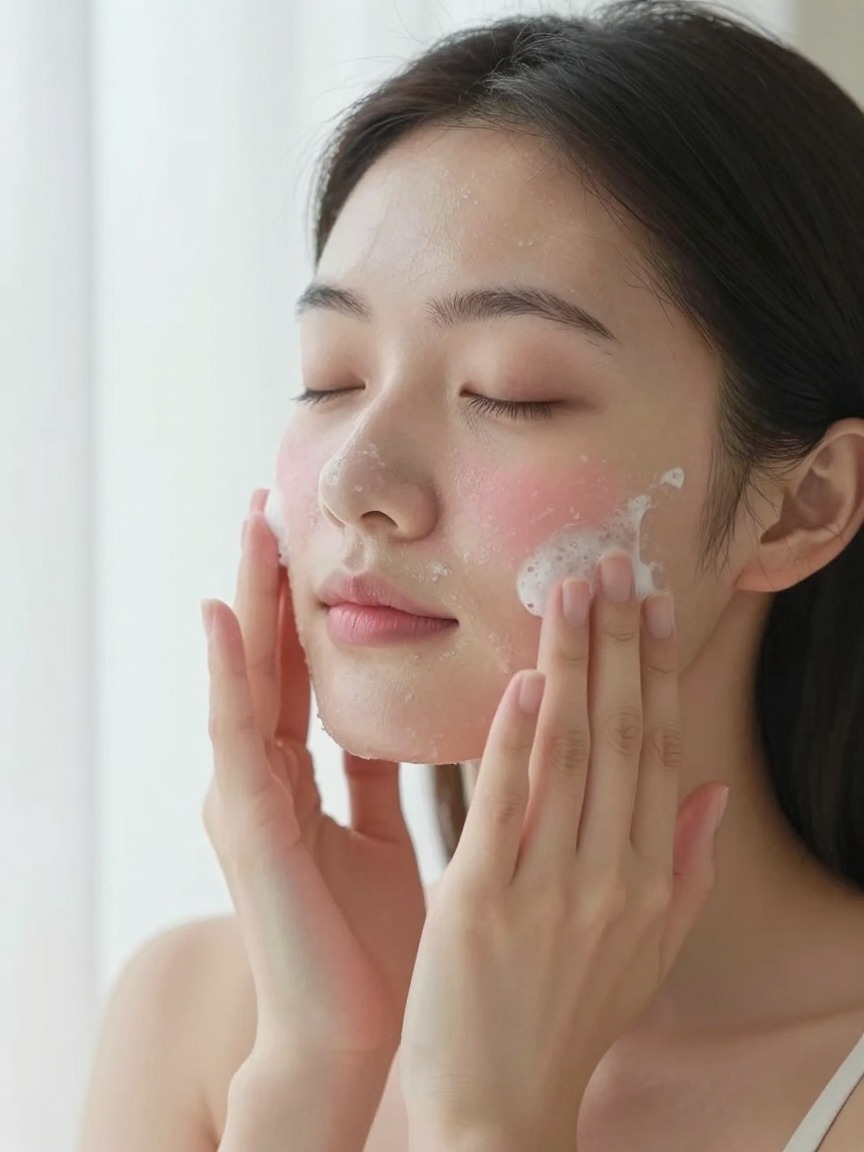
Lather feels satisfying, but it isn't a measure of how well a cleanser works. A foaming cleanser and a non-foaming cleanser can use equally mild surfactants. What matters is the ingredient list, not the amount of bubbles it produces.
pH-balanced formulas, alkaline soap and why it matters
Healthy facial skin sits at a mildly acidic pH, roughly 4.5 to 5.5. Traditional soap is alkaline, often above pH 9. Repeatedly pushing skin into that range can disrupt the barrier. It also makes it easier for irritants and bacteria to cause problems. Most dermatologist-recommended cleansers are pH-balanced, formulated closer to skin's natural range. That's one of the quieter reasons they cause less tightness than a bar of soap or a harsh foaming face wash.
Ceramides, lipids, hyaluronic acid, glycerin and humectants: cleansing while conditioning
A newer trend in dermatologist-favored formulas builds repair ingredients directly into the cleanser. Ceramides help replace the lipids that washing removes. Hyaluronic acid and glycerin are humectants that attract and hold onto moisture. Since a cleanser only touches skin for seconds before rinsing, these ingredients have a smaller effect than in a leave-on product. But the logic is straightforward: even a small assist during a barrier-stripping step is better than none.
Niacinamide and other barrier-support additions
Niacinamide shows up in a growing number of dermatologist-favored cleansers too. It supports the skin barrier and calms visible redness, without adding much irritation risk. On its own, a rinse-off dose of niacinamide won't do as much as a leave-on serum would. Paired with ceramides and humectants, it still adds a small, low-risk assist to a formula that's already doing its main job well.
Fragrance-free formulas and allergic contact dermatitis
Fragrance is one of the most common causes of allergic contact dermatitis in skincare. It's also a purely cosmetic addition with zero cleansing function. That's why dermatologists disproportionately recommend fragrance-free formulas. Scent itself isn't inherently dangerous. It's just an easy variable to remove when a product needs to work reliably across sensitive skin types. The same logic extends to dyes, natural fragrance from essential oils, and certain preservatives increasingly flagged as common contact allergens.
Why a dermatologist judges contact time, not ingredient count
Dermatologists also weigh how long a product actually sits on skin before it's washed away. That timing changes how much any single ingredient can realistically do. A cleanser is on the face for roughly 20 to 60 seconds. That's long enough for a surfactant to lift away oil and buildup. It's far too short for something like a ceramide or a botanical extract to meaningfully treat anything the way a serum or moisturizer left on overnight might. This is a big part of why a dermatologist evaluates a cleanser mainly on what it removes and avoids irritating, rather than on a long list of active-sounding ingredients in the marketing copy. A cleanser with three carefully chosen ingredients can outperform one with twenty, if those three do the actual job well.
Why patch testing still matters for sensitive skin
Even a cleanser built around every criterion above can still cause a reaction in an individual person. Everyone's skin and allergy history is different. That's why the standard advice for sensitive skin, or a history of reactive skin, is to patch test a new cleanser first. Apply it to the inner forearm for several days before using it on the face. Introduce one new product at a time rather than switching an entire routine at once. If irritation, stinging, or breakouts show up and don't resolve, stop and check in with a dermatologist rather than guessing further.