





What Not to Use in the Morning
The morning is about protection, not strong treatment. So the short list of what not to use in the morning is easy to remember. Skip anything that makes the skin more reactive to sunlight. That means a few actives are better saved for night. The rest of your daytime steps can stay light and protective. Once you know which products to hold back, planning a morning routine gets much simpler. Once you know the handful of products to hold back, the rest of the morning falls into place easily.
Avoid a retinoid or retinol in the morning. Also skip a strong exfoliating acid like an AHA or BHA. These can be excellent products in the right slot. They just do not belong in the morning, when UV exposure peaks. Using them by day works against the protection you are trying to build. The same active that helps overnight can leave skin exposed and irritated during daylight. Saving those actives for after dark is a simple swap that pays off in fewer surprises.
What you should use in the morning is gentle and protective. A mild cleanser, such as the CeraVe Hydrating Facial Cleanser, is a fine start. An antioxidant like the La Roche-Posay 10% Pure Vitamin C Serum works well too. Always finish with sunscreen as the final step. That trio covers cleansing, defense, and protection without irritation. It is enough for most people, and it will not leave skin vulnerable when you head outside. That gentle, protective trio is genuinely enough to carry most people through the day.
How an Exfoliating Acid Adds Sun Sensitivity
Here is why timing matters so much. A retinoid and an exfoliating acid can both increase sun sensitivity. Using them in the morning leaves skin more open to UV damage. That is the opposite of what you want during daylight hours. The same product that helps at night can backfire by day. Fresh, resurfaced skin simply has less natural defense against the sun. In short, the sun is the reason these actives belong to the night, not the morning.
An exfoliating acid removes dead surface cells. The fresh skin underneath is more vulnerable to the sun. Without protection, that raises the risk of irritation and new dark spots. This is why an exfoliating acid pairs best with an evening routine. Overnight, skin can renew itself without any UV to contend with. By morning, a good sunscreen then guards that newly revealed layer. Letting skin renew overnight and then shielding it by day is the logic behind the whole split.
- A retinoid or retinol, which can raise sun sensitivity.
- A strong exfoliating acid such as an AHA or BHA.
- Any harsh peel or scrub that leaves skin raw.
- Very strong vitamin C blends that sting under sun.
- Layer these at night, then protect the skin the next day.
The fix for daytime sun sensitivity is simple. Follow every morning routine with a broad-spectrum sunscreen. The EltaMD UV Clear Broad-Spectrum SPF 46 is a well-loved daily option. A broad-spectrum sunscreen guards the skin while your night actives do their work after dark. Reapply it through the day if you are outside for long stretches. That single habit protects all the effort your evening routine puts in. Reapplication through the day is what keeps that protection intact from morning to evening.
Affiliate disclosure: We may earn a commission from qualifying purchases made through links on this page, at no extra cost to you. Some links on this page are affiliate links.
Recommended morning vs night skincare routine
Editor-picked products from our guides.
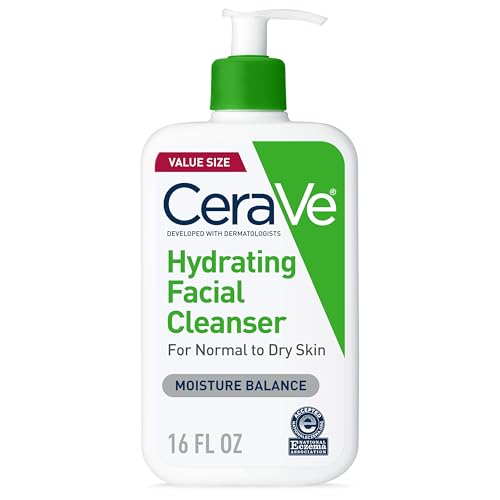
Hydrating Facial Cleanser
CeraVe
A ceramide-and-hyaluronic-acid cleanser that won't strip skin. It leaves the barrier intact before you layer on serum and SPF.
- Won't strip skin that's about to carry AM actives and SPF
- Ceramides and hyaluronic acid support the barrier while cleansing
- Fragrance-free and non-comedogenic, low irritation risk
- Doesn't fully remove heavy makeup or sunscreen on its own — better suited to AM than as a standalone PM cleanse

10% Pure Vitamin C Serum
La Roche-Posay
A stabilized 10% vitamin C serum with soothing neurosensine. It gives morning antioxidant support that pairs with SPF against free-radical damage.
- Stabilized formula resists oxidizing as quickly as some open-jar vitamin C serums
- Formulated with sensitive-skin tolerance in mind
- Layers easily under moisturizer and SPF
- 10% concentration is milder than potent options like SkinCeuticals C E Ferulic, so visible brightening builds slowly

UV Clear Broad-Spectrum SPF 46
EltaMD
A niacinamide sunscreen that's become a dermatologist-office staple. It protects without the breakouts or irritation some sunscreens trigger.
- Contains niacinamide, which calms skin while it protects
- Lightweight, non-greasy finish sits well under makeup
- Broad-spectrum UVA/UVB coverage — the single most important AM step
- Higher price per ounce than drugstore SPF, and the bottle is small relative to how much you should actually apply