










What Belongs in a Night Routine
If the morning routine is about defense, the night routine is about repair. That difference means a PM routine can carry more steps, more active ingredients, and more room to actually change skin over time.
The Job of a Night Routine: Cell Turnover & Collagen Repair
Skin's natural repair processes ramp up overnight. Cell turnover increases, and there's no UV exposure competing for attention or complicating how actives behave. That makes night the right time for the ingredients that do the heaviest lifting: retinoids for cell turnover and collagen support, exfoliating acids for texture and buildup, and richer moisturizers that support the barrier through hours of repair. None of this is about protecting skin from an immediate threat. It's about giving skin the ingredients and conditions to actually improve.
The PM Order: Cleanser, Double Cleansing & Treatment Serum
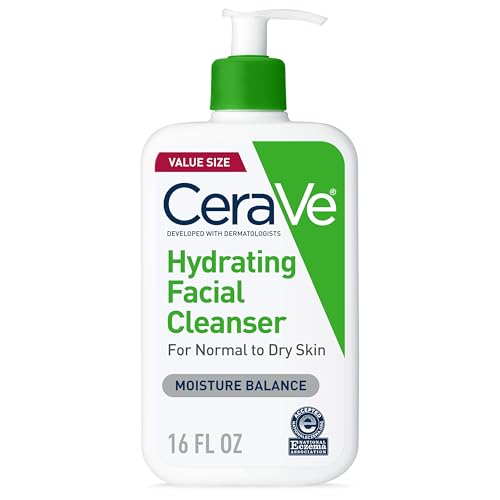
Cleansing matters more at night than in the morning. A full day accumulates sunscreen, oil, pollution particles, and often makeup. Leaving any of that on skin overnight can clog pores and block a treatment serum from absorbing where it's needed. Double cleansing, an oil or balm-based cleanser followed by a water-based one, is worth the extra step on most nights, especially for anyone wearing sunscreen daily. After cleansing, the treatment step goes on clean, fully dry skin, such as CeraVe Skin Renewing Retinol Serum for a gentler, encapsulated retinoid.
Retinoid, Exfoliating Acid, AHA & BHA: Introducing Actives Without Irritation
The most common way a night routine goes wrong is introducing too much, too fast. A retinoid and an exfoliating acid, such as an AHA or a BHA, shouldn't be layered together. Skin needs time to adjust to one active before it can handle a second. Using them on alternating nights lets skin tolerate both without the redness, flaking, and irritation that comes from combining actives too early. Starting a new retinoid at a low frequency, two or three nights a week, and slowly building up is far more sustainable than applying it nightly from day one.
Buffering, Occlusive Moisturizer & Barrier Repair
Moisturizer comes last. It should be noticeably richer than whatever's used in the morning, since it has to support skin through several hours of repair without reapplication. A pick like CeraVe PM Facial Moisturizing Lotion works well here. A rich, occlusive moisturizer applied on top, sometimes even mixed directly with the retinoid, uses a technique called buffering. It helps offset the dryness that comes with any new active and supports barrier repair while skin does its overnight work.
What to Leave Out: Vitamin C & Extra Actives for Sensitive Skin
Vitamin C isn't strictly necessary at night. Its main job is neutralizing daytime environmental damage. It's not harmful to use in the evening, but it's not doing much either. That shelf space is often better used for a treatment active. Physical exfoliants and strong peel-style treatments should stay occasional, once or twice a week at most, rather than nightly. Sensitive skin in particular should hold off on a second active, like La Roche-Posay's 10% Pure Vitamin C Serum or a new acid, until skin has adjusted to the first. Patience here saves weeks of irritation later.
Building the Habit
A five-step night routine takes a little longer than the morning version, and that's by design. Skin has all night to absorb a treatment serum and recover, so there's no need to rush the process. Most people do best introducing one new active at a time and giving it two to three weeks before judging whether it's working. A consistent order, cleanser, treatment, moisturizer, matters more for results than any single product choice.