
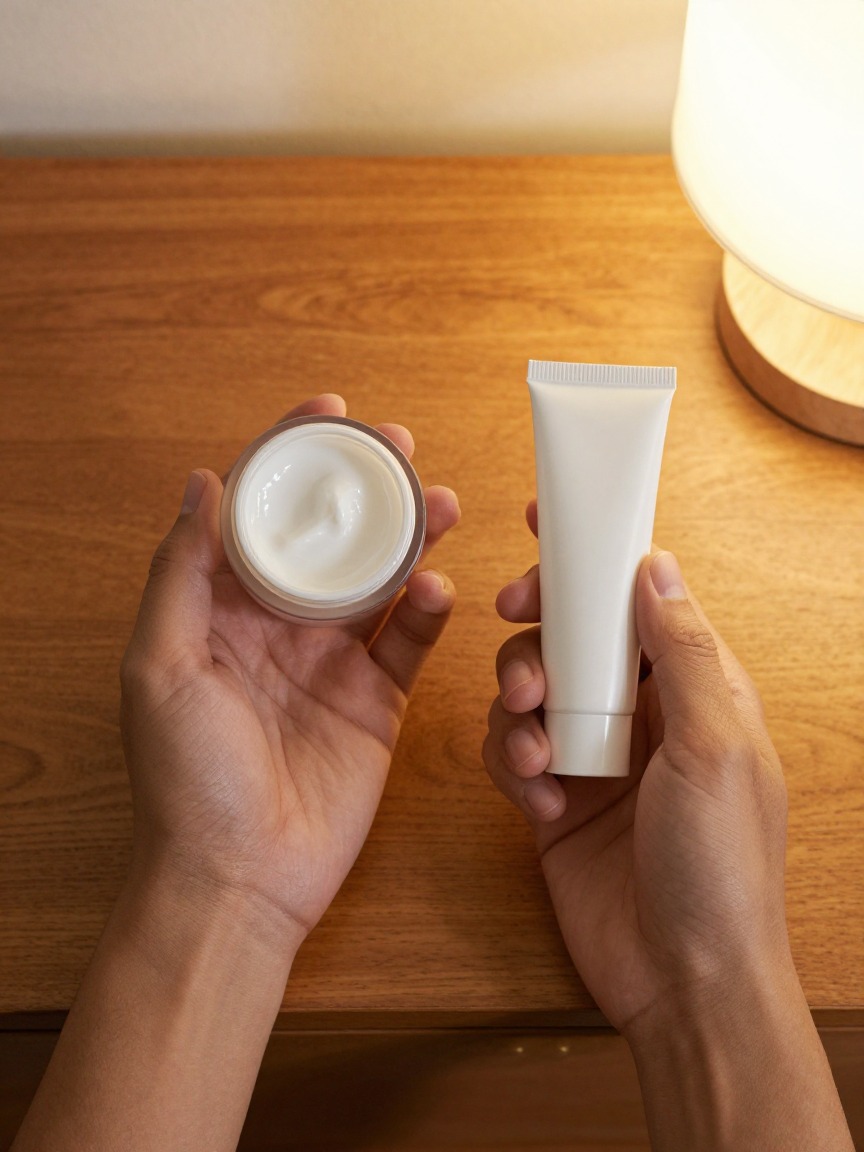
Overnight Mask vs Night Cream: Gel-Cream Texture, Emollients & Cost-Per-Use
Sleeping masks and night creams occupy overlapping territory. Brands don't always use the terms consistently, which makes the aisle confusing. Both are leave-on products for the last step of a nighttime routine. Both are formulated around hydration. The real differences are in texture, intended use frequency, and what each is built to prioritize. Understanding those differences makes it easier to pick one, instead of buying both and layering unnecessarily.
Humectant, Occlusive & Hyaluronic Acid: Texture and Formulation Differences
Sleeping masks tend to be formulated as gels, gel-creams, or lightweight balms. They're built around a high concentration of humectants like hyaluronic acid, often with a plumping or slightly tacky finish that sits close to the surface of skin. Night creams tend to be richer and more traditionally cream-like. They're built around emollient and occlusive ingredients — oils, butters, fatty alcohols — designed to fully absorb and reinforce the skin barrier overnight, rather than sit as a film. Neither texture is objectively better. They're suited to different needs. A gel sleeping mask generally feels lighter and less greasy. A night cream tends to deliver deeper, longer-lasting occlusion for skin that runs dry.
Peptides, Retinoid, Barrier Lipids & Exfoliating Acids: What Each One Is Built For
Night creams are usually the workhorse moisturizer in a routine. They do the daily job of keeping skin's barrier intact and comfortable, often formulated with a broader set of ingredients — peptides, a retinoid, or barrier lipids — aimed at longer-term skin health. Sleeping masks are more often positioned as a boost. You layer them on top of, or occasionally instead of, a regular moisturizer for an extra hit of hydration. They're frequently timed around a specific need: travel, dry weather, or a stretch of visibly tired-looking skin. Some sleeping masks, like Glow Recipe's watermelon formula, include exfoliating acids. That's part of why they're marketed for two or three nights a week rather than daily use. A night cream is generally meant to be a nightly habit.
Layering Both for Dry Skin, Oily Skin, Combination Skin & Sensitive Skin
Yes, you can use both, but it's not always necessary. Doubling up can be counterproductive for some skin types. Very dry skin, or skin in a cold, low-humidity climate, can genuinely benefit from a normal night cream followed by a richer sleeping mask, like Summer Fridays' balm-like formula, on top. That extra sealing helps, especially a few nights a week. Oily skin, combination skin, or normal skin usually doesn't need both. Applying a heavy night cream and a heavy sleeping mask together is more likely to feel greasy than to meaningfully improve hydration. If you're using both, the lighter, more humectant-focused product — a gel-cream like Laneige's Water Sleeping Mask, for example — generally goes on first, closer to skin. The richer occlusive layer goes on top. Sensitive skin should watch for added fragrance and unnecessary actives in either product before worrying about texture.
How to Decide: Fragrance, Actives, Moisturizer Habits & Cost-Per-Use Budget
If you only want one product, think about your daily routine and your skin's baseline dryness. Skin that's dry or tight most days benefits more from a solid, dependable night cream used nightly. Skin that's generally fine day-to-day, but looks dull or dehydrated after specific stressors — travel, weather changes, poor sleep — is a different case. That skin is a better fit for a sleeping mask used situationally, layered over whatever moisturizer already works. Sensitive or reactive skin should treat both categories the same way: check for fragrance and unnecessary actives before texture. A rich night cream or sleeping mask that irritates skin isn't doing its job either way.
Budget is worth factoring in too. Sleeping masks are often positioned as an occasional boost rather than a nightly essential. A smaller jar can last a long time if you're only reaching for it a few nights a week. That sometimes makes a pricier sleeping mask more reasonable per use than it first appears. A night cream, by contrast, gets used up faster simply because it's part of the everyday routine. Weigh cost-per-use rather than sticker price alone when deciding where to spend more on your budget. Neither product is inherently the better investment. It depends on which one is doing the daily work for your skin.