

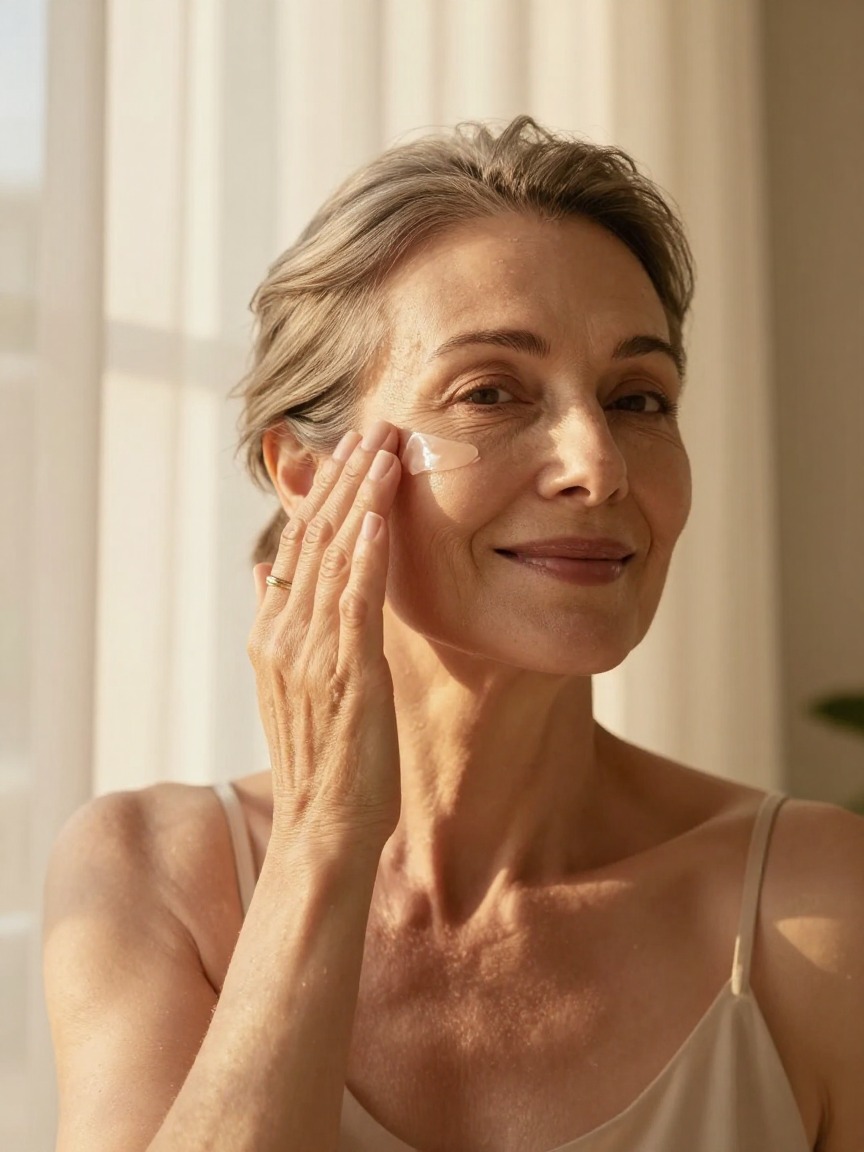

Noa Kensington is the ingredients and formulation writer at Best Facial Skin Care, translating dense INCI lists and actives research into plain-English guidance. Noa focuses on what an active actually does at a given concentration, how ingredients interact, and where the evidence is strong versus thin.
Background
- 8 years covering cosmetic ingredients and formulation
- Reads the research so readers do not have to decode an INCI list
- Owns our serums, toners and exfoliation coverage
- Distinguishes well-evidenced actives from marketing hype
Focus areas
How Noa approaches ingredients
Noa Kensington approaches a skincare product the way a careful reader approaches a manuscript: skeptical first, curious second, convinced only after the details hold up. The marketing copy on the front of a bottle exists to persuade. The ingredient list on the back exists because regulators require it, whether or not the brand wants it read closely. Noa reads the second one first and treats the first one as a claim to be checked against it. That habit isn't a credential — Noa is not a dermatologist and doesn't diagnose skin conditions — it's a discipline built from reading enough INCI lists, enough published research abstracts, and enough reformulations of the same "hero" ingredient to know that the story on the label and the story inside the bottle are frequently two different stories.
Decoding an INCI List
An International Nomenclature of Cosmetic Ingredients list is ordered by concentration, descending, until roughly the 1% mark. Below that threshold, brands are free to list ingredients in nearly any order, which means the back third of most labels is close to useless for guessing dose. Noa's first move is always to locate water — usually aqua, first or near-first — and count backward from there. If a product marketed on a single ingredient lists that ingredient sixth or eighth, behind several preservatives and a fragrance compound, that placement says more than any front-of-pack claim. The second move is identifying the base: is this a water-based gel, an anhydrous oil serum, a silicone-forward primer-serum hybrid? The base determines how everything dissolved in it actually behaves on skin, and two products with an identical "hero" ingredient can perform completely differently depending on what it's suspended in. The third move is separating true actives from the structural cast — the emulsifiers, thickeners, chelators, and preservatives that make a formula stable and pleasant to use but do nothing for the specific concern on the label. A fifteen-ingredient serum might have eleven ingredients doing texture-and-stability work and four doing the job it's being sold on.
Concentration and Formulation vs. the Hero Ingredient
This is where most confusion, and most marketing leverage, lives. "Contains retinol" says nothing about whether that's 0.01% or 1%. "With niacinamide" says nothing about whether it's buffered to a pH where niacinamide actually performs, paired with a tested ratio of supporting ingredients, or present at a level high enough to do anything besides let a brand print the word on the box. Noa's working rule: a hero ingredient without a stated percentage, in a formula Noa can't otherwise evaluate, is a marketing choice, not evidence of a formulation decision. That's not automatically dishonest — plenty of well-built products don't print percentages — but it shifts the burden onto Noa to infer strength from ingredient order, from which form of the ingredient is used (a free acid versus a gentler derivative), and from how the rest of the formula supports or undercuts it. A brilliant active dropped into a poorly buffered, under-preserved, or under-dosed base underperforms a modest active in a formula built properly around it. Formulation is the difference between an ingredient that works in a test tube and one that works on a face.
Where the Evidence Is Strong — and Where It's Thin
Some actives carry decades of published research behind them, and Noa treats that asymmetry as central to how confidently to write about a product. Retinoids — retinol, retinaldehyde, and their prescription-strength relatives — have the deepest evidence base in the routine for fine lines, texture, and breakouts, though strength, stability, and irritation potential vary enormously between formulations. Vitamin C, specifically L-ascorbic acid, has solid support for antioxidant protection and brightening, but only at an effective concentration and only when the formula keeps it stable; a browned, oxidized vitamin C serum has likely lost much of what made it worth buying. Niacinamide has a wide, consistent evidence base for barrier support, tone, and oil regulation, and tolerates a broad pH range, which is part of why it turns up in so many formulas without much fuss. AHAs and BHAs — glycolic, lactic, and salicylic acid chief among them — have long-standing evidence for exfoliation and texture, with salicylic acid additionally useful for congested pores, and effectiveness tied closely to both concentration and formula pH. Azelaic acid has good evidence for tone evenness and mild breakouts and tends to be well tolerated across skin types. These five categories are where Noa writes with real confidence, because the literature is deep enough to separate genuine effect from wishful thinking.
Other categories are thinner than the marketing implies. Peptides are a large, uneven group — a handful of specific, well-studied sequences have decent supporting data, but "peptide complex" as a catch-all phrase covers everything from thoroughly tested molecules to novel sequences backed by a single manufacturer-funded study. Noa's practice is to ask for the specific peptide name, not the category, before drawing any conclusion. "Exosomes" are the sharpest current example of hype outrunning evidence: the term has precise meaning in cell biology, but cosmetic exosome ingredients sit in a scientific and regulatory gray area, with sourcing, stability, and skin-penetration claims that are mostly unverified outside sponsored studies. Growth factors, stem-cell extracts, and the rotating cast of "bio-fermented" or "postbiotic" ingredients often land in this same thin-evidence zone — biologically plausible, commercially exciting, not yet backed by the kind of independent, replicated research that niacinamide or salicylic acid already have. Noa's stance isn't that these are worthless; it's that the evidence doesn't yet support the confidence the marketing implies, and that gap gets stated plainly instead of smoothed over for the sake of a tidier review.
pH, Delivery, and Why the Same Molecule Behaves Differently
Identical active ingredients can perform very differently depending on how they're delivered. AHAs and BHAs need a formula pH low enough — roughly 3 to 4 — to keep the acid in its active, unbuffered form; raise the pH and the same percentage on the label does noticeably less exfoliating work. L-ascorbic acid needs a similarly low pH to stay in its active form, which is also why it's one of the least stable, most easily oxidized ingredients in a routine. Niacinamide is comparatively pH-flexible, part of why it plays well alongside more of a routine than the acids do. Beyond pH, delivery systems — encapsulation, liposomal carriers, whether an active sits in an oil phase or a water phase — change how much of it actually reaches skin versus sitting on the surface or degrading before absorption. Noa reads for these signals specifically: an "encapsulated retinol" claim is a real formulation decision worth understanding, not a buzzword, since encapsulation is often used to reduce irritation and improve stability, sometimes at a genuine tradeoff in how quickly results show up.
Layering and Ingredient Conflicts
Combining actives is less about mythical pairings that "cancel each other out" and more about cumulative irritation and mismatched pH. Retinoids and exfoliating acids used in the same routine, especially the same night, commonly over-strip skin — not because the molecules chemically neutralize one another, but because the skin barrier can only absorb so much disruption at once. Benzoyl peroxide has historically been flagged for destabilizing certain retinol formulations, though this is formulation-specific rather than a blanket rule. Layering a low-pH active like L-ascorbic acid directly against a higher-pH active can push both outside their effective range, which is why spacing them across separate steps or separate days is usually the more reliable approach rather than stacking everything into one application. Noa's general framework: build a routine, not a pile — introduce one active at a time, watch how skin actually responds, and treat "more actives at once" as a risk to manage rather than a goal worth chasing.
What an Active Can and Can't Do
None of this replaces a diagnosis. Noa is not a dermatologist, does not diagnose skin conditions, and does not write claims that a product cures, treats, or reverses disease — melasma, cystic acne, rosacea, eczema, and any persistent or worsening skin change belong in front of a qualified medical professional, not in a serum review. A well-formulated active at an effective concentration can support texture, tone, hydration, and barrier function, and can measurably improve the look of skin over weeks to months of consistent use. It cannot rebuild a compromised barrier overnight, replace daily sunscreen, or resolve a medical skin condition, and any review that implies otherwise has stopped being honest to chase a stronger claim. Getting that ceiling right — what an ingredient list can plausibly deliver, and exactly where it stops — is the actual work. The credibility of the writing rests on drawing that line correctly every time, not on any credential Noa could claim instead.
Guides by Noa Kensington
Noa authors our Serums & Treatments, Masks & Exfoliation, Toners & Essences coverage.