
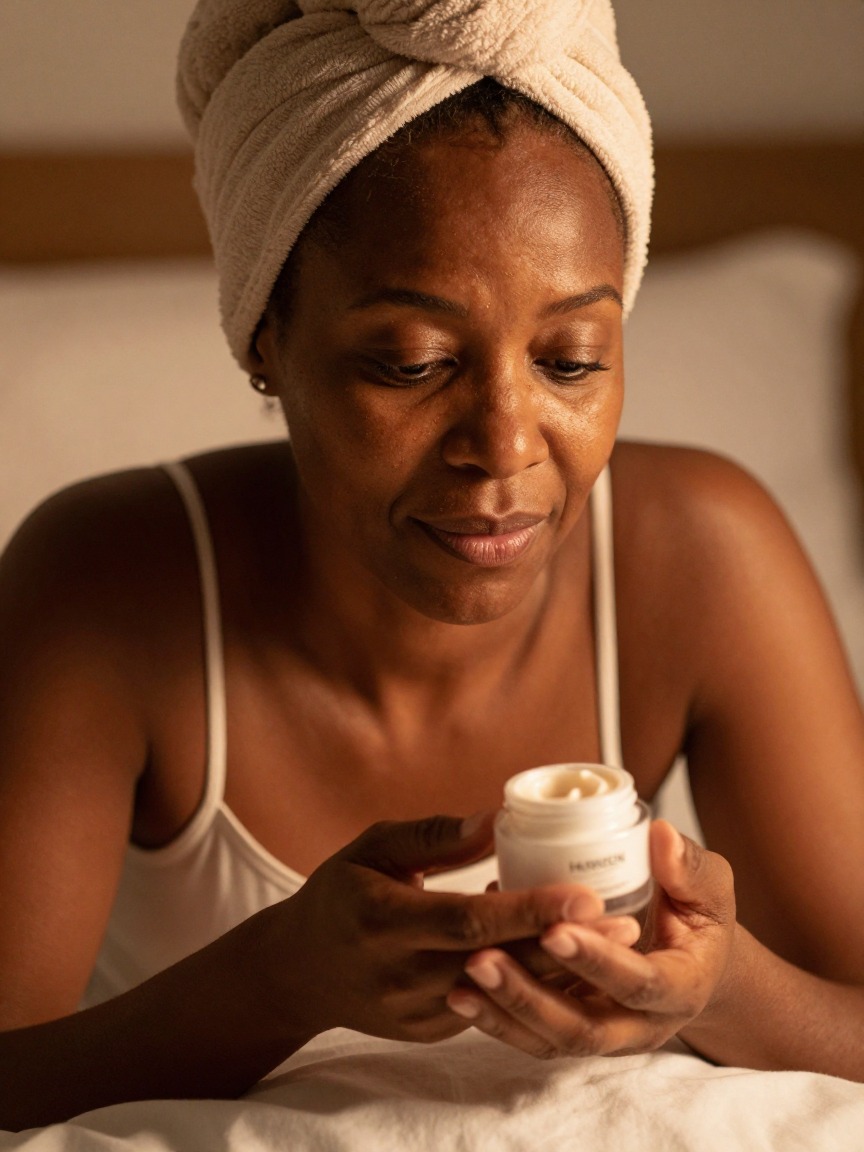
Start with skin tolerance, not retinoid strength
It's tempting to shop for the highest retinol percentage you can find. The assumption is that stronger automatically means better results. In practice, the opposite is often true. A strong retinoid on skin that isn't ready causes irritation, redness, and flaking. That forces you to stop using it altogether, which means zero benefit rather than a slower one. The ingredient that actually improves your skin is the one you can use consistently, not the one with the biggest number on the label. If you've never used a retinoid, look for a lower-strength or well-buffered formula — something combined with ceramides, niacinamide, or hyaluronic acid — over the most concentrated option available.
Understanding what's in the jar: retinol, retinaldehyde, retinyl esters and tretinoin
Not all retinoids are the same ingredient. The differences affect both strength and speed. Retinyl esters (retinyl palmitate, retinyl acetate) are the mildest and slowest-acting, often used in gentler formulas. Retinol is the most common over-the-counter option. It needs to convert twice inside the skin before it becomes active, which makes it slower but generally better tolerated. Retinaldehyde converts just once and tends to act faster and stronger than retinol at an equivalent concentration. Tretinoin, available only by prescription, is already in its active form. It works the fastest and most predictably, but also carries the highest irritation risk and needs a doctor's guidance on strength and use. A night cream's ingredient list usually tells you which type it uses, even without a stated percentage.
Concentration, packaging and label claims
Many drugstore retinol creams don't publish an exact concentration, which can feel frustrating when comparing products. This isn't always a red flag. Formulas differ in how they buffer and deliver the ingredient, so two creams at the same stated percentage can behave very differently in practice. Concentration matters most at the higher end. A cream stating 1% retinol, for instance, is worth treating with the same caution as a new, potent active, even if you've used gentler retinol products before without issue. Packaging matters too: an opaque pump or tube protects the formula from air and light far better than a jar you dip fingers into repeatedly, since retinoids degrade with exposure over time.
Ceramides, niacinamide, hyaluronic acid and peptides: supporting the barrier
- Ceramides — support the skin's barrier, which matters more once you introduce an active ingredient that can compromise it.
- Niacinamide — has a genuinely calming effect and can reduce some of the redness and dryness that comes with retinoid use.
- Hyaluronic acid or glycerin — humectants that pull in moisture, useful in any night cream but especially one with a drying active.
- Peptides — a reasonable complement to, or substitute for, a retinoid if you want to support collagen with a gentler ingredient.
Fragrance-free formulas and irritation risk
Fragrance adds no functional benefit to an anti-wrinkle formula. It's one of the more common causes of irritation, particularly for skin already dealing with a new active ingredient. A fragrance-free option is worth a second look if your skin tends to react easily.
Texture for dry skin, oily skin and sensitive skin
A night cream that feels heavy or greasy is less likely to get used consistently. Consistency is what actually drives results with any of these ingredients. Dry or mature skin generally does better with a richer, more emollient texture. Oily or combination skin tends to stick with a lighter gel-cream for longer. Sensitive skin benefits from both a gentler texture and a shorter ingredient list, since more ingredients mean more chances for a reaction. If you're switching from a serum-plus-moisturizer routine to an all-in-one night cream, check whether it feels sufficiently hydrating on its own, especially while skin adjusts to a new retinoid.
What to mostly ignore: marketing claims a dermatologist would skip
Phrases like clinically proven or a specific percentage improvement from a small in-house study are common across this category. They aren't a reliable way to compare products. These claims often come from studies funded by the brand itself, with methodology you can't independently check. A dermatologist would tell you the ingredient list and concentration, where published, tell you far more than the claims on the front of the box. Brands like RoC, Olay, Neutrogena, La Roche-Posay, SkinCeuticals, and CeraVe all lean on this kind of marketing to some degree — read past it to the formula itself.
A short checklist before buying a night cream
- Do you already know your skin tolerates retinoids, or is this your first one? Match the strength accordingly.
- Does the formula include supporting ingredients (ceramides, niacinamide, hyaluronic acid) or is it a bare, unbuffered retinoid?
- Does the texture suit your skin type — rich for dry skin, lighter for oily skin?
- Is it fragrance-free, if your skin is sensitive or you're already introducing a new active?
- Is the packaging protecting the formula from light and air (a pump or tube, not an open jar)?