
Retinoids and Tretinoin: The Best-Studied Ingredient for Collagen and Cell Turnover
Retinoids are vitamin A derivatives, ranging from gentle retinyl esters through retinol to prescription-strength tretinoin. They have more research behind them than any other anti-aging ingredient available. They work by speeding up skin cell turnover and supporting collagen production. Over consistent use, that can improve the look of fine lines, texture, and tone. The tradeoff is irritation. Retinoids commonly cause dryness, flaking, and sensitivity, especially in the first few weeks. That's why a slow start works better for most people. Try two or three nights a week, building up over a month or two, instead of diving straight into nightly use. Over-the-counter retinol is milder and slower-acting than prescription tretinoin. A dermatologist can prescribe tretinoin for people who've built tolerance and want a stronger option.
Vitamin C and L-Ascorbic Acid: The Daytime Antioxidant
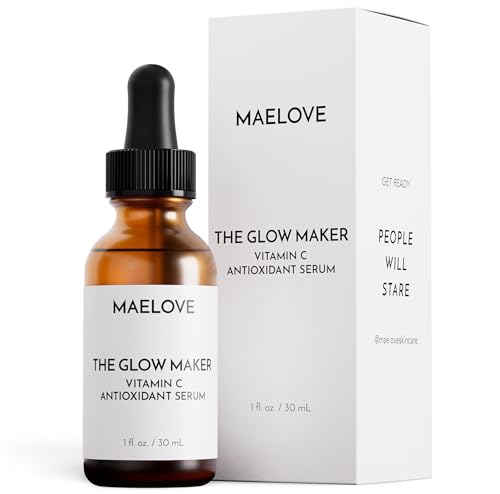
Vitamin C serums are usually formulated as L-ascorbic acid or a more stable derivative. They work primarily as antioxidants, helping neutralize free-radical damage from UV exposure and pollution before it builds into visible change. They also have a modest brightening effect on uneven tone. L-ascorbic acid is the best-studied form, but it's also the least stable. It can oxidize, and lose strength, if stored poorly or kept too long. It also works best on skin at a low pH, applied before anything else in a morning routine. Vitamin C pairs well with SPF, backing up daytime protection rather than duplicating it. That's why it's typically a morning-routine ingredient, not a nighttime one.
Peptides: Gentler, Lower-Irritation Signaling Molecules
Peptides are short chains of amino acids that act as signals. They tell skin to behave in ways tied to more youthful skin, supporting collagen production and skin structure. The evidence behind peptides is generally less robust than for retinoids. They're also far gentler, though. That makes them a fair option for skin that doesn't tolerate retinoids well, or as an add-on layered alongside one. Peptide-containing moisturizers are common and tend to be well tolerated, even by sensitive skin. Peptides simply don't carry the same irritation risk that retinoids and exfoliating acids do.
AHAs and BHAs: Glycolic Acid, Salicylic Acid & How They Exfoliate Without Substituting
Alpha and beta hydroxy acids include glycolic, lactic, and salicylic acid among the most common. They exfoliate by loosening the bonds between dead skin cells, which can improve texture and help other products absorb more evenly. They're a genuinely useful supporting ingredient in an anti-aging routine. But they're not a stand-in for a retinoid. Using both hard in the same session is one of the more common ways people damage their skin barrier while chasing faster results. Alternate a retinoid and an AHA or BHA on different nights instead. Or run an acid just a couple of times a week rather than daily. Either way gets most of the exfoliation benefit with far less irritation risk.
Niacinamide: The Barrier Support Ingredient That Calms Irritation
Niacinamide, or vitamin B3, isn't usually marketed as a headline anti-aging ingredient. But it plays a genuinely useful supporting role. It helps reinforce the skin barrier and calms redness and irritation. It can also offset some of the dryness that comes with retinoid or acid use. It's well tolerated by nearly every skin type, including sensitive and acne-prone skin. It's commonly formulated alongside other actives rather than used entirely on its own.
Sunscreen and SPF: Technically Not an Active, Practically the Most Important One
Broad-spectrum SPF 30 or higher isn't classified as an "anti-aging active" the way retinoids or vitamin C are. But daily sunscreen use does more to prevent visible aging than any other single step in a routine. UV exposure is the main driver of what's usually called photoaging: fine lines, uneven tone, loss of elasticity. No serum or retinoid outpaces the damage of steady unprotected sun exposure. Reapplication matters too. A single morning coat generally doesn't hold up through a full day outdoors.
How to Combine Actives Without Wrecking Your Barrier — and When to See a Dermatologist
The safest approach layers actives by time of day and night, rather than stacking everything at once. Use vitamin C and SPF in the morning, a retinoid at night, with AHAs or BHAs on the nights the retinoid isn't. Layer niacinamide or peptides in wherever the routine needs extra support. Introduce one new active at a time, roughly two weeks apart. That makes it easy to spot what's causing irritation if something goes wrong — a genuinely useful habit most rushed routines skip. If irritation doesn't settle, a dermatologist can help adjust the plan. Our buying guide covers specific picks for each active, including CeraVe, SkinCeuticals, RoC, Olay, and EltaMD.