









Where the "Don't Mix" Rule Came From: L-Ascorbic Acid, pH & In-Vitro Study
The idea that niacinamide and vitamin C cancel each other out traces back to an older in-vitro study. Some versions of the claim go further. They warn the two combine to form a skin-irritating compound called niacin. That's test-tube research from decades ago. It used conditions that don't reflect how modern skincare is formulated or applied. The study measured what happens to L-ascorbic acid and niacinamide at specific pH levels in a lab. It wasn't measured on real skin. It's been widely cited in beauty media ever since. More recent research hasn't supported the same conclusion for products on shelves today.
Niacinamide, Vitamin C & Modern Formulation: What Evidence Suggests
Modern formulation is different from what those early lab conditions tested. Niacinamide is stable across a much wider pH range than once assumed. Most commercial vitamin C serums use derivatives like ascorbyl glucoside or sodium ascorbyl phosphate. They rarely use pure L-ascorbic acid. Those derivatives don't create the conditions needed for any meaningful conversion to niacin. Subsequent research, and dermatologist commentary, have generally walked back the strict "never combine" rule. That doesn't mean zero interaction is possible. But the practical risk is low for most people using well-formulated products. Brands like Naturium and Good Molecules build many of their serums around these gentler derivatives.
Flushing, Tingling, Redness & Irritation: Why You Might Still React
Have you noticed flushing, tingling, or redness when using niacinamide and vitamin C together? That's a real reaction worth taking seriously. It just may not be caused by the ingredients "canceling out." A more likely explanation is a vitamin C product at a very low, irritating pH. That's common with pure L-ascorbic acid formulas. Applying too many actives at once is another common cause of irritation. Or you may simply have sensitive skin that reacts to one or both ingredients. Pay attention to what your skin tells you, over what a general rule says it should do.
Layering, Patch Testing, Morning Routine & Night Routine
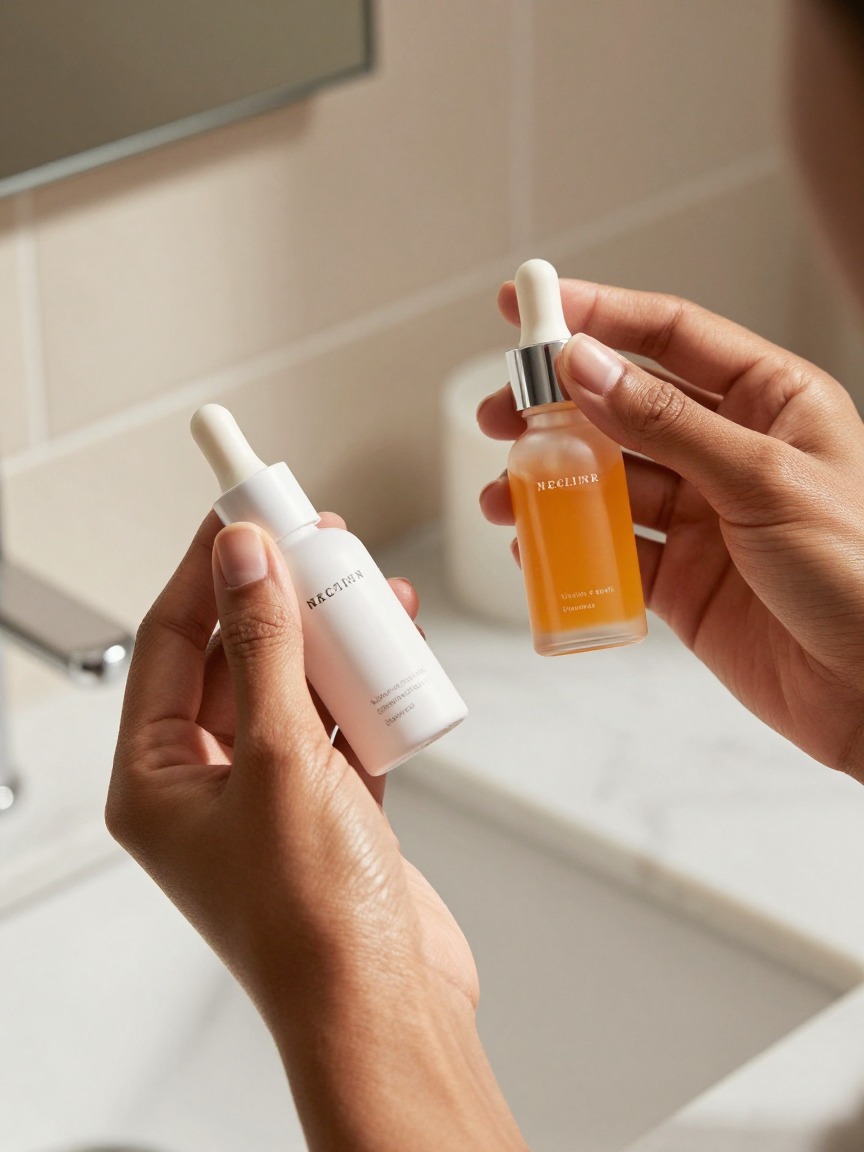
Want to be cautious while these actives settle into your routine? A few approaches work well. Use vitamin C in your morning routine, and niacinamide in your night routine. That way you get both without applying them in the same layer. Prefer to layer them in one routine? The Ordinary's Niacinamide 10% + Zinc 1% and a vitamin C serum are a common pairing. Apply the thinner, lower-pH product first, usually vitamin C. Let it absorb for a few minutes before following with niacinamide. Patch testing any new combination is a smart habit. Try it on a small area for a few days before applying it to your full face. If you notice persistent stinging or redness with either ingredient, scale back frequency rather than stopping both outright. The irritation may be coming from just one of them. A gentle option like La Roche-Posay's niacinamide can make that easier to isolate.
Ascorbyl Glucoside, Sensitive Skin, Actives & a Dermatologist's Take
For most people using standard over-the-counter formulas, niacinamide and vitamin C can share a routine. That's true whether they're layered, or split between morning and night. Neither meaningfully cancels the other out. Gentler vitamin C derivatives, like ascorbyl glucoside, tend to be an easier starting point for sensitive skin. Pure L-ascorbic acid is harder to tolerate. Paula's Choice and other research-driven brands often favor these gentler forms. Gentle-leaning brands like Glossier keep their niacinamide side minimal, which can help too. Is your skin reactive, or are you combining several other actives like retinoids, acids, or high-percentage serums? Separating them by time of day is still a reasonable, low-effort way to reduce irritation risk. If you're managing diagnosed sensitivity, rosacea, or another skin condition, check with a dermatologist before adding new actives together.