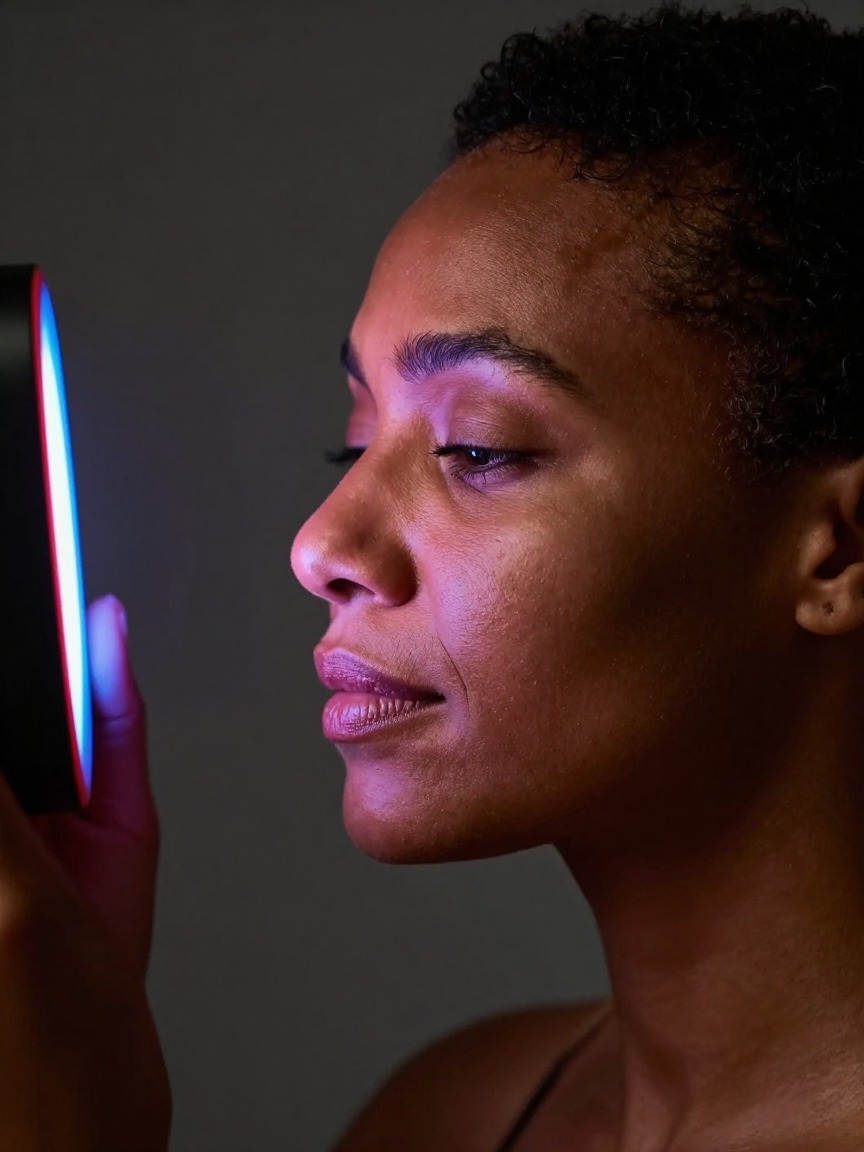
Red Light vs Blue Light for Skin: Photobiomodulation & Wavelength Basics
Red and blue LED light are the two workhorses of at-home light therapy. They are not interchangeable. Each wavelength works through photobiomodulation, but targets a different process in skin. Knowing what each one is studied for makes it easier to pick a mask that matches your skin concern, instead of buying based on whichever one is marketed loudest.
Red & Near-Infrared Light: The Collagen and Fibroblast Wavelength
Red light sits generally in the 620 to 700 nanometer range. Near-infrared light extends further, to around 850 nanometers. Both penetrate deeper into skin than blue light does. Research on photobiomodulation has focused heavily on this range for its link to fibroblast activity, the cells that produce collagen and elastin. Over consistent use, this is linked to gradual improvement in fine lines, skin texture, and overall firmness. Flexible masks like CurrentBody Skin pack a high LED count into this exact wavelength range. Red light is also studied for calming visible redness. Clinical platforms like Omnilux use this same wavelength range, and multi-setting devices like the Therabody TheraFace Mask offer it alongside blue light. Anyone recovering from an in-office treatment, like microneedling or a peel, should confirm timing with their provider before adding a home device.
Blue Light & Porphyrins: The Acne-Causing Bacteria & Breakouts Wavelength
Blue light sits at a shorter wavelength, typically 405 to 420 nanometers. It doesn't penetrate as deeply as red light. Instead, it's absorbed by porphyrins, compounds naturally produced by acne-causing bacteria. Exposure to blue light at this wavelength triggers a reaction in those porphyrins, which can help reduce bacterial activity. That's why blue light devices are marketed toward acne-prone and oily skin, not aging concerns. Blue light isn't shown to address hormonal acne, cystic acne, or acne with a strong inflammatory component. Prescription treatment does that. It's best thought of as a supporting tool for mild to moderate breakouts.
Can You Use a Combination Mask for Both?
Yes. A number of masks alternate or combine red and blue settings. Combination options like Qure Skincare's Qure LED Mask suit anyone dealing with both breakouts and early signs of aging. They also help with post-acne redness that red light may calm. A combination mask is more convenient for varying concerns. A single-wavelength device sometimes offers a stronger, more concentrated dose of that one wavelength, since the diode array isn't split between colors.
Green Light, Amber Light & Other Extra Colors
Some masks add extra LED colors beyond red and blue. Green light and amber light are the most common. These are often marketed for uneven tone or an extra brightening effect. The research behind these additional colors is thinner than what exists for red, near-infrared, and blue light. Treat them as a bonus feature, not a primary reason to buy a mask. Judge each device mainly on how well its red and blue performance matches your actual concern.
What Neither Wavelength Does: Sunscreen & Retinoids Still Matter
Neither red nor blue light whitens, resurfaces, or exfoliates skin. Neither is a substitute for sunscreen, retinoids, or professional treatment for a diagnosed skin condition. Marketing language sometimes stretches the research further than the studies themselves support, especially around dramatic before-and-after claims. Treat LED light as one input in a broader skincare routine, with realistic, gradual expectations, not a stand-alone solution.
Choosing by Skin Concern: Consistency, Fine Lines, Skin Texture & Firmness
If you had to pick one: go red or red-plus-near-infrared for fine lines, dullness, skin texture, and firmness. Go blue for surface-level breakouts and oiliness. Go with a combination mask if you're dealing with both, or if your skin concern shifts over time. Whichever you choose, consistency over weeks matters more than which color you start with.