Red Light, Blue Light & Photobiomodulation: What Each Wavelength Does
LED face masks work through photobiomodulation. Specific wavelengths of light trigger a response in skin cells. There's no heat and no UV exposure involved. Red and near-infrared light sit in the 620 to 850 nanometer range. This is the most studied band for supporting collagen production and calming visible redness. That's why it shows up in nearly every anti-aging mask on the market. Blue light sits around 405 to 420 nanometers and works differently. It targets the porphyrins that acne-causing bacteria produce. That's why it's marketed for breakouts rather than fine lines. Most masks use one wavelength, the other, or both — check the spec sheet before assuming a mask does everything.
Collagen Support and LED Coverage: Silicone Mask vs Rigid Mask
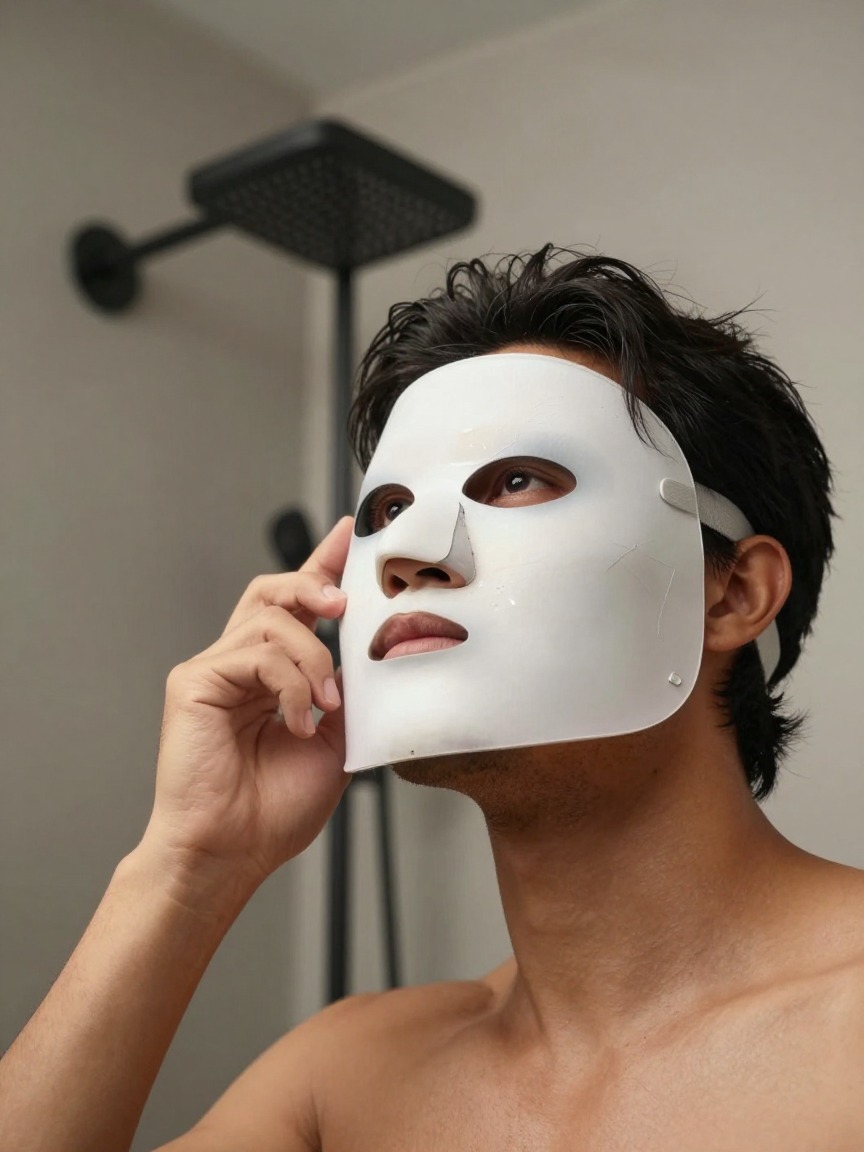
Manufacturers love to tout LED counts. A higher number only matters if the diodes sit close to skin and are evenly spaced. A mask with gaps around the nose, eyes, or jawline treats less surface area than the box implies, no matter what the count says. Silicone masks tend to hug the face more evenly than rigid plastic visors. Rigid designs, though, can hold a more consistent distance from the light source, and that distance also affects the collagen-supporting dose you actually receive.
Flexible Mask Comfort for Sensitive, Acne-Prone Skin
Rigid visor-style masks are easier to manufacture with a consistent light distance. They don't flex to different face shapes, so fit varies by user. Flexible silicone masks conform better, but they can feel warm during longer sessions. They also tend to be heavier, since the battery and controls usually sit on the mask itself rather than a separate puck. Neither style is objectively better. It comes down to comfort, session length, and whether you want to move around during treatment. Sensitive or acne-prone skin can react to either style, so start with shorter sessions either way.
Session Time, Cordless Design & FDA-Cleared Claims
Sessions range from about three minutes to twenty-plus, depending on the device. None of them work like a switch. Visible changes from red light are typically reported after weeks of consistent use, not a single session. A cordless, battery-powered mask makes it easier to move around during longer sessions than one tethered to a controller. We are researchers and reviewers, not dermatologists, and none of this is medical advice. Most LED masks are FDA-cleared only for a narrow claim, like temporary reduction in the appearance of fine lines.
Fine Lines, Wrinkles & Breakouts: When to See a Dermatologist
LED masks are marketed as general wellness and cosmetic devices, not medical treatments. They can support the look of fine lines and wrinkles, or help with mild breakouts, over consistent use. Persistent acne, cystic breakouts, or any skin reaction should go to a dermatologist. A light mask alone isn't equipped to manage a diagnosed skin condition.
Common Mistakes
- Skipping consistency — most of the research behind LED therapy involves regular sessions over eight to twelve weeks, not occasional use.
- Buying a blue-light-only mask for anti-aging concerns, or a red-light-only mask for active breakouts. The wavelengths target different problems.
- Wearing photosensitizing skincare like retinoids or certain acids without checking with a doctor first.
- Assuming a higher price always means a stronger dose. Where brands publish wavelength and irradiance specs, compare those directly.
Spend vs. Save: Where LED Money Is Well Spent
This is one device category where paying more can genuinely matter, because a mask is only as good as the dose it delivers. Cheap masks often under-report or overstate their wavelength and irradiance, and a weak, poorly-spaced array simply won't reach the levels the research relies on. That's the case for choosing a well-studied, clinically-backed mask over the cheapest visor on the shelf. Still, price alone isn't proof; a mid-range mask that publishes its wavelengths and irradiance can be a smarter buy than a pricey one that hides them.
Match the Mask to Your Concern and Routine
- Fine lines and firmness: prioritize a red and near-infrared mask with even, gap-free coverage.
- Active breakouts: you need blue light, or a combined red-and-blue device, not a red-only mask.
- First-timer: a shorter-session, low-commitment mask makes the daily habit easier to keep.
- Comfort over long sessions: a flexible silicone mask that molds to your face beats a rigid visor.
A Buying Checklist Before You Commit
Look for a clearly stated wavelength range, published irradiance where available, FDA clearance, and even diode spacing that actually covers the nose, eyes, and jawline. Be honest about whether you'll wear it consistently for weeks, because an unused premium mask is the most expensive mistake in this category.