









The Two-Phase Approach: Loading Phase vs. Maintenance Phase
Nearly every microcurrent brand, from NuFACE to ZIIP, structures its routine around two phases. There's an initial 'loading' phase, then an ongoing maintenance phase. The loading phase is typically five sessions a week for the first four to eight weeks. It's meant to build whatever cumulative effect the device can produce. After that stretch, most brands recommend tapering to two or three sessions a week. That maintains results, instead of continuing daily use indefinitely. This mirrors how most muscle-training or active-skincare routines work: a more frequent period to see a change, then lighter upkeep once you're at a plateau.
Session Length: How Long a Single Microcurrent Session Should Take
Session length varies by device and by how many areas you're treating. Most guided routines run somewhere between five and twenty minutes. Devices with pre-set programs, like app-connected options, will typically time this for you. On simpler devices, the general guidance is to spend a set number of seconds gliding the probes along each muscle group.
Stroke Pattern & Technique: Jawline, Cheeks, Forehead & Under-Eye Area
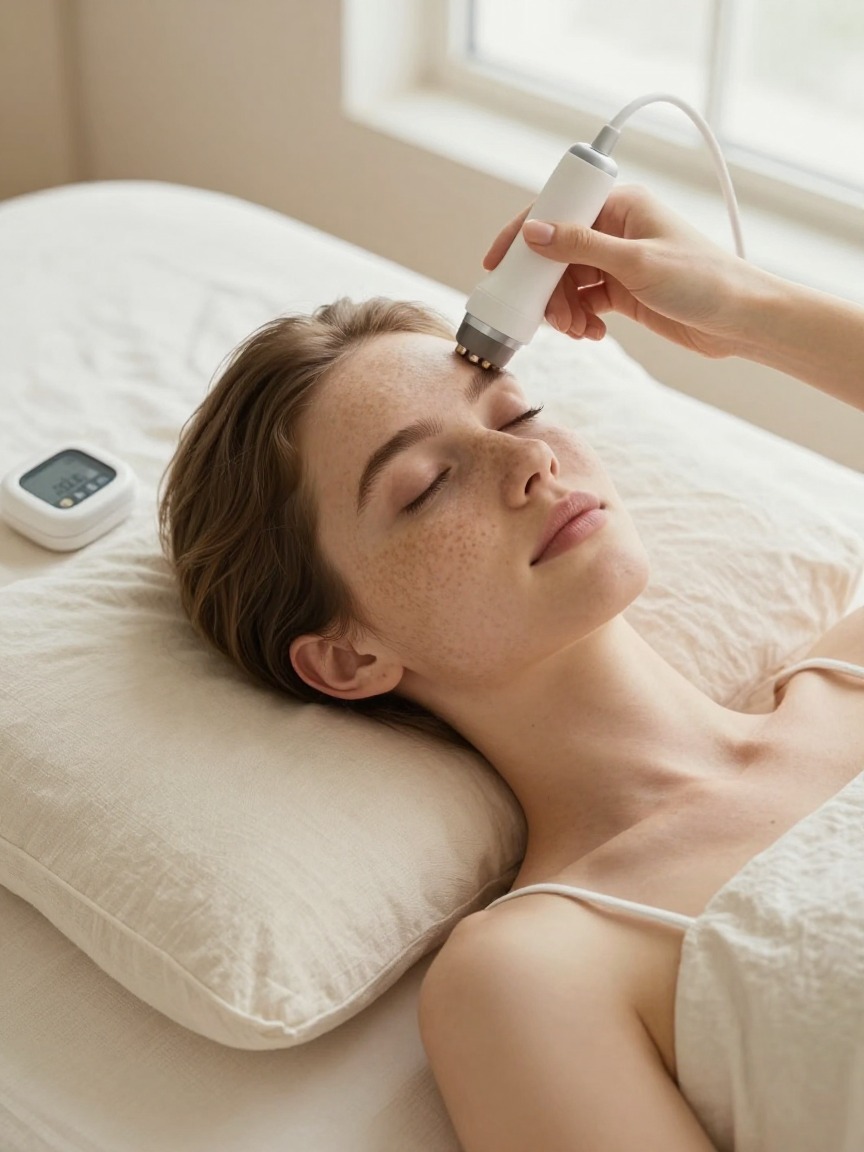
Rushing through a session undercuts a lot of the potential benefit. So does randomly moving the probes around. Most devices are designed around a specific stroke pattern. Generally, you move from the center of the face outward, and from the jaw upward toward the temple, covering the jawline, cheeks, forehead, and under-eye area in turn. That pattern works with the direction of facial muscles, not against them. Pressing too hard doesn't make the current stronger. It mostly just risks irritating the skin. A slower, more deliberate pass tends to produce more consistent results than a fast, careless one, even at the same total session length.
What a Realistic Results Timeline Looks Like: The Snatched Look
Immediately after a session, many people notice a temporary, subtle lifted or snatched look. That effect is largely short-lived. It fades within a day or so without repeat use. Gradual, more lasting changes tend to show up only after several weeks of consistent loading-phase use, where reported. Even then, results vary a lot from person to person, and are generally modest rather than dramatic. Expect a slightly firmer-looking, more toned complexion with sustained use, not a visible lift comparable to a cosmetic procedure. Anyone promising dramatic, facelift-level results from a handheld device on a fixed timeline is overselling what the evidence supports.
What Happens If You Stop: Consistent Use, Habit & Probes
The toning effect isn't permanent. Taking an extended break, weeks or months, generally means results fade back toward baseline. Picking the habit back up usually means restarting something close to the original loading phase, rather than jumping straight back into maintenance frequency. This is worth knowing before you buy. Microcurrent is a genuine time and habit commitment, not a one-and-done purchase. Consistent use of the probes is what makes the difference — a device sitting unused in a drawer after the first few weeks is one of the most common ways people end up feeling like it 'didn't work.'
Building It Into an App-Connected Skincare Routine: NuFACE, ZIIP & Your Gym Routine
The single biggest predictor of results isn't the specific device — not whether it's a NuFACE wand, a ZIIP Beauty device, a FOREO tool, a Solawave wand, or a MyoLift pen. It's whether someone uses it consistently enough to matter. Pairing sessions with an existing habit, like right after washing your face or at a set point in your evening skincare routine, tends to make the loading phase far more sustainable. Think of it the way you'd think of a gym routine: if five sessions a week genuinely isn't realistic for your schedule, a slightly slower, more consistent three-times-a-week routine is a more honest bet than an ambitious daily plan you're likely to abandon after two weeks.