









The Muscle-Toning Theory: How Microcurrent Affects Facial Muscles
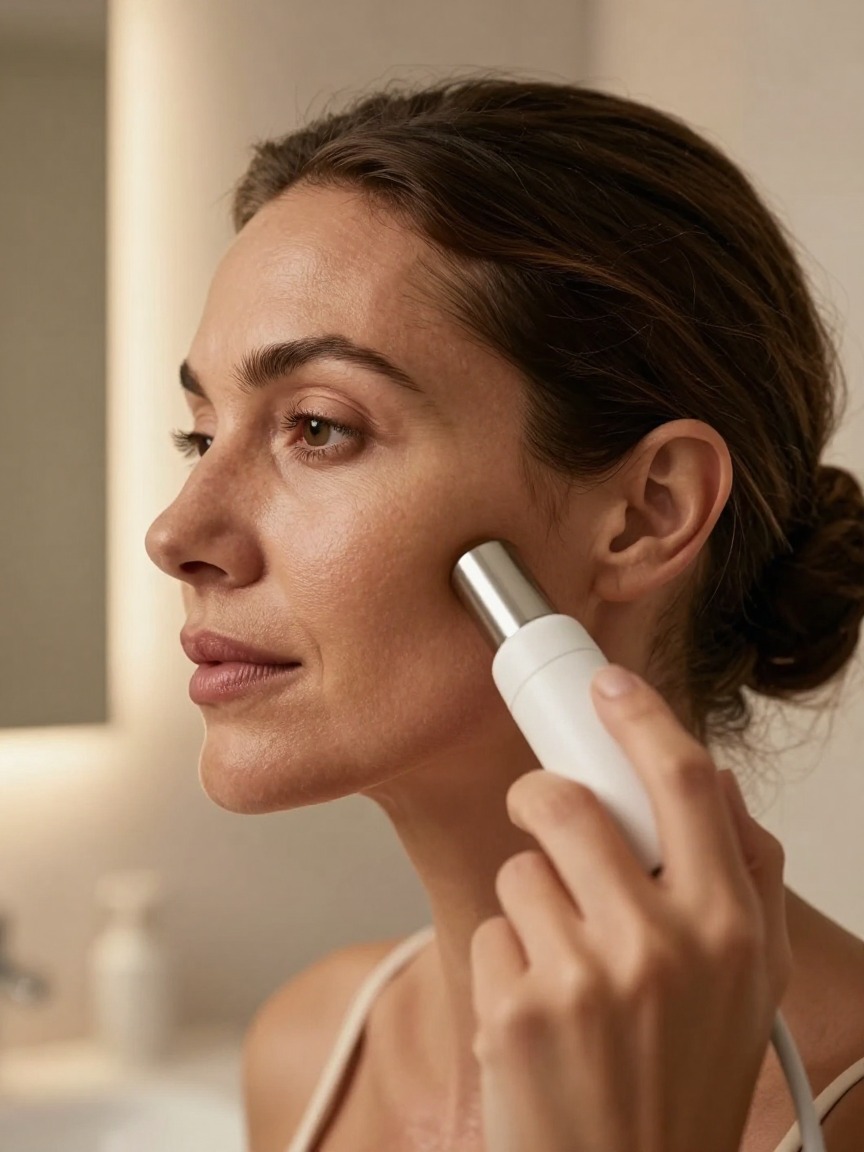
Facial muscles work differently from the muscles you train at the gym. They attach directly to skin, not just to bone. That's part of why facial expressions and muscle tone show up so visibly on the skin's surface. The idea behind microcurrent: a very low-level electrical current can prompt these muscles to contract slightly. Proponents compare this to a much gentler version of the signals your brain sends to trigger movement. They describe it as 'exercising' facial muscles from the outside in — a simplified analogy, not an exact clinical description.
Microcurrent vs. EMS: Muscle Contraction & Cellular Activity
It's easy to conflate microcurrent with EMS — electrical muscle stimulation, the more intense current used in devices designed to visibly contract muscles, like ab-toning belts marketed for the body. Microcurrent runs at a much lower amperage. It's measured in millionths of an amp, not the thousandths used in EMS. It isn't meant to produce a visible muscle contraction or forceful twitch. Instead, the theory holds that it works at a more subtle, cellular level. It may encourage processes like ATP production and broader cellular activity, which proponents argue support firmer-looking skin and more responsive muscle tone over time. That mechanism is plausible, based on decades of microcurrent use in physical therapy. But the specific claims made for cosmetic facial use rest on a much smaller body of research.
What 'Toning' Looks Like: ATP Production, Circulation & Temporary Tightening
The most consistently reported effect is an immediate but temporary tightening. Many people notice a subtle lift, or a more 'awake' look, in the treated area right after a session — comparable to how skin looks different after a workout, or a cold splash of water and a jump in circulation. That immediate effect typically fades within a day or two without repeat use. Longer-term claims are different. The idea that regular use over weeks or months produces cumulative improvement in muscle tone, jawline definition, or fine lines is where the marketing outpaces the independent evidence on ATP production and toning. Some users do report gradual, cumulative results with months of consistent use, with brands like NuFACE and ZIIP Beauty among the most studied. The honest answer: this varies a lot from person to person. No microcurrent device has evidence anywhere close to what supports a surgical facelift or injectable treatment.
Why the Effect Fades: Muscle Tone, Skin Surface & Expression Lines
Facial muscles, like muscles anywhere else in the body, don't hold a 'trained' state indefinitely without continued stimulation. Whatever benefit microcurrent provides — genuine muscle stimulation, a temporary plumping effect from increased circulation, or simply the light massage motion of moving the probes across the skin surface — depends on repetition to maintain. It's the same logic behind why stopping a gym routine eventually reverses muscle tone. The effect isn't stored permanently; it's maintained through consistent input. That's why every reputable brand, from NuFACE to Solawave, markets microcurrent as a routine, not a one-time treatment for expression lines. Realistic expectations matter more here than with almost any other category of skincare tool.
Where Microcurrent Stops: Facelift, Filler, Jawline & Sagging
It's worth being blunt about the ceiling here. A microcurrent device cannot lift or remove excess skin. It cannot meaningfully change bone structure or deep fat pad position. It cannot replicate what a surgical facelift, thread lift, or injectable filler does. Those procedures physically reposition or remove tissue. Microcurrent, at best, produces a subtle, surface-level, temporary tightening effect around the jawline through muscle stimulation and increased circulation. For mild sagging, a lackluster complexion, or a routine that leaves skin looking a bit more toned day to day, microcurrent can be a reasonable, low-risk addition. For significant sagging, deep wrinkles, or structural aging concerns, it's not a substitute for talking to a dermatologist or a licensed cosmetic provider about what's actually achievable.
The Takeaway: Wrinkles, a Cosmetic Provider & When to See a Dermatologist
Treat microcurrent's effect on facial muscles the way you'd treat a light daily stretching habit, not a surgical intervention. It's plausible. It's generally low-risk. It's genuinely noticeable in the short term for many people. But it's modest, temporary, and entirely dependent on showing up consistently, rather than one dramatic session. For real concerns about wrinkles or sagging, a dermatologist or cosmetic provider remains the more reliable resource.