


AHA vs BHA: which acid actually fits your skin
The AHA-vs-BHA question comes up constantly. The honest answer is that they're not competing for the same job. AHAs work on the surface of the skin. BHA works inside the pore. Picking between them - or deciding you need both - comes down to what's actually happening on your skin, not which one has better marketing.
Glycolic acid, lactic acid & mandelic acid: what AHA is built for
Alpha-hydroxy acids are water-soluble. That limits how far they can travel - they act mainly on the outermost layer of skin cells, breaking down the material that holds dull, dead cells in place. That's why AHAs are the acid of choice for dullness, rough or uneven texture, and surface-level discoloration from old sun spots or marks. Glycolic acid is the smallest AHA molecule. It penetrates fastest and tends to deliver the most visible short-term brightening. That speed is also why it's the AHA most likely to cause stinging or redness on skin that isn't used to acids. Lactic acid is a larger molecule that moves more slowly. It's broadly considered the gentler of the two common AHAs, with a mild humectant effect that can soften the drying feeling exfoliation sometimes brings. Mandelic acid, larger again, is worth a specific mention for people with deeper skin tones or a history of dark marks after breakouts, since its slower penetration is associated with a lower risk of triggering post-inflammatory hyperpigmentation.
Salicylic acid (BHA): oil-soluble, built for blackheads & clogged pores
Salicylic acid, the BHA used in virtually all facial products, is oil-soluble rather than water-soluble. That single property changes what it's good for. It can move through the sebum inside a pore and exfoliate from the inside out. That's exactly what's needed to keep blackheads, closed comedones, and general congestion from building up in oily and combination skin. BHA doesn't do as much for surface brightening as an AHA does - its strength is inside the pore, not on the visible top layer of skin. So someone whose main complaint is dullness rather than clogged pores usually gets more out of an AHA.
Dullness, texture, dark spots & hyperpigmentation: do you need both?
Plenty of people get value from using both acid types, just not necessarily on the same night in the same product. A common approach is a BHA-focused product for the T-zone or oilier areas, and an AHA for drier cheeks or overall tone. That can mean two separate products used on different nights, or a single blended AHA/BHA formula at a modest combined strength - the more forgiving option for skin that swings between oily and dry depending on the day. What's worth avoiding is reaching for a high-percentage AHA and a high-percentage BHA on the same night, hoping that more exfoliation means better results for dark spots or hyperpigmentation. That combination is one of the more common ways people end up over-exfoliated, with visible redness, tightness, and a compromised-feeling barrier.
Sensitive skin, oily skin & combination skin: a simple way to decide
- If your main complaint is blackheads, visible pores, or ongoing breakouts on oily skin - start with BHA.
- If your main complaint is dullness, rough texture, or uneven tone with minimal oiliness - start with AHA, and choose lactic or mandelic acid if your skin is on the sensitive side.
- If you have both concerns and don't know where to start - a gentle, blended AHA/BHA toner used two to three nights a week is a reasonable middle ground for combination skin before committing to a single-acid product at a higher strength.
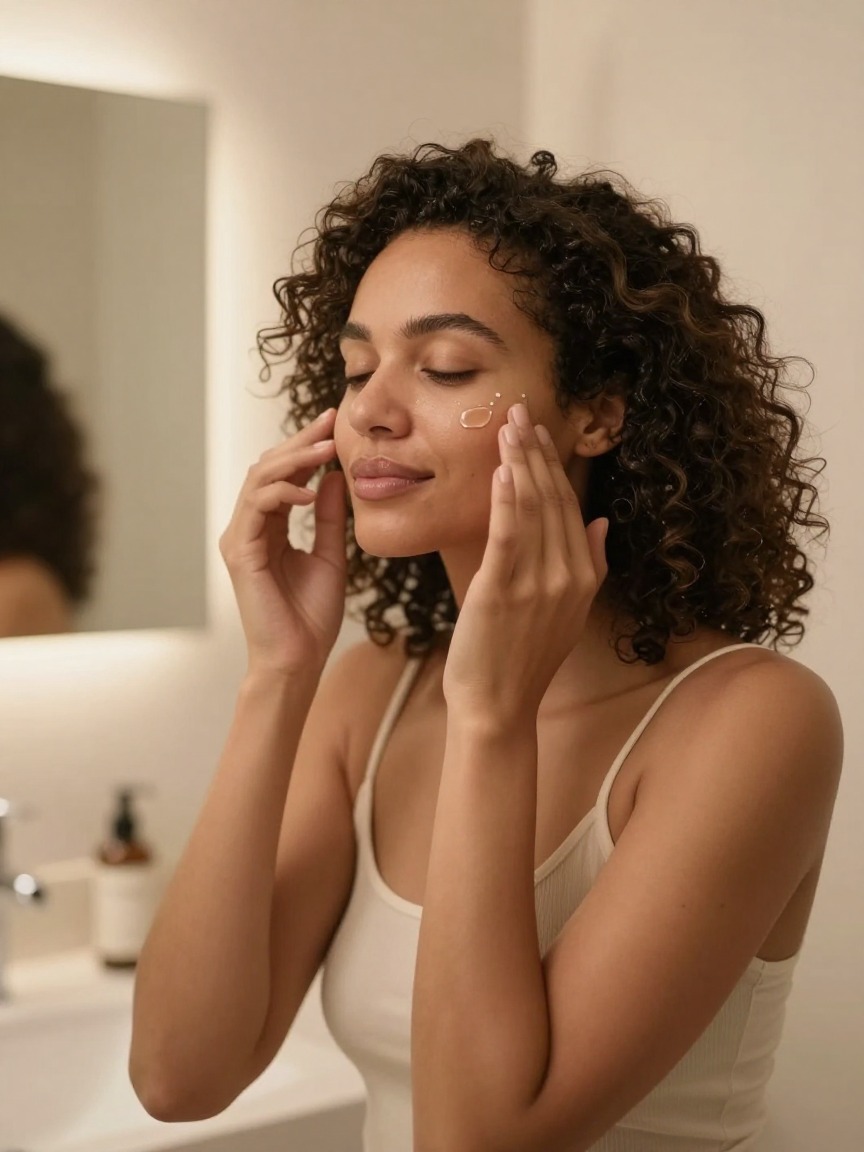
- If you're not sure how your skin will react to either - patch test on the inside of the arm or along the jawline for a few nights before applying to the full face.
Patch testing & when over-exfoliated skin needs a dermatologist
Whichever you land on, this is a start low, watch, and adjust category - not one where matching the product exactly to a diagnosis matters most. Well-reviewed formulas from brands like Paula's Choice, The Ordinary, and COSRX make good starting points for either acid type. If irritation, breakouts, or unusual reactions show up and don't settle down within a week or two of easing off, that's the point to talk to a dermatologist rather than keep experimenting with over-the-counter products.