
Are at-home chemical peels safe to use?
At-home chemical peels are safe for most people when you respect the label. Chemical peels use acids like glycolic, lactic, salicylic, or mandelic. These acids loosen the glue between dead surface cells. That lets dull, rough skin shed and reveal smoother skin below. The strength printed on the bottle really matters here. A 10% leave-on formula behaves very differently from a 30% rinse-off one. Follow the stated timing every single time you apply it. Never leave a strong formula on longer than the directions allow. Keep a timer running so you do not lose track of the minutes.
Beginners do best with gentle, low-dose formats. A pre-soaked pad such as the Dr. Dennis Gross Skincare Alpha Beta Universal Daily Peel spreads a mild acid blend evenly across the face. Wash-off treatments like the Drunk Elephant T.L.C. Sukari Babyfacial are stronger and need more care. The Ordinary AHA 30% + BHA 2% Peeling Solution is very potent, so keep its contact time short. The Peter Thomas Roth Peeling Solution is another high-strength option best left to experienced users. Rinse the moment the clock says so, and never stack two peels back to back. Start with the mildest option and only move up if your skin stays calm.
Used with respect, at-home chemical peels can smooth rough texture, fade dullness, and brighten uneven tone. Used carelessly, the same chemical peels can trigger redness, stinging, or even a chemical burn. Frosting, white patches, or intense pain mean you should rinse at once. Strength, timing, and frequency decide which outcome you get. Treat these products as real actives, not casual add-ons. A cautious, label-led approach, laid out in our full guide to peeling at home, keeps these treatments safe.
How to patch test and avoid over-exfoliation
Always patch test before the first full-face use. Dab a little product on your inner arm or jaw. Wait a full 24 hours before you go further. Watch for burning, swelling, or lasting redness during that window. A simple patch test flags sensitivity before it reaches your whole face. Repeat the patch test whenever you try a new acid or a higher strength. It takes only minutes and can save you weeks of recovery.
Over-exfoliation is the most common mistake people make with acids. Signs of over-exfoliation include tightness, flaking, waxy shine, and skin that stings under moisturizer. If you notice them, stop all actives and let the barrier recover. Spacing peels out is central to peel safety and the right frequency, and it prevents over-exfoliation in the first place. Most formulas suit once or twice a week, never daily. When in doubt, do less and watch how your skin responds.
- Never layer a peel with a retinoid on the same night.
- Skip peels on broken, sunburned, or freshly waxed skin.
- Introduce only one new acid into your routine at a time.
- Stop if stinging grows instead of fading within a minute.
- Wait until any active breakout has calmed before peeling.
Sunscreen is non-negotiable after any acid treatment. Fresh acids leave skin far more exposed to UV light. Apply a broad-spectrum sunscreen every morning while you use chemical peels. Reapply that sunscreen through the day whenever you are outside. Skipping it invites sunburn and new dark spots, which cancels out the peel's benefit. If your skin runs reactive, ease in with one of the gentler formulas we recommend first. First Aid Beauty and L'Oréal Paris both offer lower-strength options that suit nervous beginners. See a dermatologist before peeling if you have active acne, eczema, melasma, or a scarring history.
Affiliate disclosure: We may earn a commission from qualifying purchases made through links on this page, at no extra cost to you. Some links on this page are affiliate links.
Recommended at-home chemical peels
Editor-picked products from our guides.
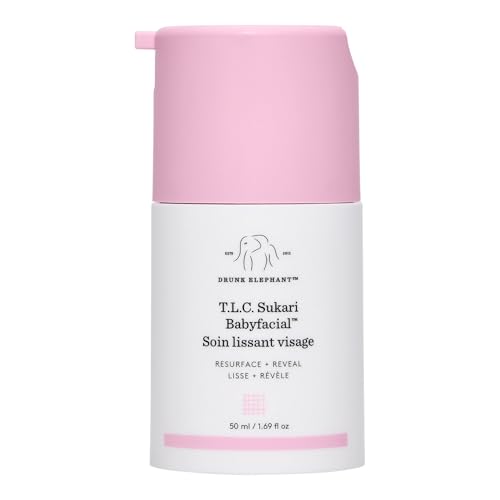
T.L.C. Sukari Babyfacial
Drunk Elephant
It layers a 25% AHA blend with 2% BHA in a 20-minute leave-on mask format. That gives you a more intensive weekly treatment than a daily pad, without needing a full professional peel.
- Higher acid concentration delivers noticeably smoother skin after one use
- BHA content helps clear congestion, not just surface dullness
- Fragrance-free formula removes one common irritant
- Strong enough that first-time users often feel real tingling or mild stinging, so it's not a good first peel

AHA 30% + BHA 2% Peeling Solution
The Ordinary
At 30% glycolic-acid-led AHA plus 2% BHA, this is one of the strongest peel solutions sold without a prescription. It's built for a once-weekly, strictly-timed application.
- Very high acid concentration for visible texture and tone improvement
- Inexpensive relative to the strength delivered
- Clear timing instructions make dosing more predictable than a vague leave-on serum
- High enough strength that overuse or skipping the patch test risks real irritation or burning — not a product for peel beginners

Facial Radiance Pads
First Aid Beauty
A modest 5% glycolic acid dose in a pre-soaked pad makes this the gentlest true peel format here. It gives new users a way to introduce acids without much risk of stinging or flaking.
- Low, beginner-friendly acid concentration
- Pre-soaked pad format keeps dosing consistent and mess-free
- Gentle enough for several uses a week for most skin types
- Too mild to make a visible dent in deeper texture or pigmentation concerns