












Can You Use Vitamin C and Retinol Together?
Yes, but most dermatologists suggest using them at separate times. You can use vitamin C and retinol together in the same routine, just not layered in one step. Combining several strong actives at once raises the chance of redness and dryness. Spacing them out keeps your skin calmer while both still do their work.
This is not a hard chemical clash. Older advice claimed the two cancel each other out, but that is overstated for modern formulas. The real reason to split them is comfort. Using vitamin C and retinol together in one layer simply stacks irritation for many people.
So the goal is timing, not avoidance. Both are proven, popular ingredients that belong in a well-built routine.
The old fear that these two cancel each other out is overstated. Modern formulas are more stable than the myth suggests. The real reason to space them is comfort, not chemistry. Two strong actives in one layer simply irritate many people.
Time of day gives each one a natural home. A well-formulated vitamin C serum fits the morning, where it supports daytime defense. Retinol suits the night, when skin repairs.
Split a Vitamin C Serum and Retinol Across Morning and Night
The classic approach is vitamin C in the morning and retinol at night. A vitamin C serum works well in daylight, where its antioxidants help defend against everyday stress. SkinCeuticals C E Ferulic and Maelove Glow Maker are popular morning options. Retinol then takes the evening slot on its own.
A simple split across morning and night looks like this:
- Morning: cleanse, apply a vitamin C serum, then sunscreen.
- Night: cleanse, apply retinol, then moisturizer.
- Keep the two actives in separate parts of the day.
- Add only one new product at a time.
Storage protects your vitamin C investment. Many formulas oxidize when exposed to light and air over time. A darkened, air-tight bottle lasts longer. If the liquid turns deep orange or brown, its potency has faded.
Introduce each active slowly to read your skin's response. A patch test on the inner arm can flag problems early. Start a couple of times a week, then build up. Patience protects your skin far more than speed.
A steady rhythm keeps this pairing easy, especially once you know the best way to apply and layer it. Cleanse, apply your active, then lock it in with moisturizer. Add sunscreen every morning without exception. Both ingredients make skin more sun sensitive.
Introduce them one at a time, not together. Let vitamin C settle into your routine for a couple of weeks first. Then add retinol slowly at night. This staggered start makes any reaction easy to trace.
Beginners should never layer vitamin C and retinol in one step. If irritation lingers even after you space them out, a dermatologist can help you adjust.
Among our top vitamin C serum picks, CeraVe Skin Renewing Vitamin C Serum and La Roche-Posay Pure Vitamin C10 Serum are gentler choices for the morning. Naturium Vitamin C Complex Serum is another balanced choice. Splitting vitamin C and retinol across morning and night lets you enjoy both without piling on irritation in a single step.
If your schedule makes a morning routine hard, you can alternate nights instead. Use a vitamin C serum one evening and retinol the next. Timeless Skin Care 20% Vitamin C + E Ferulic Acid Serum is a strong option if you go this route. Whatever you choose, avoid slathering vitamin C and retinol together in one layer as a beginner. If irritation lingers despite spacing them out, a dermatologist can help you adjust.
Affiliate disclosure: We may earn a commission from qualifying purchases made through links on this page, at no extra cost to you. Some links on this page are affiliate links.
Recommended vitamin c serums
Editor-picked products from our guides.
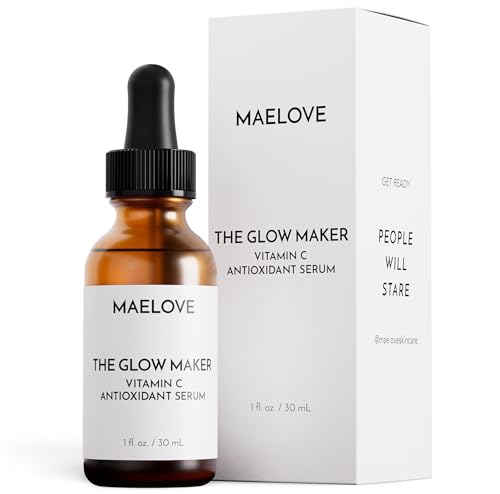
Glow Maker
Maelove
It leans on similar formulation logic to pricier serums: L-ascorbic acid plus vitamin E and ferulic acid. It costs a fraction of the price. That's why it's often called an affordable alternative to the prestige options.
- Combines L-ascorbic acid with vitamin E and ferulic acid, echoing higher-end formulas
- Opaque pump bottle helps limit light and air exposure
- Noticeably cheaper per ounce than most L-ascorbic acid serums of similar formulation
- The pump can dispense unevenly or feel like it needs priming, a minor but frequently mentioned annoyance

Skin Renewing Vitamin C Serum
CeraVe
It pairs 10% L-ascorbic acid with hyaluronic acid and CeraVe's ceramide complex. That means it brightens without skipping the hydration and barrier support drier skin needs.
- 10% L-ascorbic acid alongside hyaluronic acid for hydration
- Includes CeraVe's three-ceramide blend to support the skin barrier
- Widely available at drugstore price points
- Comes in a squeeze tube rather than an airless pump, so more air gets in with each use, which can shorten how long it stays fresh

Pure Vitamin C10 Serum
La Roche-Posay
It keeps the formula minimal: 10% pure vitamin C plus soothing neurosensine. That makes it one of the more tolerable pure-ascorbic-acid options for sensitive users to start with.
- Fragrance-free formula aimed at sensitive skin
- 10% concentration is a reasonable starting point rather than an aggressive one
- Backed by La Roche-Posay's dermatologist-tested, sensitive-skin-focused formulation approach
- Some users find the texture sits slightly tacky before it fully absorbs