












When Should You Apply Vitamin C Serum
Most people apply vitamin C serum in the morning. Cleanse first, then apply vitamin C serum before sunscreen and moisturizer. As a lightweight layer, it sinks in fast. This order lets the rest of your routine sit on top. A thin, fast-absorbing serum belongs early, before any richer products. Layering it under heavier creams is what lets it reach the skin properly. Putting the thinnest layer first is simply how you let a fast-absorbing serum reach the skin properly.
Why the morning? Vitamin C is an antioxidant. It helps defend skin against daytime UV and pollution. Using a vitamin C serum early gives that protection when you need it most. The SkinCeuticals C E Ferulic is a classic morning pick. Applying it by day makes the most of its protective role. It works alongside sunscreen, not as a replacement for it. Used by day, it complements sunscreen rather than standing in for it in any way.
Budget-friendly options work well too. Maelove Glow Maker and Timeless Skin Care 20% Vitamin C + E Ferulic Acid are popular alternatives. The CeraVe Skin Renewing Vitamin C Serum pairs vitamin C with barrier-supporting ingredients. Any of these fits neatly into a morning routine. Start every other day if your skin is new to the ingredient. Building up slowly helps you avoid the tingling some formulas can cause. Easing in every other day is the gentlest way to sidestep any early tingling.
Using an Antioxidant Serum in the Morning Before Sunscreen
A vitamin C serum acts as your antioxidant serum for the day. An antioxidant serum works best under sunscreen, not instead of it. So apply vitamin C in the morning, then seal with SPF. That pairing gives stronger daytime defense than either step alone. Sunscreen blocks rays, while the antioxidant mops up what slips through. Together they cover more ground than either one can manage by itself. Paired together, sunscreen and an antioxidant cover more ground than either one can alone.
Some people prefer vitamin C at night instead. Nighttime use avoids overlap with other morning actives. It can also suit sensitive skin that reacts to heavy layering. La Roche-Posay Pure Vitamin C10 Serum and Naturium Vitamin C Complex Serum both work at either time. Pick the slot you will actually keep up with day after day. The best schedule is the one that fits your life, not a strict rule. Choosing the slot that fits your life is what keeps a vitamin C habit going for the long haul.
- Apply vitamin C on clean skin, before heavier products.
- In the morning, layer it before sunscreen.
- At night, use it alone or before moisturizer.
- Wait a minute before your next step to reduce pilling.
- Store it away from light and heat to keep it fresh.
The exact hour matters less than the habit itself. Daily use is what makes an antioxidant serum pay off over time. Whether you apply vitamin C serum in the morning or at night, be consistent. And when you use it in the morning, always follow with sunscreen. If the color turns dark orange, the formula has oxidized and lost strength. A fresh, pale serum is a sign the vitamin C is still active. A pale, fresh formula is your sign the vitamin C is still doing its job.
Affiliate disclosure: We may earn a commission from qualifying purchases made through links on this page, at no extra cost to you. Some links on this page are affiliate links.
Recommended vitamin c serums
Editor-picked products from our guides.
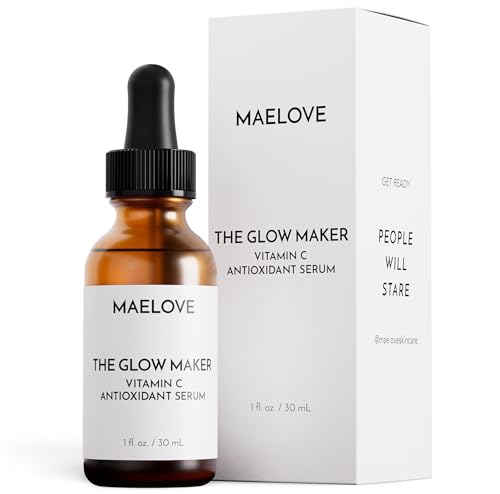
Glow Maker
Maelove
It leans on similar formulation logic to pricier serums: L-ascorbic acid plus vitamin E and ferulic acid. It costs a fraction of the price. That's why it's often called an affordable alternative to the prestige options.
- Combines L-ascorbic acid with vitamin E and ferulic acid, echoing higher-end formulas
- Opaque pump bottle helps limit light and air exposure
- Noticeably cheaper per ounce than most L-ascorbic acid serums of similar formulation
- The pump can dispense unevenly or feel like it needs priming, a minor but frequently mentioned annoyance

Skin Renewing Vitamin C Serum
CeraVe
It pairs 10% L-ascorbic acid with hyaluronic acid and CeraVe's ceramide complex. That means it brightens without skipping the hydration and barrier support drier skin needs.
- 10% L-ascorbic acid alongside hyaluronic acid for hydration
- Includes CeraVe's three-ceramide blend to support the skin barrier
- Widely available at drugstore price points
- Comes in a squeeze tube rather than an airless pump, so more air gets in with each use, which can shorten how long it stays fresh

Pure Vitamin C10 Serum
La Roche-Posay
It keeps the formula minimal: 10% pure vitamin C plus soothing neurosensine. That makes it one of the more tolerable pure-ascorbic-acid options for sensitive users to start with.
- Fragrance-free formula aimed at sensitive skin
- 10% concentration is a reasonable starting point rather than an aggressive one
- Backed by La Roche-Posay's dermatologist-tested, sensitive-skin-focused formulation approach
- Some users find the texture sits slightly tacky before it fully absorbs