What "beginner-friendly" retinol means: encapsulated retinol, niacinamide & ceramides
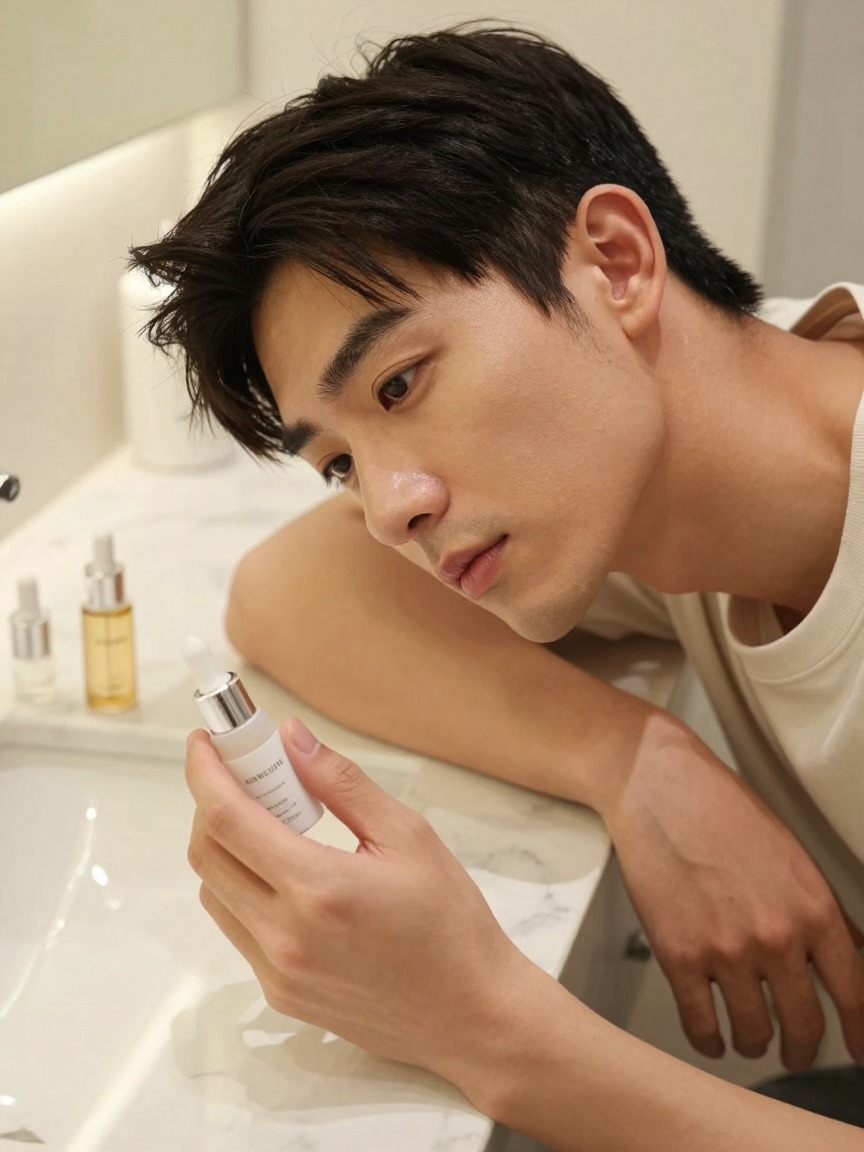
Every product here is built to ease a first retinol experience. Most use a lower percentage, typically 0.25%-0.3%, or an adjustable format you dilute yourself. Many rely on encapsulated retinol, a slow-release technology that limits how much reaches skin at once. Supporting ingredients like ceramides, niacinamide, or hyaluronic acid help offset the dryness retinol is known for. None of that removes the adjustment period entirely. It just makes it easier to get through.
Retinol, retinal (retinaldehyde) & tretinoin: how the retinoid family differs
Retinol is the most common over-the-counter form. Skin has to convert it in two steps before it becomes active - first to retinaldehyde, then to retinoic acid. That extra step makes retinol gentler but slower-acting. Retinaldehyde, often labeled "retinal," skips that first conversion and reaches active retinoic acid faster. So a low-looking percentage, like 0.2%, can pack more punch than it sounds. Prescription tretinoin is retinoic acid itself. It's considerably stronger than anything sold over the counter.
Percentage vs. formula: squalane, hyaluronic acid & low percentage retinol
Percentage matters less than the whole formula. A 0.3% retinol in a ceramide-and-glycerin base often feels more comfortable than a bare-bones 0.25% version. Encapsulated retinol, wrapped in a delivery shell, tends to feel gentler than free retinol at the same strength. That's worth more attention than the number on the label. Look for squalane or hyaluronic acid alongside a low percentage retinol to keep the barrier supported while it adjusts.
Fragrance-free, dryness & irritation: what to look for beyond retinol
- Ceramides, squalane, or hyaluronic acid to support the skin barrier while it adjusts
- Niacinamide, which is generally well tolerated alongside retinol and can help with redness
- Fragrance-free formulas, since fragrance adds an extra irritation variable on top of dryness
- A dropper or pump that lets you control a small, pea-sized or smaller amount
Sensitive skin, pregnancy & when to see a dermatologist first
Retinol isn't something everyone should self-start. If you're pregnant, trying to conceive, or breastfeeding, skip topical retinoids. Talk to your doctor - this is standard medical guidance, not a marketing disclaimer. The same goes for sensitive skin with active eczema, a rosacea flare, or another diagnosed condition. A dermatologist can advise on whether and how to start safely. We're reviewers, not clinicians, and nothing here replaces that conversation.
Buffering, sunscreen, cell turnover & fine lines: mistakes to avoid
- Applying too much, too often, right out of the gate instead of buffering and easing in
- Skipping moisturizer, or applying retinol to damp skin, which increases penetration and irritation
- Going outside without sunscreen the next day - retinol increases sun sensitivity
- Combining a new retinol with other actives, like acids or benzoyl peroxide, in the same week
Retinol works by speeding cell turnover, which gradually softens fine lines and evens texture. Rushing any of the steps above is the fastest way to stall that progress.
Matching a Beginner Retinol to Your Skin and Budget
Your starting point should be how reactive your skin is, not the flashiest bottle. If your skin is calm and you just want a gentle on-ramp, an affordable drugstore serum that pairs the active with ceramides and niacinamide, like the option from CeraVe, supports the barrier from night one. Sensitive or easily reddened skin does better with a minimal, dermatologist-tested formula such as the one from La Roche-Posay, where a short ingredient list reduces the number of things that can provoke a reaction. Anyone who wants a clearly stated, moderate percentage at a fair price will find a 0.3% complex from a brand like Naturium easy to judge. If you are especially cautious, an adjustable booster from a brand like Paula's Choice lets you dilute the active into a moisturizer and dial the strength up on your own timeline.
When to Spend and When to Save on a First Retinol
A first retinol is one place where spending less first is smart. Because a meaningful share of beginners find their skin needs weeks to adjust, an inexpensive, widely sold drugstore retinol is a low-stakes way to learn how you react before committing to a pricier bottle. Save the upgrade, or a faster-acting retinal step like the emulsion from a brand such as The Ordinary, for once you have built tolerance. Paying more up front buys you a nicer texture or delivery system, not a shortcut past the adjustment period, so let your skin earn the upgrade rather than buying it on hope. If a bottle is small and cheap enough to treat as a low-stakes trial, that is often the wisest first purchase in this category.