What a clay mask does to sebum, oil and pores
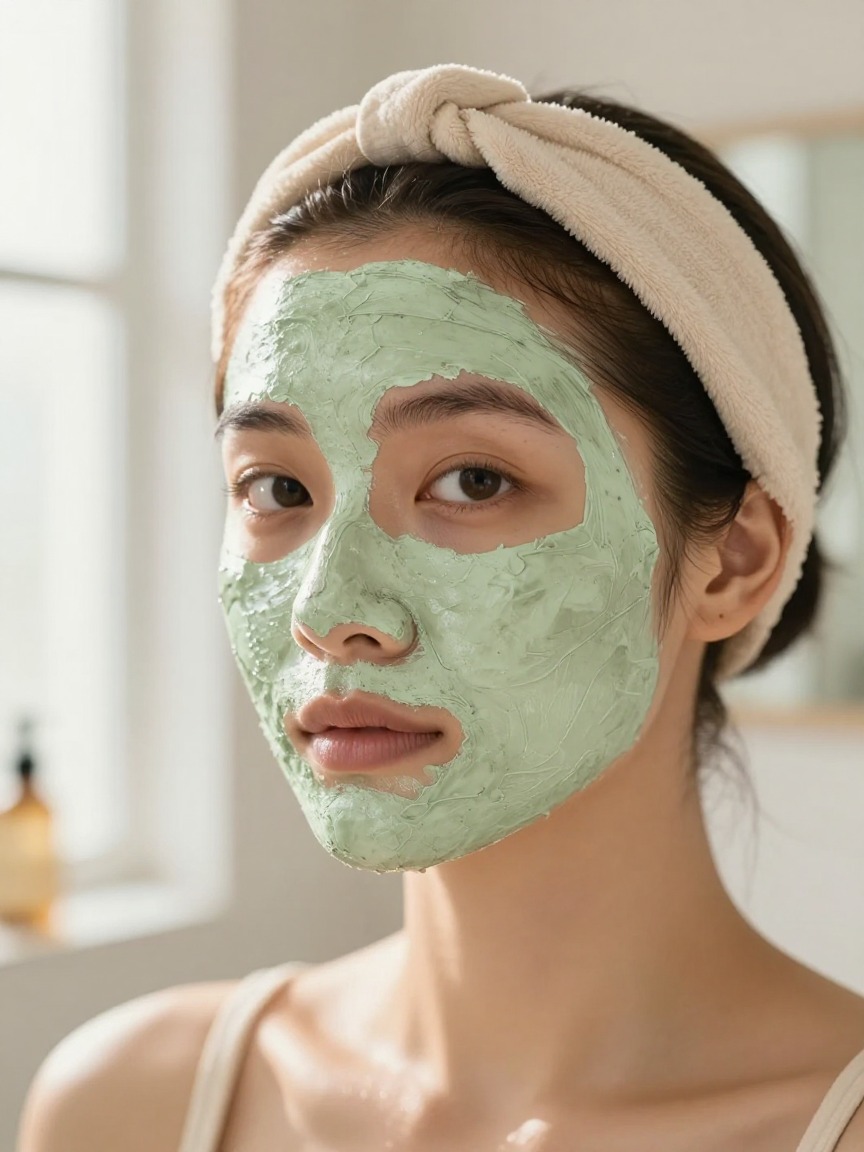
Clay masks work through physical adsorption. Negatively charged clay particles bind to oil, dirt, and dead skin cells. This happens on the surface and inside pore openings. Rinsing lifts all of that away. For oily skin, that shows up as a mattified look. Pores seem less clogged, at least temporarily. Clay does not shrink pore size, which is mostly structural. It also does not "detox" skin in any clinical sense—that's marketing language, not a mechanism.
Bentonite, kaolin and French green clay for oily skin
- Bentonite — volcanic ash clay with the strongest absorbency and swelling capacity. Best for very oily, resilient skin.
- Kaolin — a milder, whiter clay that pulls oil without stripping as aggressively. A safer starting point if skin is easily irritated but still oily.
- French green clay (illite) — mineral-rich and highly absorbent. Often paired with charcoal for extra oil-binding surface area.
- Volcanic clay — a term used heavily by Korean beauty brands. Performs similarly to a bentonite-kaolin blend.
Charcoal and salicylic acid: ingredients that boost oil control
Look past "clay mask" and check what's blended in. Charcoal adds extra binding surface area for oil and impurities. Salicylic acid (BHA) combines physical clay absorption with chemical exfoliation inside the pore lining. That combination genuinely helps oily skin prone to blackheads and breakouts. Humectants like glycerin keep a clay formula from over-drying. Prioritize glycerin if your skin gets tight or flaky after masking. Watch for high alcohol content marketed as "deep cleansing." It compounds the drying effect of clay without adding real benefit.
Best choices for sensitive skin, blackheads and pore-prone T-zones
Sensitive skin that's also oily can react to a strong bentonite mask. Stinging or excess redness during application is a sign to rinse it off. Persistent, painful, or cystic acne is worth discussing with a dermatologist. Don't rely on masks alone to treat it. A clay mask is a maintenance tool, not a fix for a skin condition. Skin that's oily mainly through the T-zone usually does better with a lighter formula on drier cheeks. Save the strongest bentonite masks for pore-prone areas and spots prone to blackheads, not the whole face.
Common mistakes: over-masking, breakouts and skipping moisturizer
- Leaving clay on until it's bone dry and cracking. This pulls moisture out of skin generally, not just surface oil, and can trigger a rebound in oil production.
- Masking every day. Most oily skin does best with one to three uses a week, not daily.
- Skipping moisturizer afterward because skin "already feels oily enough." Oily skin still needs lightweight, non-comedogenic hydration.
- Using a full-face bentonite mask when only the T-zone runs oily. Multi-masking is usually the smarter move.
- Masking through active breakouts without easing up. Irritated, broken skin reacts more harshly to clay's pull, which can worsen redness.
Drugstore picks and how to mattify without over-drying
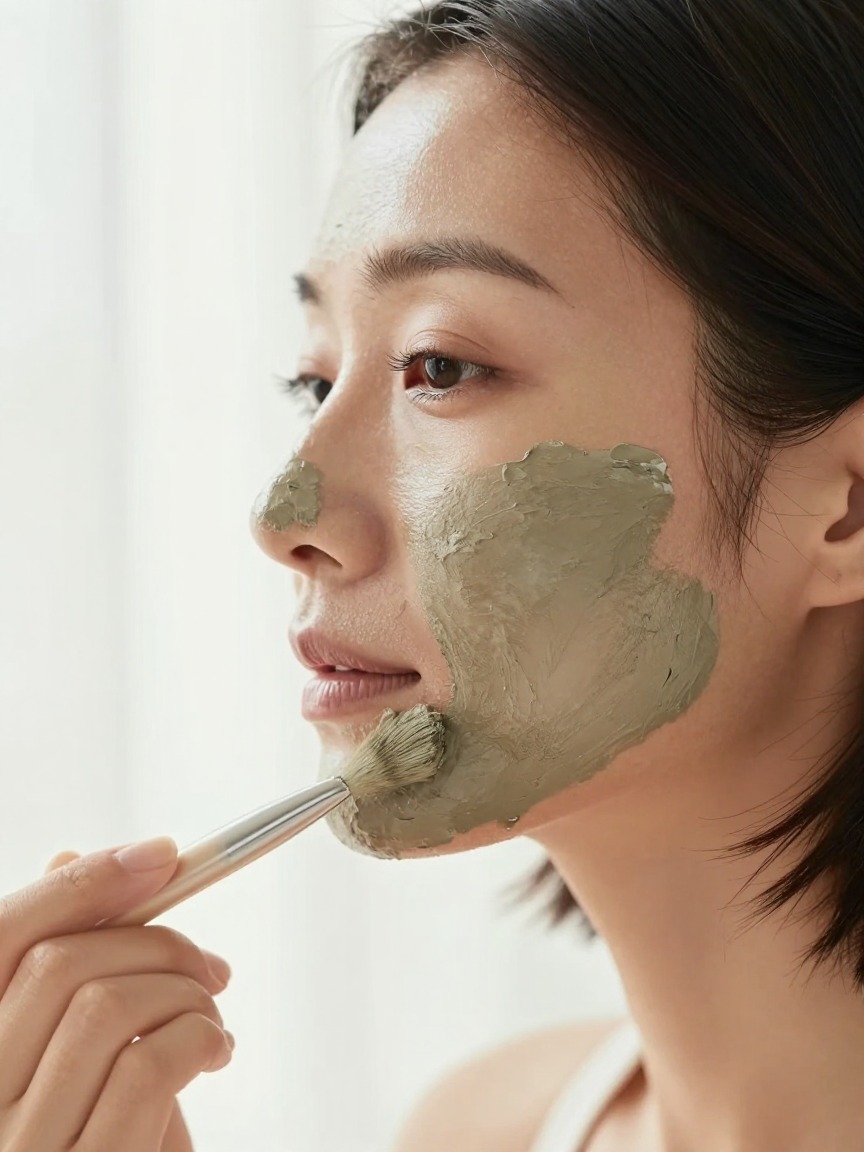
You don't need a splurge formula to mattify oily skin. Several effective clay masks sit at drugstore prices. Apply a thin, even layer and rinse before the clay fully hardens. That keeps the mattifying effect without pulling too much moisture from skin. Follow with a lightweight moisturizer every time, even if skin still feels oily.
Matching a clay mask to your skin and concern
Match the clay's strength to how oily and how resilient your skin is. Very oily, pore-prone skin that wants a formula built around congestion is well matched by innisfree Super Volcanic Pore Clay Mask 2X, or a straightforward bulk bentonite like Aztec Secret Indian Healing Clay for pure oil control. If blackheads and breakouts are the concern, a mask that pairs clay with a chemical exfoliant — such as The Ordinary Salicylic Acid 2% Masque — does two jobs in one step. Oily skin that gets tight or irritated by strong clay does better with a gentler, more comfortable formula like Kiehl's Rare Earth Deep Pore Cleansing Masque or Origins Clear Improvement, while first-timers can start with an accessible option like L'Oréal Pure-Clay.
Buying smart: spend, save, and skip the hype
Clay masks are an easy place to save. A basic bentonite or kaolin mask at a drugstore price mattifies oily skin as well as many pricier jars, so pay more only for a texture or added ingredient you actually want. Ignore “detox” and “pore-shrinking” language — clay can't do either — and read the blend instead: charcoal or salicylic acid for extra oil control, glycerin to offset dryness, and no high-alcohol content dressed up as “deep cleansing.” Buy a smaller jar first if your skin leans sensitive, since a strong clay can sting reactive areas.