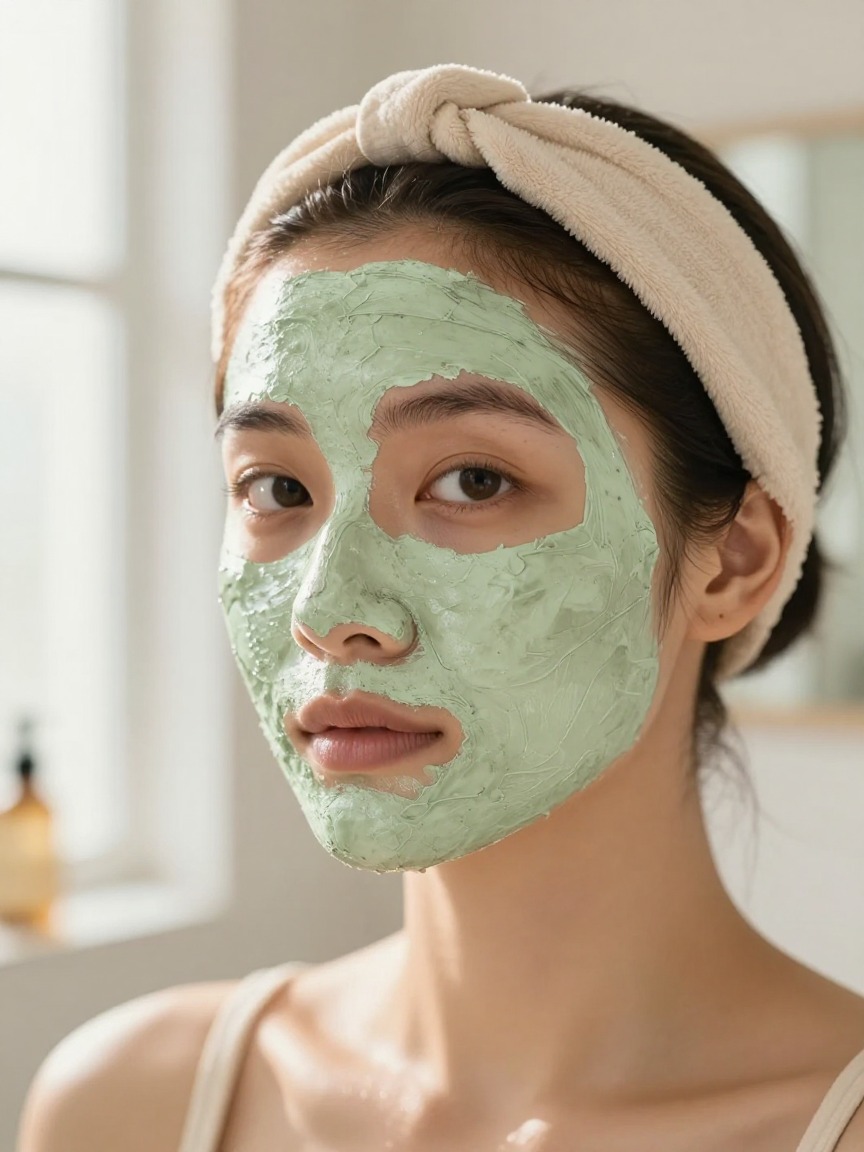
What a physical exfoliant is made of: jojoba beads, rice powder & particle shape
A face scrub uses small solid particles to buff away dead skin cells sitting on the surface. Common particles include sugar, finely milled rice powder, jojoba beads, or crushed shells and pits. The base the particles sit in matters too. Cream, gel, and oil bases all behave differently, and a drying base can undo the benefit the scrub provides.
Micro-tears and crushed walnut shells: why particle shape matters
Particle shape is the real variable to watch. Round, smooth particles glide over skin and buff gently. Fine rice powder and dissolving sugar fall into this gentle category. Irregular, jagged particles are different. Crushed walnut shells and apricot pits are the classic offenders, and under a microscope their edges are sharp. Dermatologists have flagged them for years, since jagged particles can create micro-tears in the skin's surface. That risk climbs with extra pressure or daily use. If a scrub feels genuinely gritty rather than smooth, treat that as a warning sign, not proof it's working harder.
Who should skip scrubbing: acne-prone skin, rosacea & skin barrier care
Physical exfoliants are not a good match for everyone. Active acne, rosacea, eczema, and sunburned skin all do better without scrubbing. The same goes for skin already compromised by retinoids or other strong actives. Scrubbing over inflamed or broken skin can spread bacteria, and it can worsen irritation instead of clearing it. Acne-prone skin usually does better with a low-strength chemical exfoliant, or a plain enzyme powder, instead of a scrub. Persistent acne, rosacea flares, or ongoing reactions are worth a dermatologist visit rather than more exfoliation.
Chemical exfoliant alternatives, sensitive skin & when to see a dermatologist
A gentle chemical exfoliant, such as a low-strength rinse-off AHA or BHA, is usually the safer choice for sensitive skin. It works without any friction on the skin's surface, and the strength can be dialed down easily. If skin stays red, tight, or irritated no matter how gentle the scrub, that's a signal to switch to a chemical exfoliant, or to check in with a dermatologist.
Common mistakes: exfoliation frequency, fragrance-free picks & dead skin cells
- Scrubbing daily. Two to three times a week is plenty for most skin types; daily use is the single biggest driver of over-exfoliated, reactive skin, and it throws off any sensible exfoliation frequency.
- Pressing hard. The particles do the work, so there's no need to grind them in. Light, circular pressure for 30–60 seconds is enough.
- Scrubbing over active breakouts, sunburn, or freshly waxed skin.
- Stacking a scrub with a strong chemical exfoliant or retinoid on the same night, which compounds irritation.
- Using coarser body scrubs on facial skin.
- Skipping a fragrance-free moisturizer afterward. Skin needs that support to rebuild and clear dead skin cells at a normal pace.
Choosing by skin type: oily skin, dry skin & sugar scrub picks
Skin type steers the pick more than any single ingredient. Oily or thicker skin generally tolerates a firmer scrub. Dry or sensitive skin does better with a fine-powder or sugar scrub formula, since sugar dissolves as you massage it in. Combination skin can often get away with scrubbing only the T-zone.
Cream, gel or rinse-off cleanser: which scrub format to buy
Beyond the particles, the base you buy matters for comfort and value. Cream-based polishes cushion the grit and leave skin feeling conditioned, which suits dry or normal skin. Gel or foaming formulas rinse cleaner and feel lighter, a better match for oily skin. A scrub-in-a-cleanser, or a mild powder you activate with water, folds exfoliation into a step you already do and is the lowest-commitment way to add gentle polishing without buying a separate product.
Spotting a gentle scrub before you buy
You can screen for a kind formula on the shelf. Look for round, dissolving, or finely milled particles — sugar, jojoba beads, rice or cellulose powder — and treat walnut shell or apricot seed high on the list as a reason to put it back. A short, fragrance-free ingredient list is worth more than any natural or detoxifying claim on the front. If a tester feels sharp or genuinely scratchy between your fingers, that grit will feel the same on your face.
Spend vs save on a face scrub
Scrubs are a category where spending more buys texture and scent, not necessarily better results. A gentle powder like Dermalogica's suits most skin and newcomers, while an inexpensive gel scrub such as Neutrogena's is a fine first buy. A rinse-off salicylic cleanser in the CeraVe vein smooths texture on a budget without a dedicated scrub step. Reserve a spa-feel sugar polish like Fresh's for dry or normal skin that enjoys the ritual, and keep a coarse apricot-style scrub like St. Ives strictly for oily, thick, or callused areas, used sparingly.